
Last updated November 15, 2026
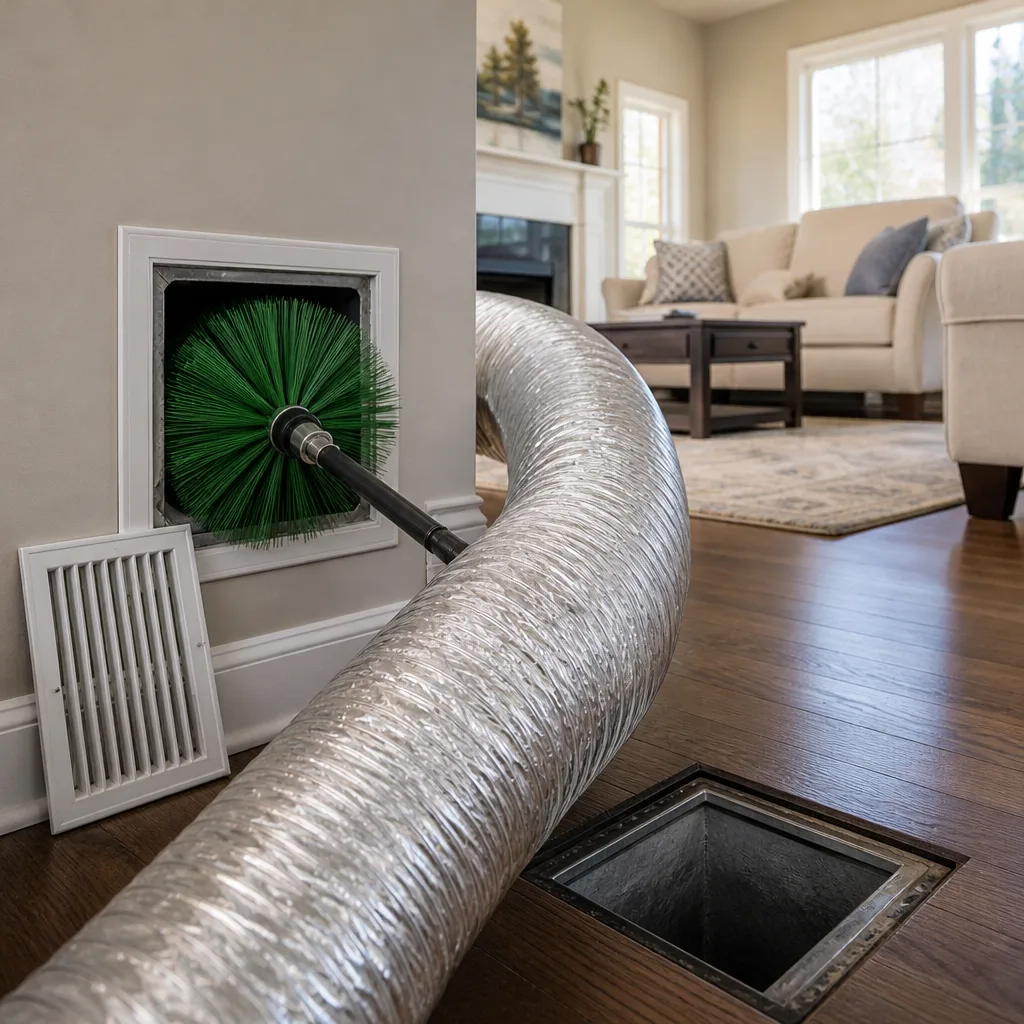 Whole-home duct cleaning
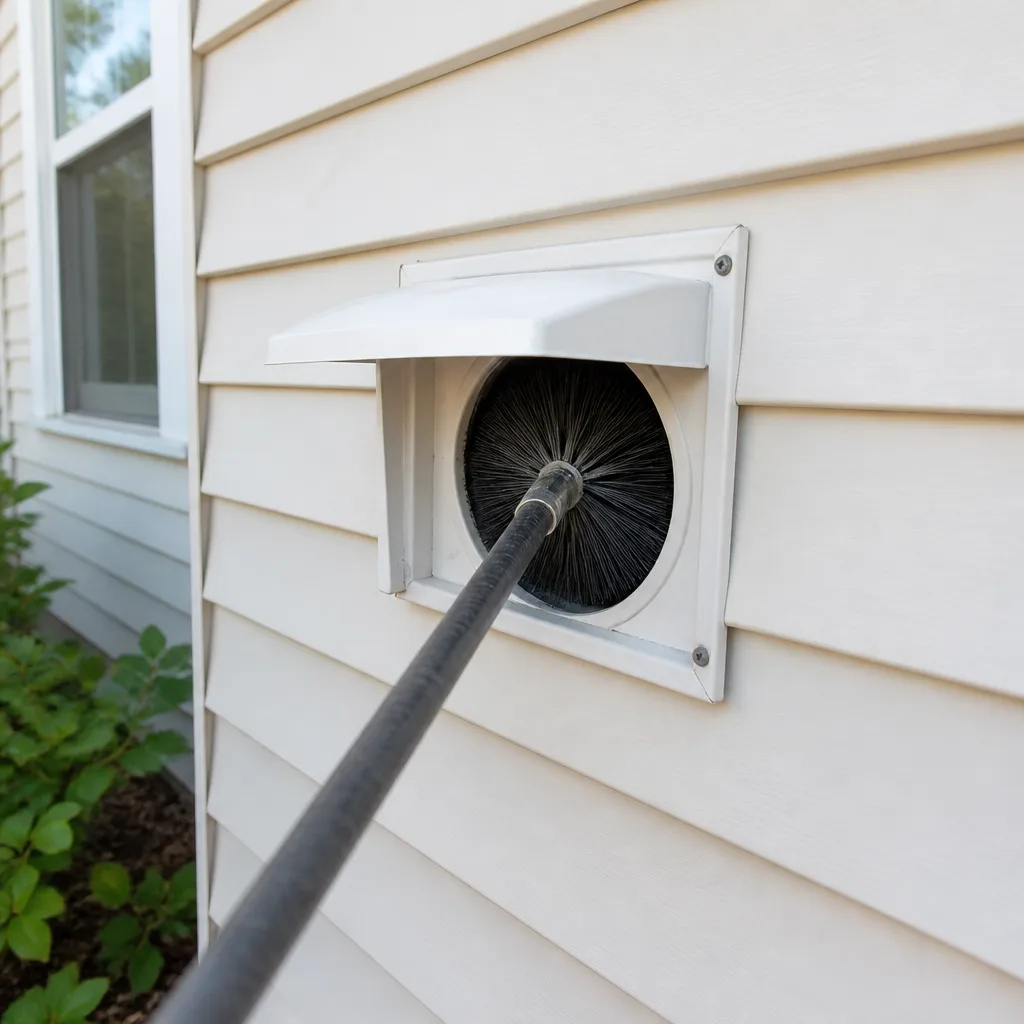 Dryer vent cleaning
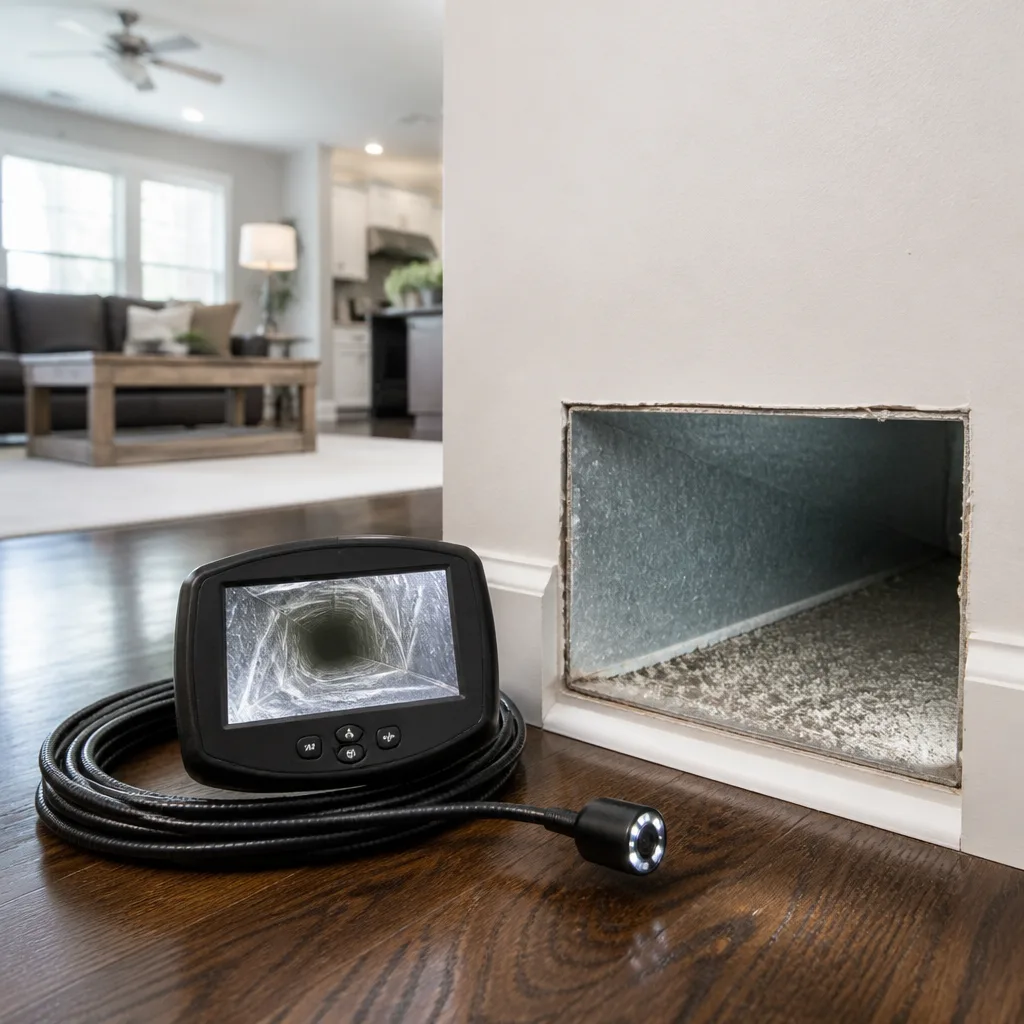 Camera inspection
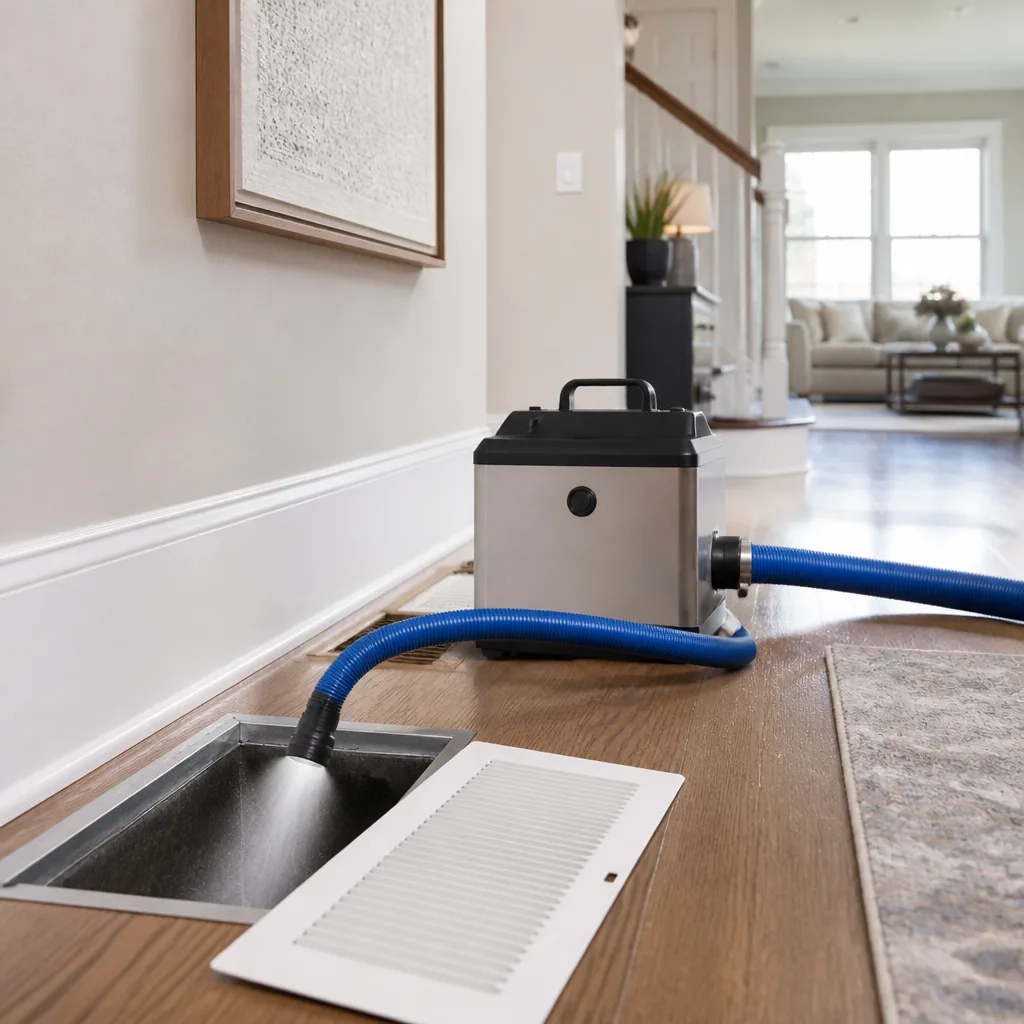 Sanitizing & deodorizing
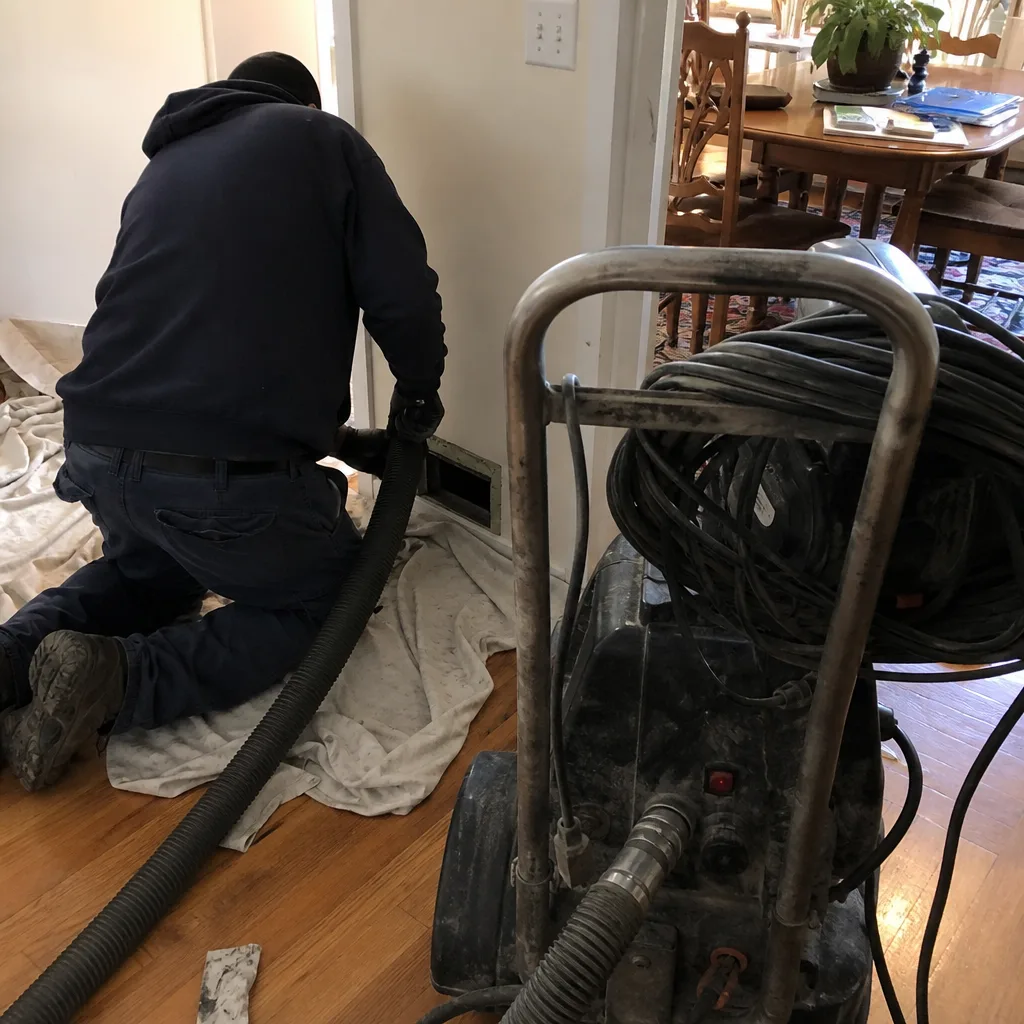
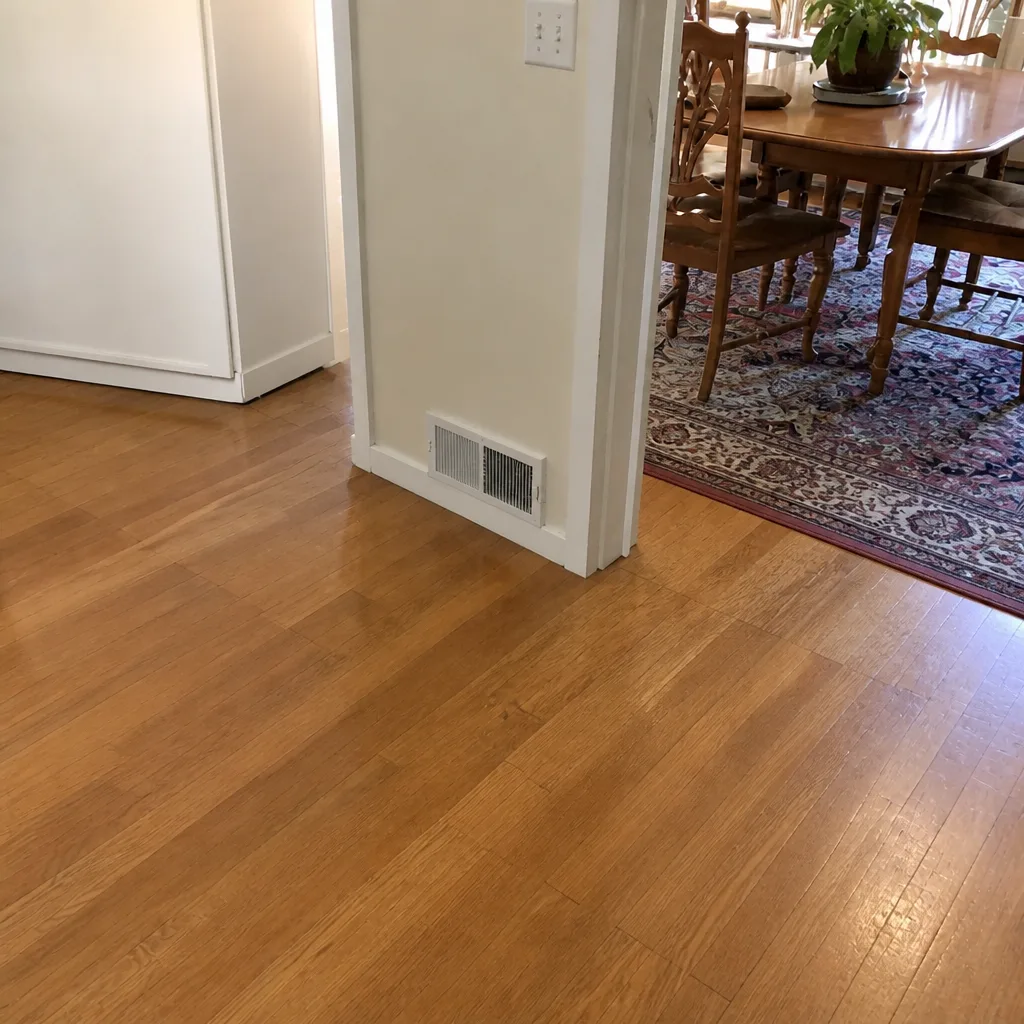
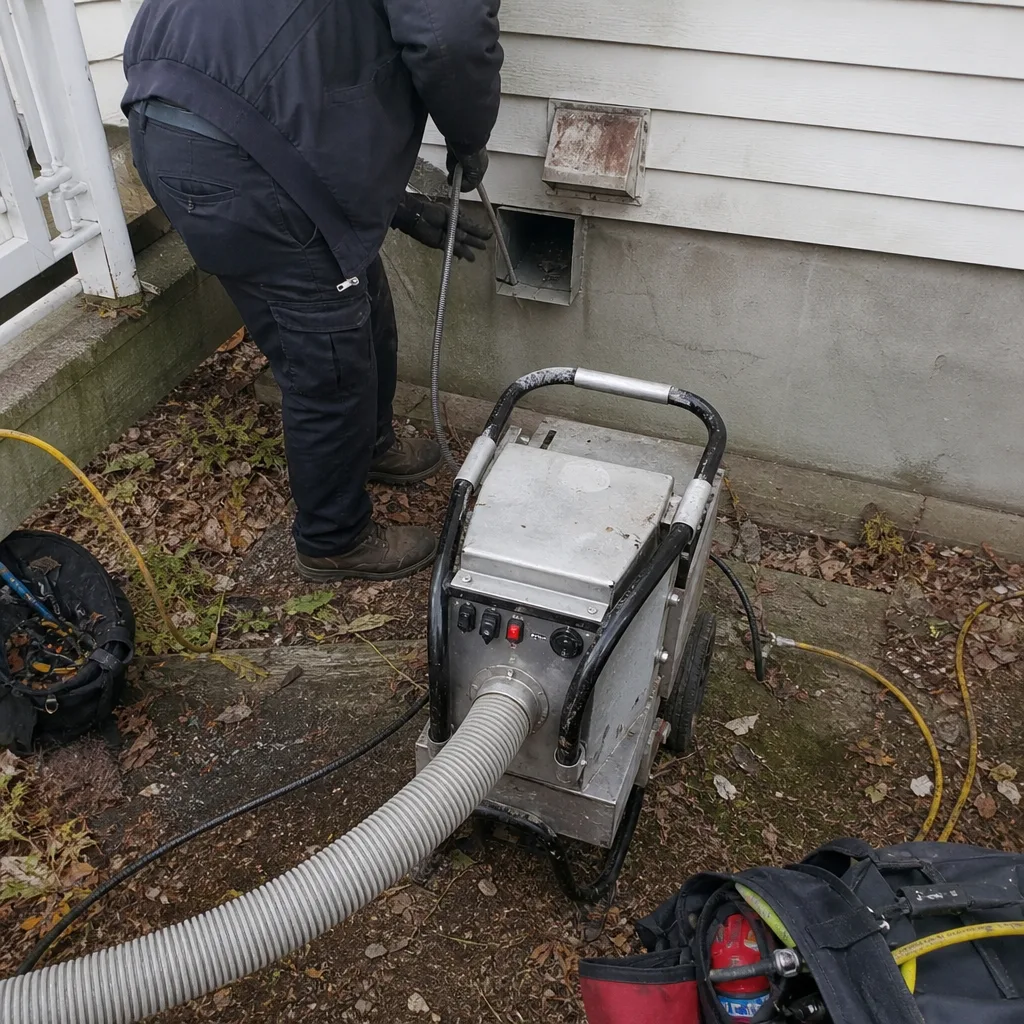
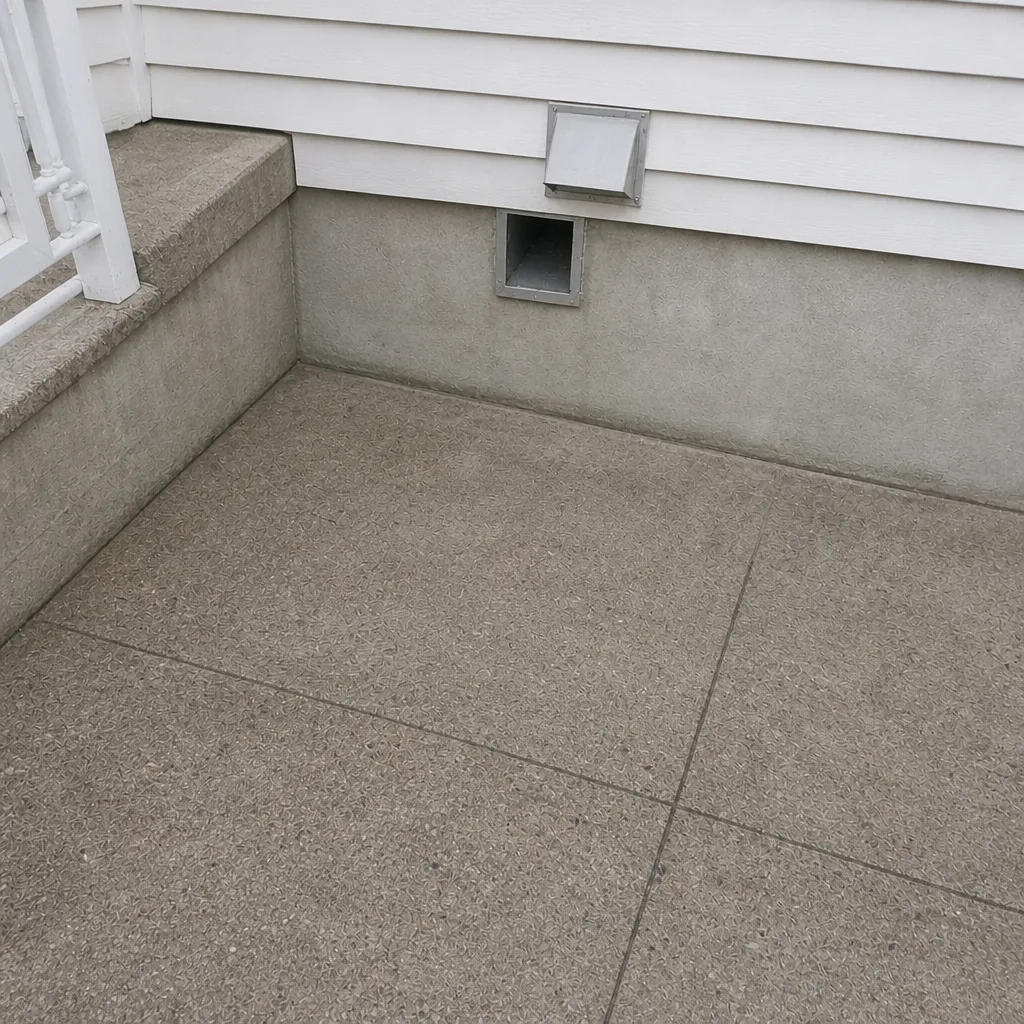
Whole-system duct and dryer vent check with before-and-after photos - you see exactly what came out of your vents
That "$99 whole-house special" is a bait ad - the real number appears once they are in your hallway, or the "clean" is a shop-vac at the register. We photograph the inside of your ducts before and after instead.
Air Duct Cleaning Maintenance Checklist for Quincy Homeowners
Changing your filter every 90 days while ignoring a collapsed flex duct section is like rotating your tires on a car with a bent frame. The routine task feels productive, and it masks the underlying problem completely. Most homeowners treat duct care as a calendar item when it’s really a diagnostic exercise. Dust on a register, a room that never quite heats, a filter that darkens on one side first – each of those is a signal, and each points to something specific upstream in the system. What follows is a checklist built around cause rather than frequency, written for the particular conditions you live with in Quincy: older housing stock, tight basements, and air that carries plenty of moisture through a good chunk of the year.
Quick Answer
A workable air duct maintenance checklist for a Quincy homeowner combines four things: quarterly filter inspection with attention to loading pattern, a seasonal room-by-room airflow comparison, a once-a-year look at visible duct runs and connections, and a professional cleaning and inspection every three to five years (sooner after renovation or if anyone in the house has respiratory sensitivity). Frequency alone isn’t the point. The point is catching the change that tells you something in the ductwork has shifted.
Styles & brands we work with
- Whole-home duct cleaning
- Dryer vent cleaning
- Camera inspection
- Sanitizing & deodorizing
Table of Contents
- The Room-by-Room Airflow Comparison
- Filter Inspection: Reading What the Filter Tells You
- Logging HVAC Runtime Against Comfort Output
- Humidity, Condensation, and Duct Liner in Quincy
- The Annual Visual Walk-Through
- Building Your Cleaning Schedule Around Real Signals
- What to Document Before You Call Anyone
- Common Mistakes to Avoid
The Room-by-Room Airflow Comparison
You can flag supply and return imbalances without a single tool, and this is the highest-value check on the whole list. The method is simple comparison. Hold a tissue or a strip of light paper in front of each supply register while the system runs, and note how strongly it moves and at what angle. Do the same at every return grille. What you’re looking for is the room that’s noticeably weaker than its neighbors, or a return that barely pulls.
Consistency matters more than force. A two-story colonial in Wollaston where every upstairs register blows with similar strength is probably fine, even if the output feels modest. A split-level in Merrymount where three bedrooms push well and the fourth barely flutters is telling you something. That weak branch usually points to one of a few causes:
- A disconnected or partially collapsed flex run behind a wall or ceiling
- A damper that was closed during a past balancing attempt and never reopened
- Crushed ductwork where a run was stepped on or pinched during an earlier renovation
- Debris or a pest nest blocking a branch near its takeoff from the trunk
- A boot that separated from the register box, dumping air into the wall cavity instead of the room
Run this check twice a year – once in heating season, once in cooling season – and write down the results. A branch that measures the same both times is stable. A branch that gets weaker between checks is degrading, and that’s your cue to have someone look at the duct itself rather than the equipment. Most duct cleaning companies would clean the system and leave a disconnected run exactly where it is. Finding and repairing that connection is part of air duct cleaning done properly.
Filter Inspection: Reading What the Filter Tells You
“Looks dirty” is not a diagnostic. Where the dust lands and what color it is tells you more about duct condition than the volume of dust does. Pull the filter and hold it up to a light. Then look at the pattern.
Loading pattern
A filter that loads evenly across its face is doing its job with clean air arriving from all sides. A filter that darkens heavily in one corner or along one edge suggests uneven airflow through the return – often a sign that the return duct is partially blocked, undersized for the equipment, or pulling air through a gap somewhere behind the grille. A filter that’s dark on the downstream side but light on the incoming side is unusual and can point to debris already sitting in the plenum or the first section of duct.
Particulate color
Gray-brown dust is ordinary household accumulation. Black or sooty residue warrants a closer look, since it can indicate a combustion byproduct issue rather than a duct problem, and that’s a conversation for your heating contractor before anything else. Rust-colored staining near the filter frame often means moisture is present somewhere upstream. Greenish or powdery patches raise a different question entirely and deserve an inspection rather than a guess.
Loading rate
How fast a filter loads is one of the clearest indicators of duct condition. A filter that’s saturated in four to six weeks in a house with no pets and no renovation underway is pulling more particulate than it should. That excess is usually coming from the ductwork itself – failing liner, joint tape that’s let go, or accumulated debris getting stirred up every time the blower runs. If your filter life is shortening year over year, log the dates. That trend is diagnostic.
Logging HVAC Runtime Against Comfort Output
This check takes two minutes a day for a week, twice a year, and it surfaces duct efficiency loss that no visual inspection will catch. The method: on a day of steady outdoor temperature, note how long the system runs to move the indoor temperature by a fixed amount – say, two degrees. Write down the outdoor temperature, the starting indoor temperature, and how many minutes the equipment ran before it cycled off.
Do it again on a comparable day a year later. If the system now needs meaningfully longer to achieve the same temperature change under the same outdoor conditions, output has dropped. That can come from the equipment itself, but on an older Quincy system it very often comes from the ducts: leaks at joints, separated connections, crushed runs, or liner that’s begun to fail and is now restricting airflow. Leaky supply ducts push conditioned air into a basement or crawlspace instead of into the rooms you’re paying to heat.
Keep a simple written log with six columns: date, outdoor temperature, indoor start, indoor end, runtime in minutes, and anything unusual you noticed. Two years of that log gives any contractor an accurate picture of your system’s trend, and it gives you the evidence to push back on a vague recommendation. Ductwork in Quincy’s older homes, particularly the triple-decker conversions and century-old capes near Quincy Center, often has decades of small leaks that add up quietly.
Humidity, Condensation, and Duct Liner in Quincy
Quincy’s summers run humid, and that humidity interacts with ductwork in ways homeowners don’t expect. The check here is visual and specific: look at your supply registers during a cooling cycle. A register that sweats – condensation forming on the metal or on the surrounding drywall – is telling you something about insulation or liner condition.
Cold air moving through a duct run that isn’t properly insulated will chill the duct exterior below the dew point of the surrounding air. Water condenses. If that run passes through an unconditioned space like an attic or a rim-joist cavity, the condensation has nowhere useful to go. Over time it saturates the duct wrap, degrades the interior liner, and creates a damp environment inside the duct itself.
What to look for:
- Beads of water on register faces or on the wall around a supply grille
- Dampness, discoloration, or a musty smell at the point where a duct passes through a floor or wall
- Interior liner that’s peeling, flaking, or separated from the duct wall when you can see it
- Duct wrap in the attic that’s compressed, torn, or missing sections
Any of those means the duct needs evaluation, not just cleaning. Wet insulation inside a duct system is a contamination problem waiting to happen, and cleaning alone won’t solve it. A proper inspection determines whether the fix is re-insulating a run, repairing a connection, or replacing a damaged section. Homes near the water in Squantum and Marina Bay tend to see this earlier than inland properties, mostly because summer humidity hangs heavier and longer in those neighborhoods.
The Annual Visual Walk-Through
Once a year, take a flashlight and walk every accessible duct run. Ten minutes in a basement and attic will tell you more than any gadget. Do it in this order:
- Start at the air handler. Look at the plenum connection. Any gap where the duct meets the cabinet, any tape peeling away, any mastic that’s cracked and pulling back.
- Follow the trunk. Run your light along the main trunk line and check every joint, every takeoff, every seam. Look for dust streaks radiating from a joint – that’s air escaping and carrying dust with it.
- Check the flex runs. Flexible duct should be as straight as the space allows. Sharp bends, sagging loops, and runs that have been stepped on or compressed all restrict airflow. Look for sections crushed flat.
- Inspect the connections at boots and registers. This is where disconnection happens most often. If the boot has pulled away from the register box or the branch has separated from the boot, air is going into the wall, not the room.
- Look for water and pests. Staining, rust, or moisture at any point along the run. Rodent droppings, nesting material, or chew marks on flex duct.
- Check the dryer vent separately. Not part of the HVAC system, but it’s the same walk-through. Look at the exterior termination while the dryer runs – you should feel strong, steady airflow. Weak or intermittent flow means lint is building up in the run, which is the leading cause of dryer fires in the home.
Write down anything you find with a location description. “Dust streak at the joint where the trunk turns toward the front of the house” gets a contractor to the right spot. “Something seems off” doesn’t.
Building Your Cleaning Schedule Around Real Signals
Every-90-days filter changes and a “clean it every year” rule of thumb are not a maintenance plan. They’re a habit. The schedule that actually protects your system is driven by signals, and the honest baseline for a Quincy home with no complicating factors is a professional cleaning and inspection every three to five years. What moves that timeline up is specific:
- Recent renovation. Drywall dust, sawdust, and construction debris migrate into the duct system and stay there. Schedule a cleaning after the work is done, not before.
- New HVAC installation. A new system moving more air through old ducts can stir up decades of accumulation. Have the ducts inspected when the equipment is commissioned.
- Allergy or respiratory sensitivity in the household. This shifts the question from “is the duct dirty” to “what’s in it,” and that requires an inspection with real containment.
- Water intrusion or a known moisture event. If any part of the system got wet, cleaning comes after the moisture source is fixed and the duct is dried.
- Visible debris at registers, or a pest finding. Either one means the system needs to be opened up and inspected.
- A filter that keeps loading faster than it used to. Degrading duct conditions are pushing particulate into the airstream.
When the time comes, the equipment matters more than the price. Rotary brush agitation, HEPA-rated vacuum capture, and negative-air containment are what separate an actual cleaning from a surface pass with a shop vac. We work with Rotobrush rotary brush systems for mechanical debris removal, Nikro HEPA vacuums to capture what’s dislodged, and Abatement Technologies negative-air machines to keep containment tight during the job – the same equipment stack remediation crews use. When we look over a Quincy home during duct cleaning in Quincy, we can tell you on the same visit whether the ducts need cleaning, repair, or both.
What to Document Before You Call Anyone
The difference between a ballpark estimate and an accurate one is what you hand the contractor when they arrive. Homeowners who document their observations get a scoped quote. Homeowners who say “the ducts probably need cleaning” get a number pulled from the air. Here’s what to assemble:
- Your filter log. Dates of changes, filter size and MERV rating, and notes on loading pattern and color.
- The airflow results. Which registers are strong, which are weak, and how the pattern has changed between checks.
- Your runtime log. The date, outdoor temperature, indoor temperatures, and runtime figures.
- The visual findings. Photos of any dust streaks at joints, separated connections, crushed flex runs, or moisture staining. Note the location of each.
- System details. The make and model of the air handler or furnace, and roughly when it was installed.
- A floor plan sketch. Show where the registers and returns are. This helps enormously in determining which branch is the problem.
- Any known history. Past renovations, a flooded basement, a pest issue, a duct repair you had done before.
With that in hand, a contractor can scope the work accurately on the first visit rather than guessing. It also lets you compare quotes on an apples-to-apples basis, because every contractor is pricing against the same recorded conditions instead of their own assumptions.
Common Mistakes to Avoid
- Treating filter changes as the whole checklist. A fresh filter is necessary and nowhere near sufficient. It protects the equipment, but it can’t tell you a branch has disconnected or a liner has failed. Those are the conditions that cost real money.
- Assuming a low quote means a smaller job. A price that undercuts everyone else usually means the scope is smaller too – a surface pass with a shop vac and no containment. Ask what equipment will be on site before you compare numbers.
- Cleaning the ducts before fixing a moisture problem. Cleaning a wet system is wasted money. Find and fix the water source first, then clean. In Quincy’s humid summers, that order matters more than most homeowners realize.
- Ignoring a single weak register for years. One room that never gets comfortable is a symptom with a cause, usually a disconnected or crushed run. It doesn’t fix itself and it usually gets worse as the connection pulls further apart.
- Booking a cleaning with a company that can’t repair anything. If the inspection turns up a broken connection or damaged section, a cleaning-only company will clean around it and leave the actual problem in place. Ask up front whether repair is on the menu.
- Skipping the dryer vent. It’s not part of the HVAC system, but it’s part of the same maintenance walk-through, and a lint-clogged vent is a fire risk. Our dryer vent cleaning clears the full run rather than just the opening at the wall.
- Not writing anything down. A maintenance checklist exists to reveal trends. If you don’t record the results, you’re comparing against memory, and memory is not a baseline.
See the difference
 Before
 After
 Before
 After
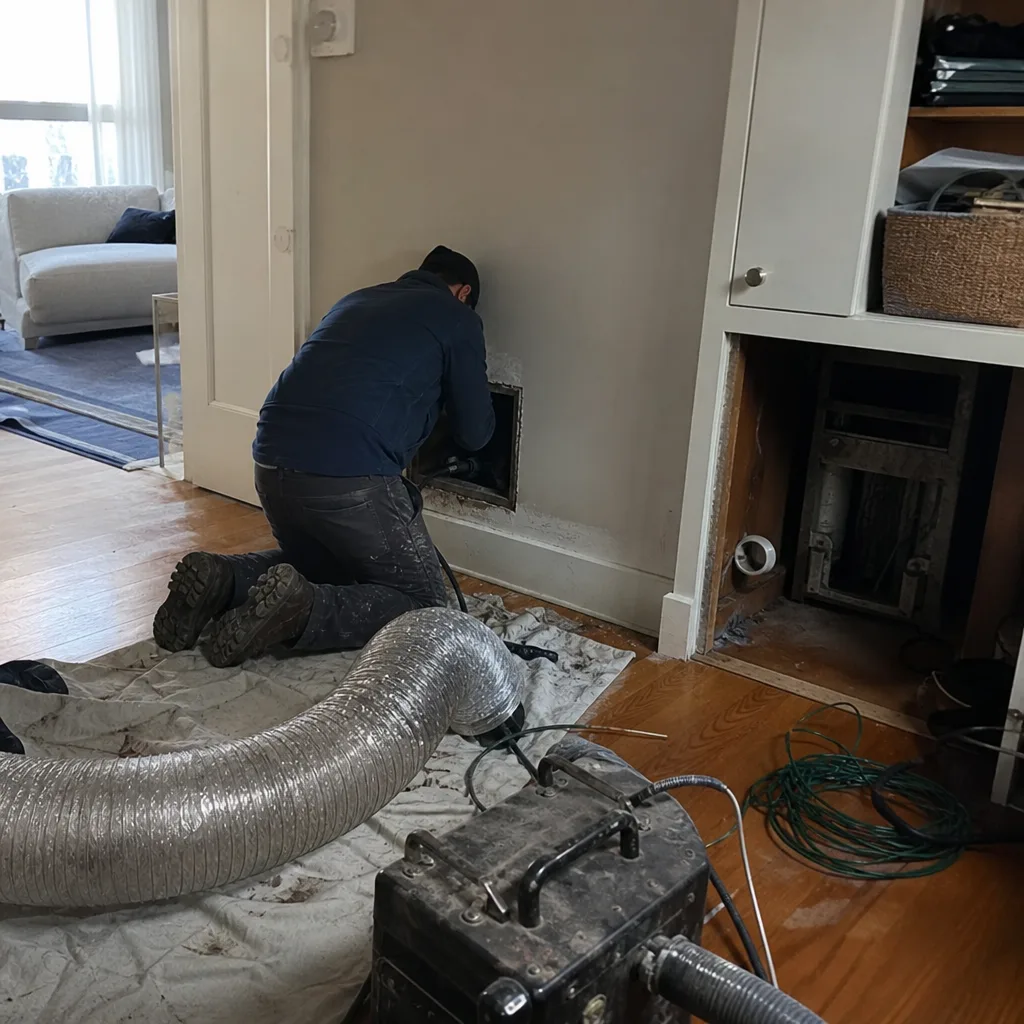 Before
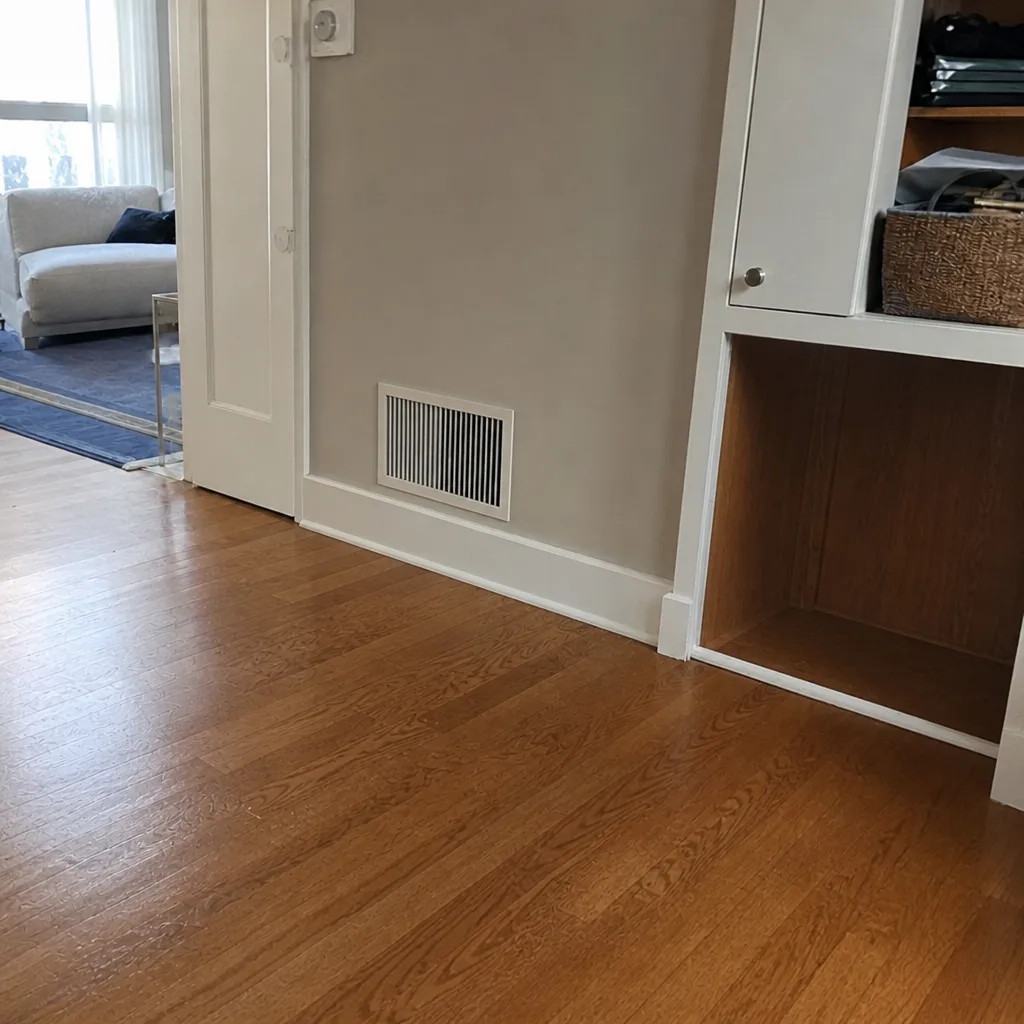 After
When to Call a Professional
Some findings warrant a call rather than a note in your log. Call if a register has gone from strong to weak between checks, if you see dust streaks at duct joints or a visibly separated connection, if a supply register is sweating or you smell dampness near a duct run, if a filter is loading in under six weeks, or if you’ve just finished a renovation or installed new equipment. Any of those means the system needs to be opened up and looked at with proper equipment.
If you’re seeing debris at registers or a pest issue, don’t run the system while you wait for an appointment. Call (855) 632-0215 for a free estimate. Our technicians have up to 14 years of experience, and we handle cleaning, repair, and dryer vent work. We answer 24/7. Fast dispatch from 7am to 7pm, Sunday through Friday. We’re closed Saturday.
Frequently Asked Questions
Every three to five years is a reasonable baseline for a typical home with no special circumstances. Move that up if you’ve renovated, installed new equipment, noticed a filter loading faster than usual, or have respiratory sensitivity in the household. The schedule should follow what your checklist turns up, not a fixed calendar.
Look for dust streaks radiating from joints and seams, which appear where escaping air carries dust and deposits it at the gap. A register that’s weaker than its neighbors and getting weaker over time is another clear sign. Both are visible with a flashlight on an accessible run.
The most common causes are a disconnected or crushed flex run, a closed damper, or debris and a pest nest blocking the branch near its takeoff. It’s a localized problem, not a system-wide one, and it needs the duct itself inspected rather than the equipment adjusted.
Yes, and the filter isn’t a substitute. A filter captures what reaches it, but it can’t remove debris that’s settled in the ductwork, and it won’t reveal a failing liner or a broken connection. Cleaning addresses what the filter never sees.
It does. Sustained humidity can cause condensation on under-insulated duct runs, which saturates duct wrap and degrades interior liner over time. Sweating registers and a musty smell near a duct run are the indicators worth watching for through July and August.
It depends on the company. Many duct cleaners clean and nothing else, which leaves a broken connection untouched. We handle cleaning, repair, and dryer vent work, so one visit can address both contamination and structural problems in the ductwork. Call (855) 632-0215 for a free estimate.
The Bottom Line
A maintenance checklist earns its keep by catching change, not by tracking a schedule. Check airflow room by room twice a year. Read your filters for pattern and loading rate, not just color. Log runtime against outdoor temperature so you have a trend line. Watch for condensation on registers through the humid months. Walk the accessible runs once a year with a flashlight and write down what you find. Those observations tell you whether your ducts need cleaning, repair, or both, and they let a contractor quote the actual job. Duct Cleaning Quincy offers free estimates in Quincy and the surrounding area. Call (855) 632-0215. We answer 24/7. Fast dispatch from 7am to 7pm, Sunday through Friday. We’re closed Saturday.
Written by the team at Duct Cleaning Quincy.