
Last updated November 15, 2026
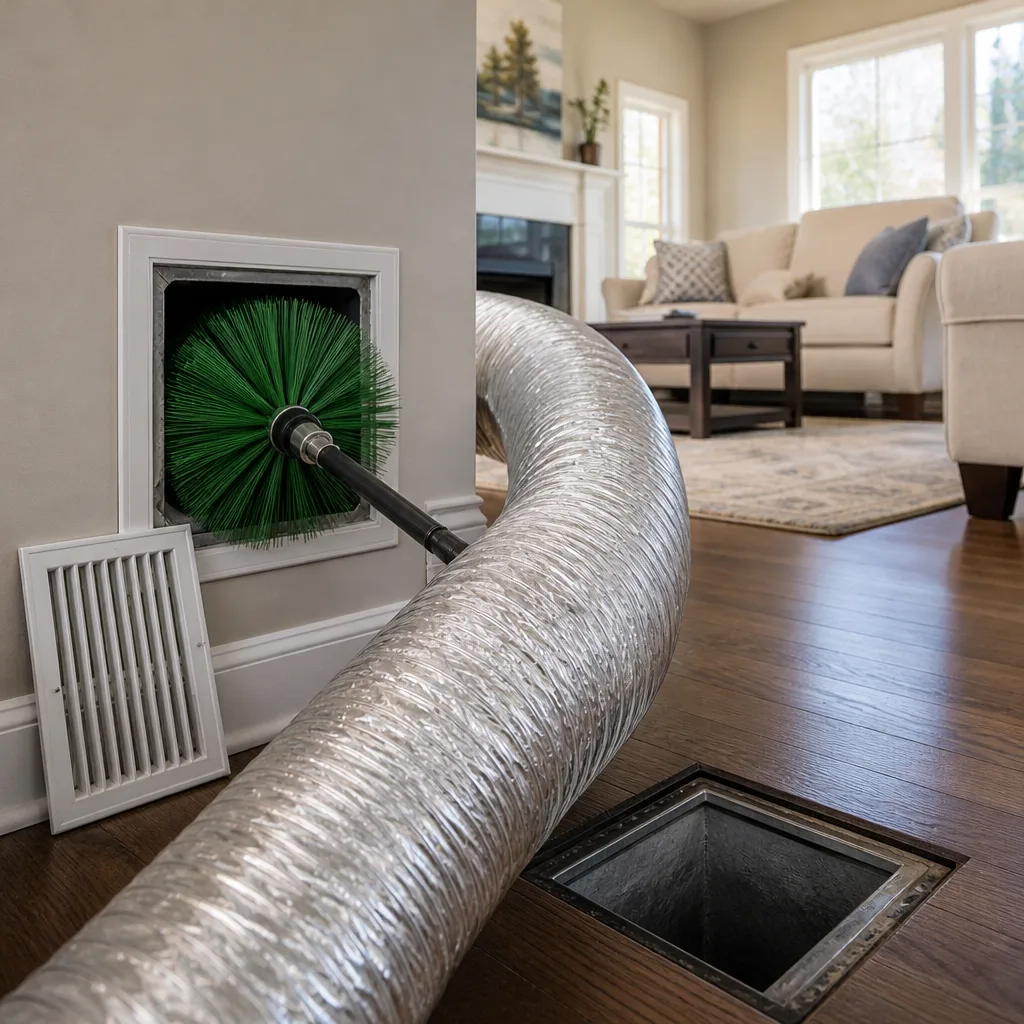 Whole-home duct cleaning
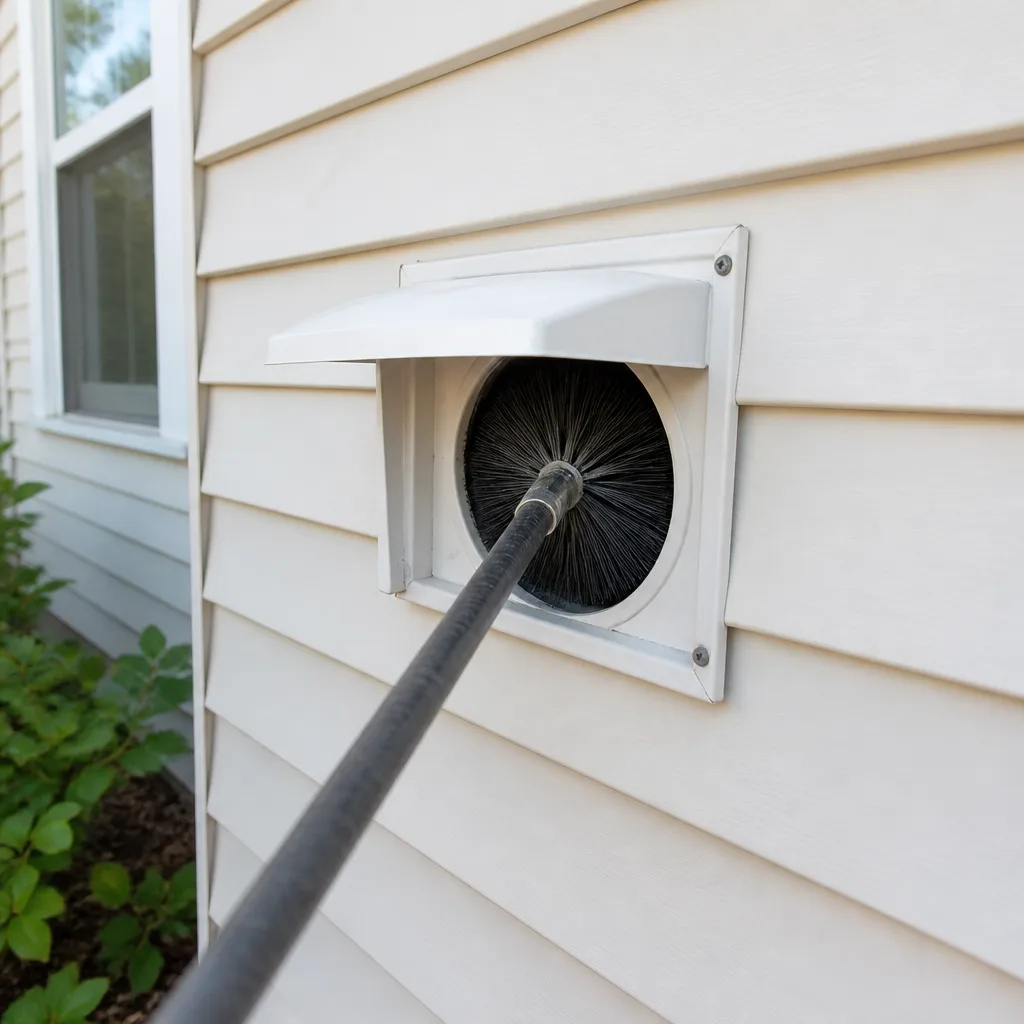 Dryer vent cleaning
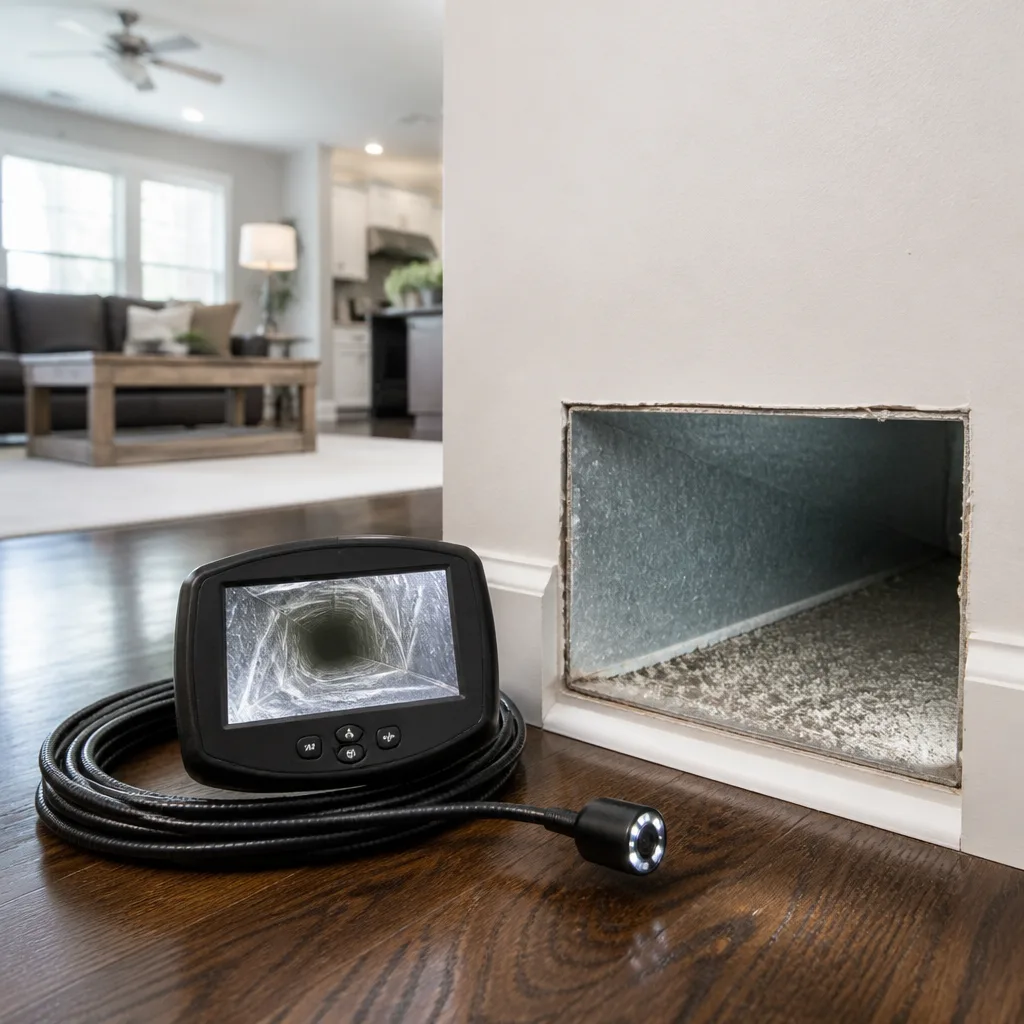 Camera inspection
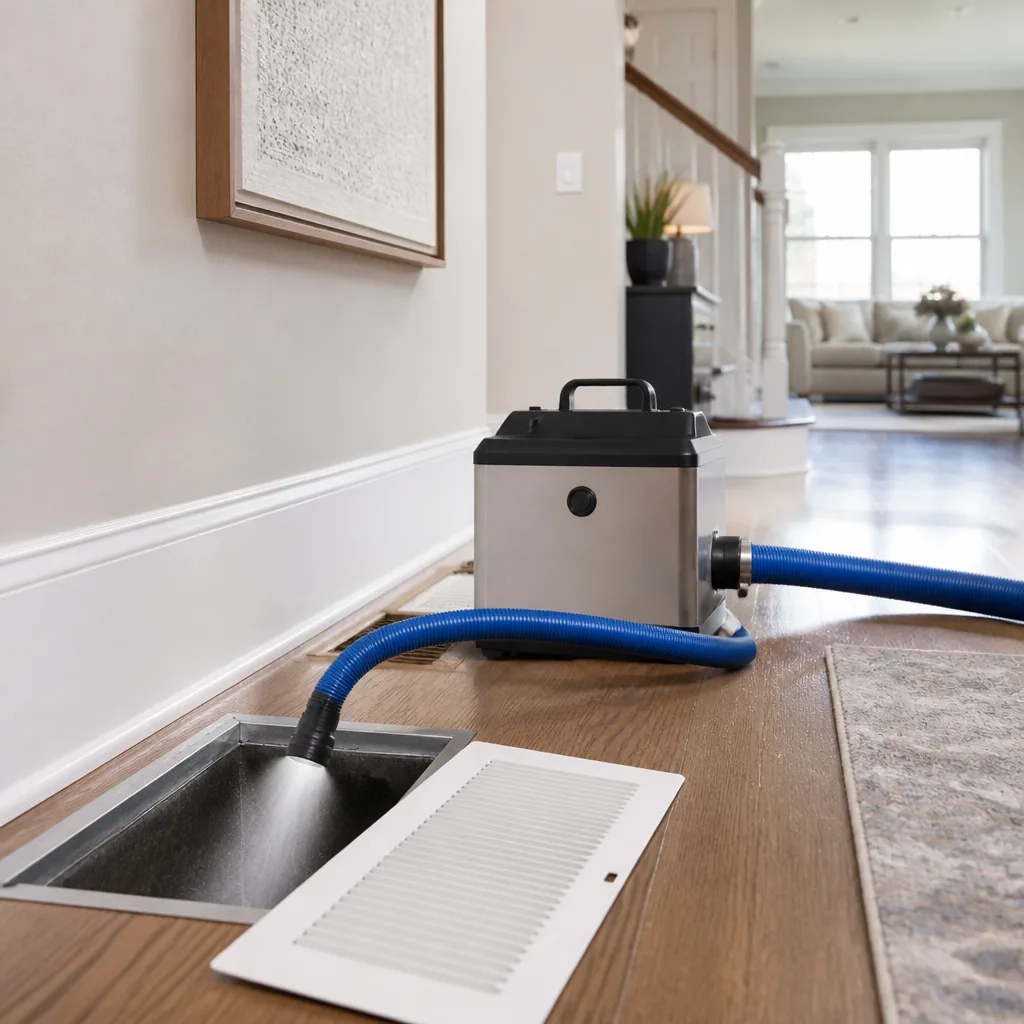 Sanitizing & deodorizing
Whole-system duct and dryer vent check with before-and-after photos - you see exactly what came out of your vents
That "$99 whole-house special" is a bait ad - the real number appears once they are in your hallway, or the "clean" is a shop-vac at the register. We photograph the inside of your ducts before and after instead.
Air Duct Cleaning Troubleshooting in Quincy: Common Problems and How to Fix Them
Here’s the part most duct cleaning companies won’t tell you: if your house is still dusty two weeks after a professional cleaning, the cleaning probably worked fine. What likely failed is the ductwork itself. A disconnected joint in the basement, a gap where a trunk line meets a boot, or a collapsed flex run in the attic pulls crawlspace or attic air straight into your living space every time the blower kicks on. Cleaning a system that leaks is like mopping a floor with the window open. In this guide, we’ll show you how to tell a dirty duct system from a broken one, how Quincy’s triple-deckers and older colonials behave differently from newer construction, and when a repair has to happen before a cleaning so you don’t re-contaminate a fresh job.
Quick Answer
If your home is still dusty, uneven, or musty after an air duct cleaning in Quincy, the cause is usually structural: a disconnected duct, an open gap, or a crushed flex section pulling unconditioned air into the system, not leftover debris. Cleaning removes what’s inside the ducts; it doesn’t seal them. The fix is a diagnostic inspection that checks airflow, static pressure, and every accessible joint, followed by duct repair before any re-cleaning.
Styles & brands we work with
- Whole-home duct cleaning
- Dryer vent cleaning
- Camera inspection
- Sanitizing & deodorizing
Table of Contents
- How to Tell Dirty Ducts From Damaged Ducts
- What Duct Pressure Imbalance Looks Like in Quincy Homes
- Why Mold Smell Comes Back After Cleaning
- The Tools a Real Diagnosis Requires
- When Repair Must Come Before Cleaning
- Dryer Vent Problems That Look Like Duct Problems
- How Quincy Building Types Change the Diagnosis
- What to Do Next: A Step-by-Step Plan
How to Tell Dirty Ducts From Damaged Ducts
Dirty ducts and damaged ducts produce overlapping symptoms, and that’s exactly why so many homeowners pay for a cleaning that doesn’t solve the problem. The distinction comes down to three senses: how the air feels, what the registers look like, and what the house smells like.
Feel the airflow at each supply register with your hand, one at a time, while the system runs. A dirty system tends to feel weak everywhere – reduced but consistent. A damaged system feels uneven: strong at registers close to the air handler, weak or dead at the far end of the house. That pattern points to a leak or a disconnected run bleeding pressure before the air ever reaches the far rooms.
Look at the register grilles. A fine, even film of dust is normal between cleanings. Streaks of dark residue radiating from one side of a grille, or a grille that’s noticeably dirtier than the one across the hall, often means air is being pulled through a gap nearby and depositing debris as it goes. In a Quincy triple-decker, that gap is frequently right at the transition between a floor joist bay and a ceiling boot.
Smell tells you the most. Dust has a dry, flat smell. A damaged duct pulling air from a damp basement, a crawlspace, or a wall cavity usually brings something else with it: a musty, earthy, or “old building” smell that shows up only when the system runs and fades when it stops. If the smell tracks the blower, you’re looking at a duct problem, not a cleanliness problem.
One more tell: dust that reappears within days in one specific room while the rest of the house stays reasonably clean. Localized recurrence almost always means localized leakage or a disconnected branch serving that room.
What Duct Pressure Imbalance Looks Like in Quincy Homes
Duct systems are supposed to run at balanced pressure: the supply side pushes air out and the return side pulls it back at roughly equal volume. When that balance breaks, you get symptoms that look like cleaning problems but are actually pressure problems.
In a Quincy triple-decker, the classic pattern is a system that serves multiple floors from a single air handler, often with long, cramped runs squeezed between original plaster ceilings and later renovations. When one of those runs gets crushed during a remodel, or a joint separated during a floor repair, the blower keeps pushing the same volume of air through fewer open paths. The result is a house that feels over-pressurized on one floor and starved on another. You’ll notice doors that don’t latch easily when the system runs, or a whistling at one register that wasn’t there before. Those are pressure symptoms, not dirt symptoms.
In older Quincy colonials, the imbalance usually shows up as a hot or cold room that never quite catches up, even after a cleaning, filter change, and a look at the thermostat. If that room has a dedicated duct run and the run is intact but leaky, sealing it can recover most of the lost airflow.
Newer construction tells a different story. Tightly built homes with flex duct run through conditioned space can suffer from undersized returns instead of leaks. The system can’t pull air back fast enough, the blower strains, and pressure builds behind a closed bedroom door. Cleaning doesn’t help here either; the fix is a return-air correction.
The habit that saves money: before you call anyone, walk the house and write down which rooms feel strong, which feel weak, and whether the weakness is new. That list is the single most useful thing you can hand a technician, and it takes ten minutes to make.
Why Mold Smell Comes Back After Cleaning
A musty smell that returns within weeks of a professional cleaning is almost never a cleaning failure. It’s a moisture signal. Mold and mildew need water, and if the smell keeps coming back, there’s a moisture source feeding it somewhere in the system: a condensate pan that isn’t draining, a humidifier bypass that’s wet, a return duct running through a damp basement or crawlspace, or an interior wall cavity that stays humid because of a plumbing leak.
Finding it is a matter of narrowing the source:
- Trace the smell to a location. Does it concentrate near one return grille, one supply register, or the air handler closet? That location is your starting point.
- Check the air handler and coil. A coil that stays wet, a pan with standing water, or a plenum lined with damp insulation is a common culprit in Quincy homes, especially after a humid stretch of summer.
- Look at the return path. If a return duct runs through a basement or crawlspace, inspect the exterior of the run for condensation or saturation.
- Check for a plumbing or roof leak nearby. A wet ceiling near a duct boot can feed the smell into the system without ever showing on the ceiling itself.
- Confirm the duct interior is dry. A technician can inspect the inside of the system and tell you whether the moisture is on the duct walls or upstream of them.
Here’s the part that matters for your wallet: if you clean the system and don’t fix the moisture, the smell returns and the contamination starts over. Moisture control comes first. Cleaning comes after, and only after the source is dry. On jobs with serious contamination, we use Abatement Technologies negative-air equipment to contain the work area and keep spores from spreading through the house during the process.
The Tools a Real Diagnosis Requires
A shop vac and a phone camera can confirm a duct is dirty. They cannot tell you where your system is losing pressure or whether a run has disconnected. That’s why the diagnostic step is the one worth paying attention to.
Here’s what serious equipment does, in plain terms:
- Rotary brush agitation (Rotobrush). A rotating brush physically loosens debris that’s adhered to duct walls. Blowing air through a system without agitation often moves surface dust and leaves the packed material behind.
- HEPA-rated vacuum capture (Nikro). The vacuum has to hold what the brush frees. HEPA capture keeps dislodged particulates out of your living space instead of recirculating them.
- Negative-air containment (Abatement Technologies). On heavier jobs, negative pressure keeps the work zone at lower pressure than the rest of the house, so anything disturbed flows toward the machine, not the bedrooms.
- Static pressure measurement. A technician reads pressure at the air handler’s supply and return. High readings point to blockage or undersized returns; low or uneven readings point to leaks.
- Smoke pencil or airflow visualization. A small visible smoke stream at a joint shows instantly whether the joint is drawing air in or pushing it out. On a disconnected duct, it’s the fastest confirmation available.
- Interior camera inspection. A flexible camera shows the inside of a run, so a technician can see a collapsed flex section or a separated joint directly rather than guessing from outside.
When a technician shows up with only a camera and a shop vac, they can clean what’s dirty. They can’t tell you if a repair is needed. We pair our cleaning work with through-brand equipment because the point of an inspection is to give you a straight answer, not to sell you the cleaning.
When Repair Must Come Before Cleaning
This is where most homeowners get the order wrong, and it’s expensive when they do. If the duct system is actively pulling dirty attic or crawlspace air, cleaning it first is a waste. The system re-contaminates the moment the blower restarts.
The order of operations is straightforward:
- Diagnose. Airflow measurement, joint inspection, smoke testing on accessible joints, and a look inside the system.
- Repair. Seal gaps, reconnect separated joints, replace crushed flex runs, and address any moisture source found during the inspection.
- Clean. With the system sealed, the cleaning pulls dust from a contained system instead of fighting incoming air.
- Verify. Re-check pressure and airflow at the registers that were weak before the work. Confirm the reading improved.
There’s a reason we offer air duct repair alongside cleaning: these aren’t separate errands that happen months apart. One visit can tell you whether your ducts need cleaning, repair, or both, and one visit can often handle both. That’s why we carry the same equipment HVAC remediation crews rely on. We’re not a cleaning-only outfit leaving the structural problems behind. If a joint is open, we seal it. If a run is crushed, we replace it. If a system has a disconnected duct, that’s the job, not an upsell.
Dryer Vent Problems That Look Like Duct Problems
Not every dust-and-humidity complaint in a Quincy home traces back to the HVAC ductwork. The dryer vent is a separate duct, and a clogged one produces symptoms homeowners routinely misattribute: a laundry room that feels humid, lint drifting into nearby rooms, clothes that take two cycles to dry, and a warm dryer cabinet when the machine shuts off. It’s also a fire risk. The U.S. Fire Administration documents that dryer vent lint is a leading cause of residential fires, and a vent choked with lint is the single most common setup for that failure.
The diagnostic is simple: run the dryer on a cold cycle and go outside to the exterior vent hood. You should feel a strong, steady airflow within seconds. Weak or absent airflow means the run is restricted somewhere along its length. In older Quincy homes with long vent runs and several elbows, lint accumulates faster than in short runs.
When we clean a dryer vent, we clear it end to end, not just at the flap. We also check the transition duct behind the dryer, the exterior hood, and for the sagging flex runs that let lint collect. See our dryer vent cleaning service for the full scope. If your airflow at the registers is fine and your laundry is slow, this is the section to pay attention to.
How Quincy Building Types Change the Diagnosis
The building stock in Quincy changes what a duct problem looks like from house to house. A diagnostic that ignores the type of construction is only guessing.
Triple-deckers. These homes often have duct systems retrofitted decades after the original build, tucked between joist bays and attic space. That means long, indirect runs and plenty of opportunities for a joint to separate. The tell in a triple-decker is a single floor that never heats or cools the same as the others.
Older colonials. Longer horizontal runs with more elbows. Debris deposits more heavily at each turn, and pressure loss compounds with distance. Dust reaccumulation along the back bedrooms is common. The repair here is usually at the joints, and the cleaning needs real agitation to reach deposits past the elbows.
Postwar capes and ranches. Shorter runs, simpler layouts, but often the air handler sits in a crawlspace or basement with unconditioned air around it. If a plenum or trunk joint there is open, the system pulls basement air every time it runs. That’s a repair-first situation.
Newer construction. Tighter envelopes, fewer leaks, but returns that are too small for the room count. The symptom is a system that runs loud and pushes air weakly. Cleaning doesn’t change it. Return-air correction does.
Quincy’s climate also plays a role. Humid summers make moisture intrusion more visible, and cold winters put real stress on every duct joint through expansion and contraction. Troubleshooting in winter should always start with a check for disconnections in unconditioned spaces. When we work in a home here, we treat the building type as part of the diagnosis from the first walk-through.
What to Do Next: A Step-by-Step Plan
If you’re reading this because your ducts don’t seem fixed, here’s the order that gets you a real answer:
- Write down the symptom pattern. Which rooms are affected, when it started, whether the smell tracks the blower.
- Feel every register. Note strong and weak ones. That map tells a technician more than any description.
- Check the filter and the air handler. A clogged filter produces weak airflow across the whole house, which is easy to mistake for duct damage.
- Inspect the dryer vent separately if laundry is slow or the laundry room feels humid.
- Request a diagnostic before a cleaning. Ask specifically whether the technician will measure pressure and check joints, not just run a camera.
- Get the diagnosis in writing. What’s dirty, what’s broken, and what order the work needs to happen in.
If the diagnosis comes back as routine contamination and nothing structural, a professional cleaning will help. Start with air duct cleaning and we’ll confirm during the inspection that no repair is needed first.
See the difference
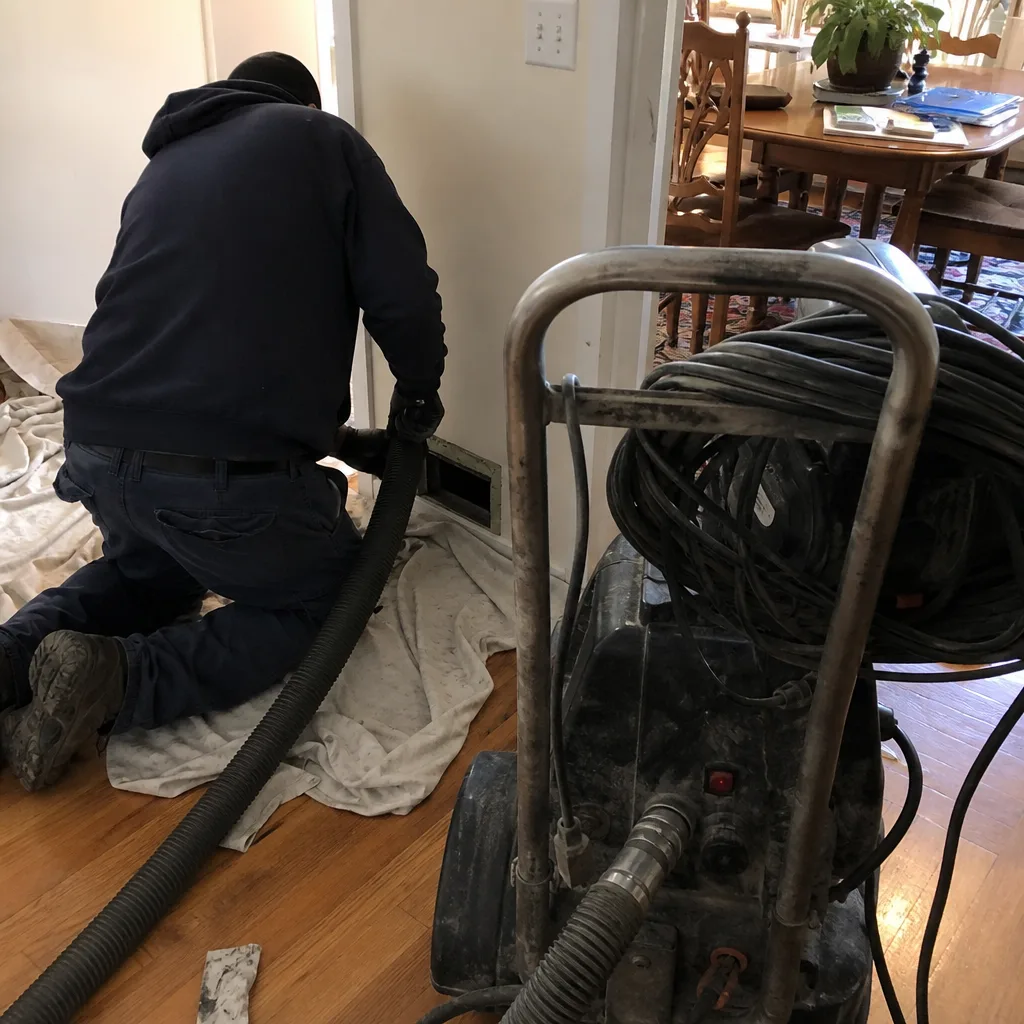 Before
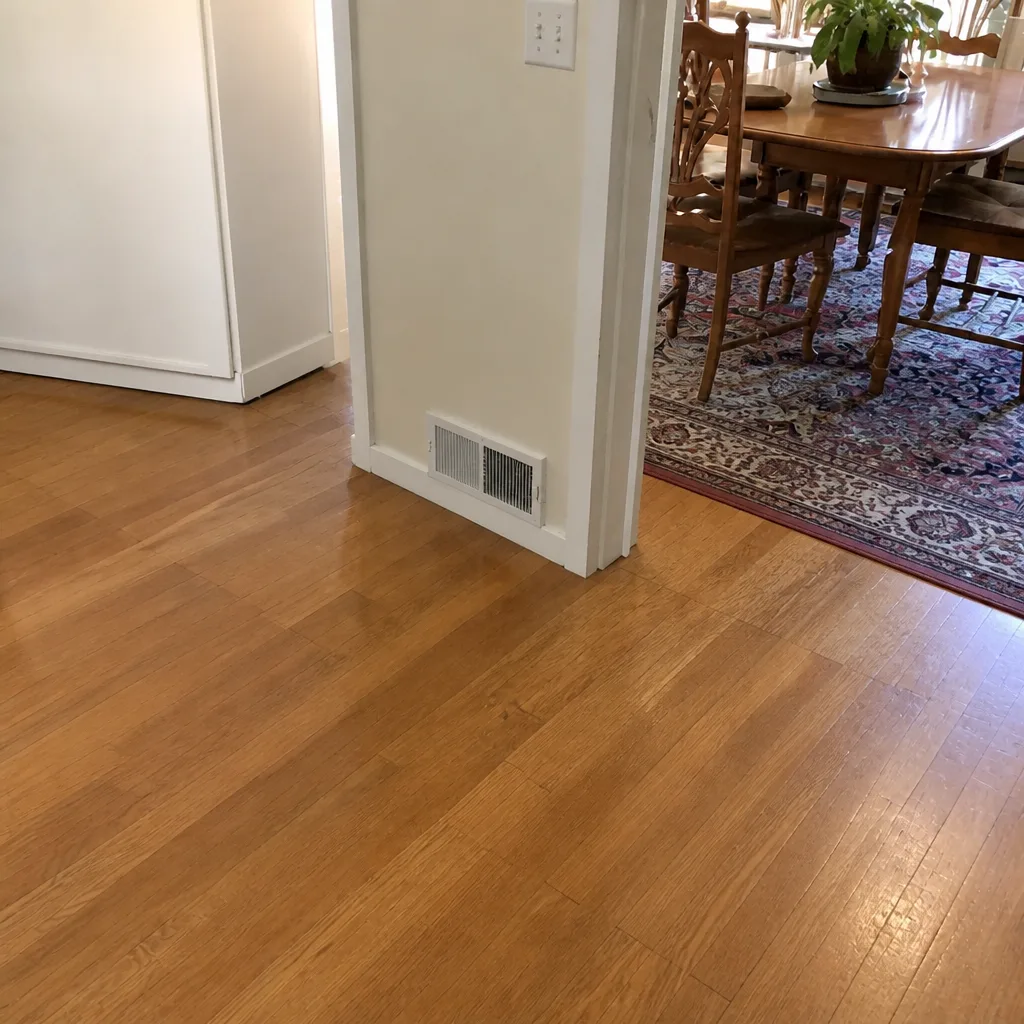 After
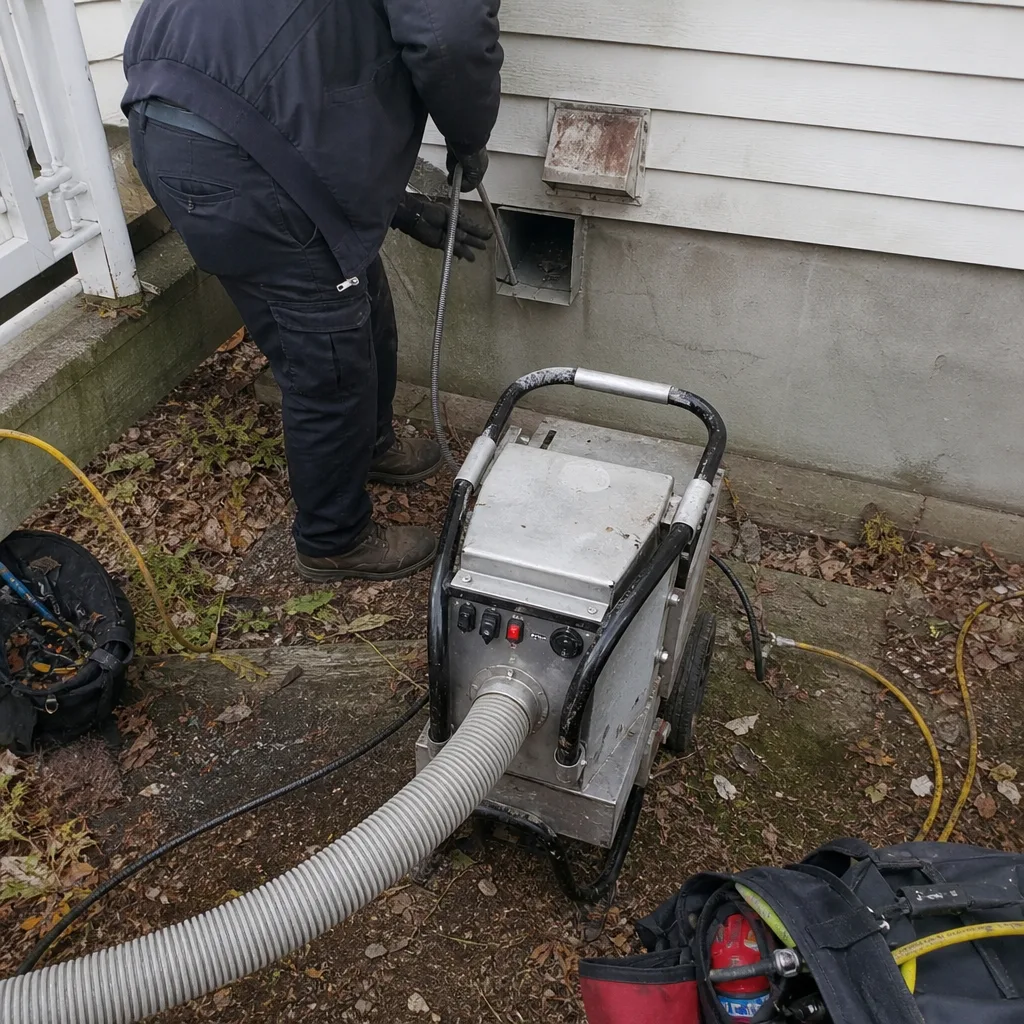 Before
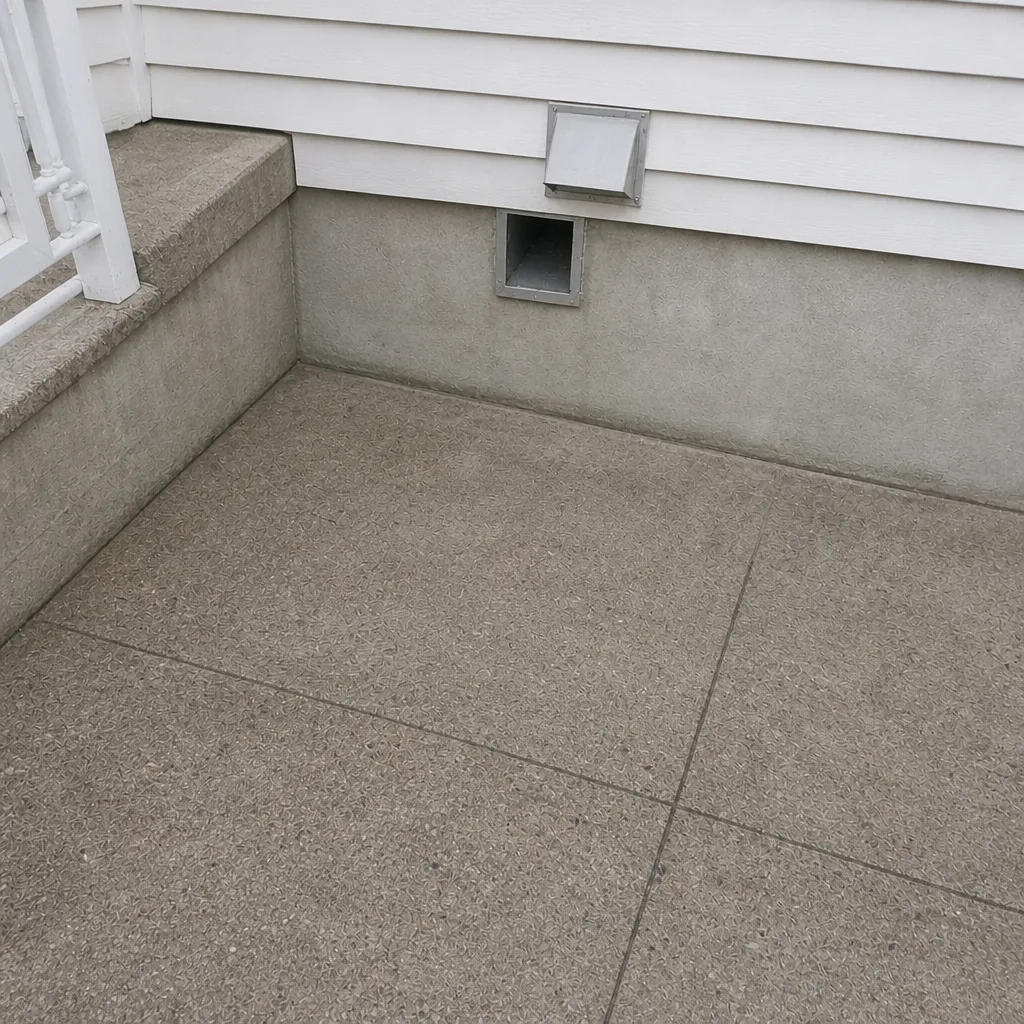 After
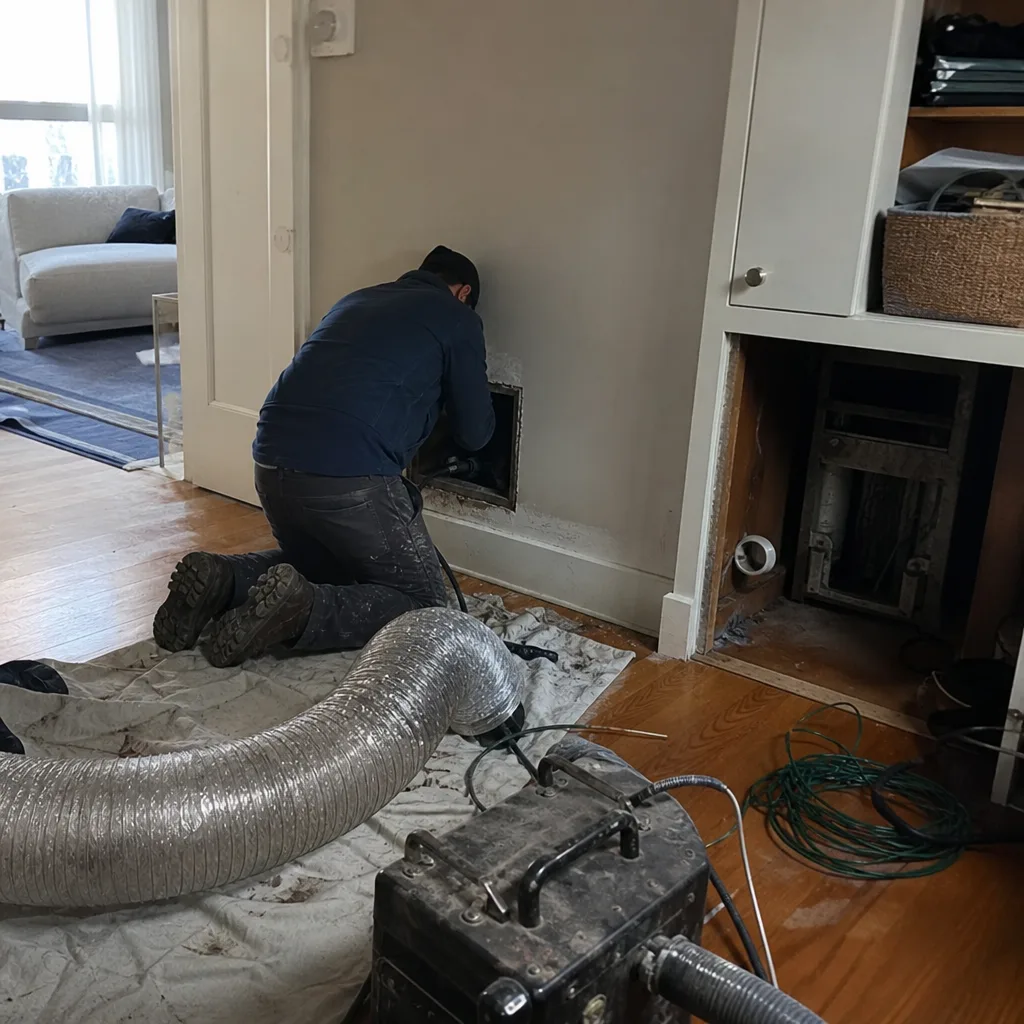 Before
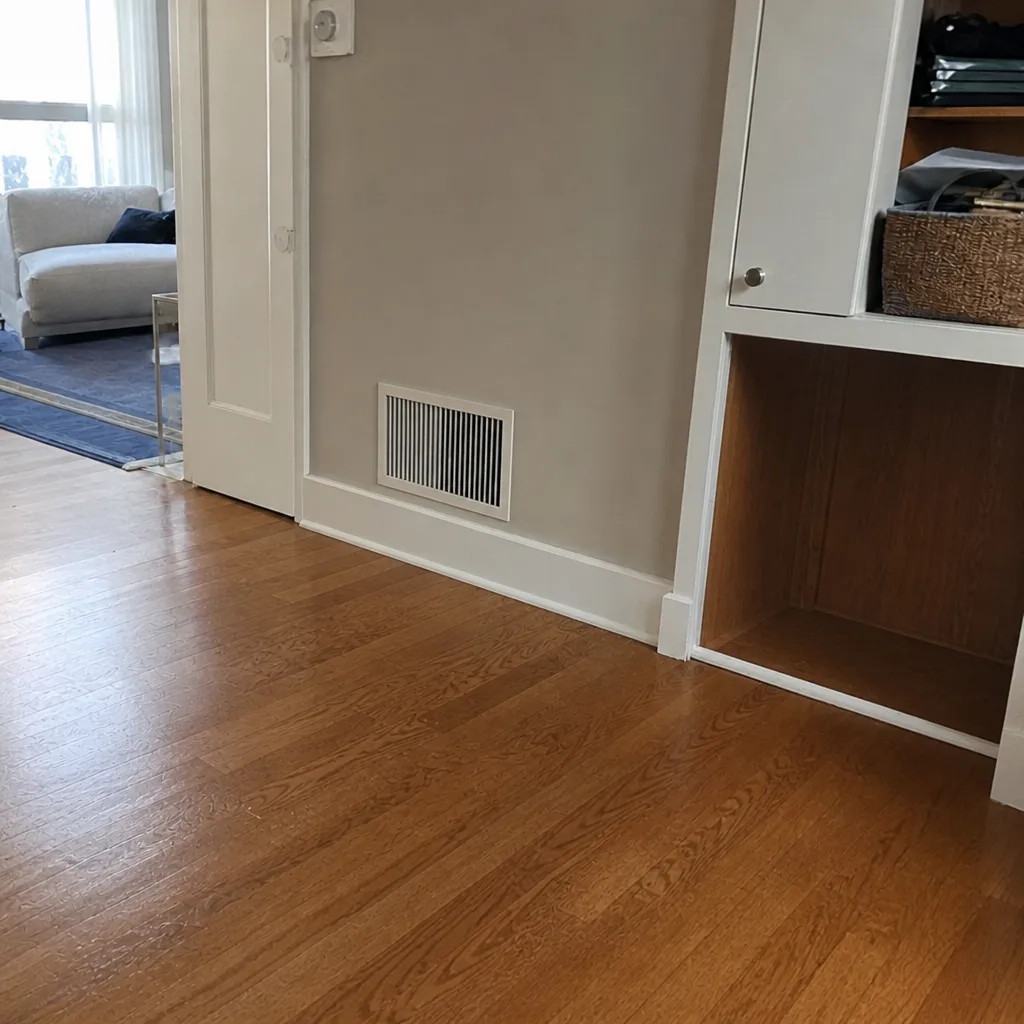 After
Common Mistakes to Avoid
- Cleaning before diagnosing. If a duct is disconnected, you’ll re-contaminate the system the moment the blower runs. Find the fault first, then clean.
- Assuming a musty smell means the cleaner did a poor job. A returning musty smell means you have a moisture source. Cleaning can’t dry out a wet coil or a damp return run.
- Skipping the registers during the pre-call walk-through. Feeling each register is free and takes five minutes. It’s the map that guides the diagnosis, and skipping it wastes everyone’s time.
- Choosing a quote that offers only a camera and a shop vac. A camera can see dirt. It can’t measure pressure or confirm a joint is open. Ask what equipment will actually be used before you book.
- Ignoring the dryer vent when the symptoms point at it. Slow drying, a humid laundry room, and lint drifting into the hall are dryer vent signals, not duct-cleaning signals. They’re separate jobs.
- Letting a moisture problem run into the cleaning season. If a coil or a return is wet, dry it first. Cleaning a damp system is a short-lived fix, and in Quincy’s humid stretch, the return of the smell is nearly guaranteed.
- Assuming a newer home can’t have duct problems. New construction often runs undersized returns. The airflow is weak, but the fault is system design, not accumulation. Cleaning won’t fix it, and knowing that up front saves money.
When to Call a Professional
Some of this guide is DIY-friendly: feeling registers, checking the filter, testing the dryer vent hood, and writing down which rooms are affected. But the moment a diagnostic needs pressure measurement, an interior camera, smoke testing at joints, or an actual repair, it’s time to call someone. The same goes for anything involving the electrical side of the air handler, gas connections, or work in a crawlspace. We’d rather a technician handle those than have a homeowner elbow-deep in an energized system.
Duct Cleaning Quincy offers free estimates in Quincy – call (855) 632-0215. We use Rotobrush and Nikro equipment for cleaning, and we can find, seal, and repair the duct faults most cleaning-only companies leave behind.
Frequently Asked Questions
Likely nothing went wrong with the cleaning itself. The most common cause is a structural duct fault (a disconnected joint, a gap at a boot, or a crushed flex run) that keeps pulling attic, basement, or crawlspace air into the living space. Sealing the fault is the fix, not another cleaning. Call (855) 632-0215 and we’ll check joints and pressure during a free estimate.
Air duct cleaning is priced as one flat rate for the whole system, quoted on a written estimate after the system is inspected, so there’s no per-duct or per-vent pricing and no bait-and-switch. We know the industry has earned a reputation for teaser coupons that turn into a much larger invoice, which is why we set the price up front, agree it before work starts, and show before-and-after photos of your own ducts. We never quote per register. Call (855) 632-0215 for an exact quote; estimates are free.
Cheap quotes usually mean light equipment: a shop vac and a surface pass instead of rotary brush agitation and HEPA capture. The duct walls that need contact agitation don’t get it, and dislodged debris recirculates into the house. In our experience, most of the difference between a low quote and a professional one comes down to equipment. Our technicians have up to 14 years of experience, and they’ll show you what the equipment is doing. Short answer: a low quote often buys less, not more. Call (855) 632-0215 for a free estimate.
Airflow being uneven room to room is the strongest signal. If one register feels strong and one at the far end feels weak, you’re losing pressure somewhere. If a musty smell returns within weeks of cleaning, or starts as soon as the blower runs, that points to a moisture source and likely a disconnected run or a leak pulling from a damp space. Cleaning alone won’t fix either. Whether you’re on a schedule or not, our technicians diagnose both in one visit because we do duct repair, not just cleaning. Call (855) 632-0215.
There’s no universal schedule; it depends on the house. A home with pets, recent renovation dust, or a chronic allergy complaint often benefits from cleaning; a sealed, well-filtered system with no symptoms might not need it at all. Signs it’s time: dust returning quickly, visible accumulation on registers, or a smell that turns on with the blower. If you’re unsure, the free estimate answers it. We’d rather tell you the system is fine than charge you for a cleaning you don’t need. Call (855) 632-0215.
We use Rotobrush rotary brush systems for agitation, Nikro HEPA vacuums for capture, and Abatement Technologies negative-air equipment for containment on heavier jobs. We also work with Honeywell and Aprilaire products for whole-home air-quality needs. You don’t have to inspect the equipment yourself, but asking a technician what they’ll actually use is a fair question, and you’ll see the setup when they arrive. It tells you the difference between a real cleaning and a surface pass. Call (855) 632-0215 for a free estimate.
The Bottom Line
Most duct problems that don’t respond to a cleaning aren’t cleaning problems at all. They’re structural: leaks, disconnections, crushed runs, or pressure imbalances that keep pulling outside air into your home. The right order is diagnose, repair, clean, verify. If you remember one thing from this guide, make it this: an honest diagnostic makes the cleaning worth doing, and skipping the diagnostic is how homeowners pay twice. Whether you need air duct cleaning in Quincy, a repair estimate, or a straight answer on whether your ducts need anything at all, our team can tell you in one visit. Call (855) 632-0215. We answer 24/7. Fast dispatch from 7am to 7pm, Sunday through Friday. Estimates are free, and the price is set per job by the written estimate before any work starts.
Written by the team at Duct Cleaning Quincy.