
Last updated November 15, 2026
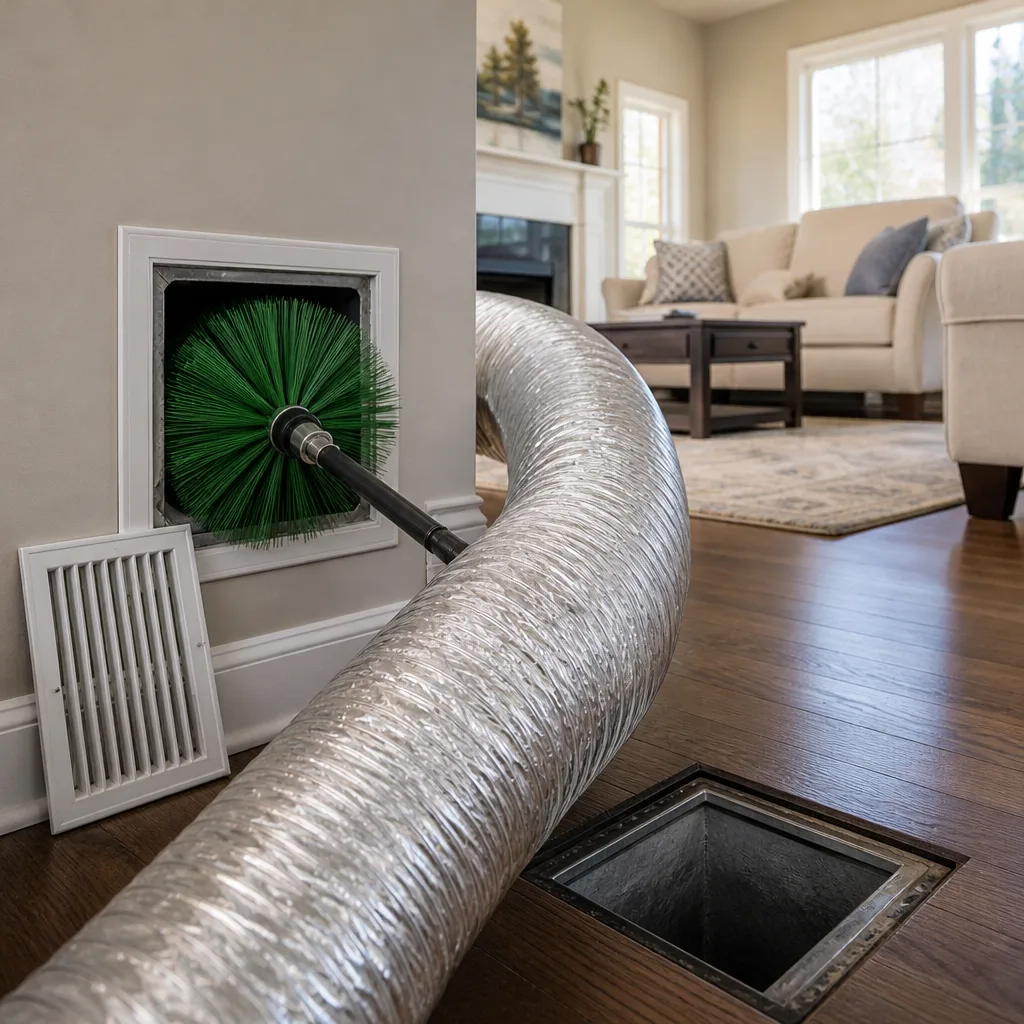 Whole-home duct cleaning
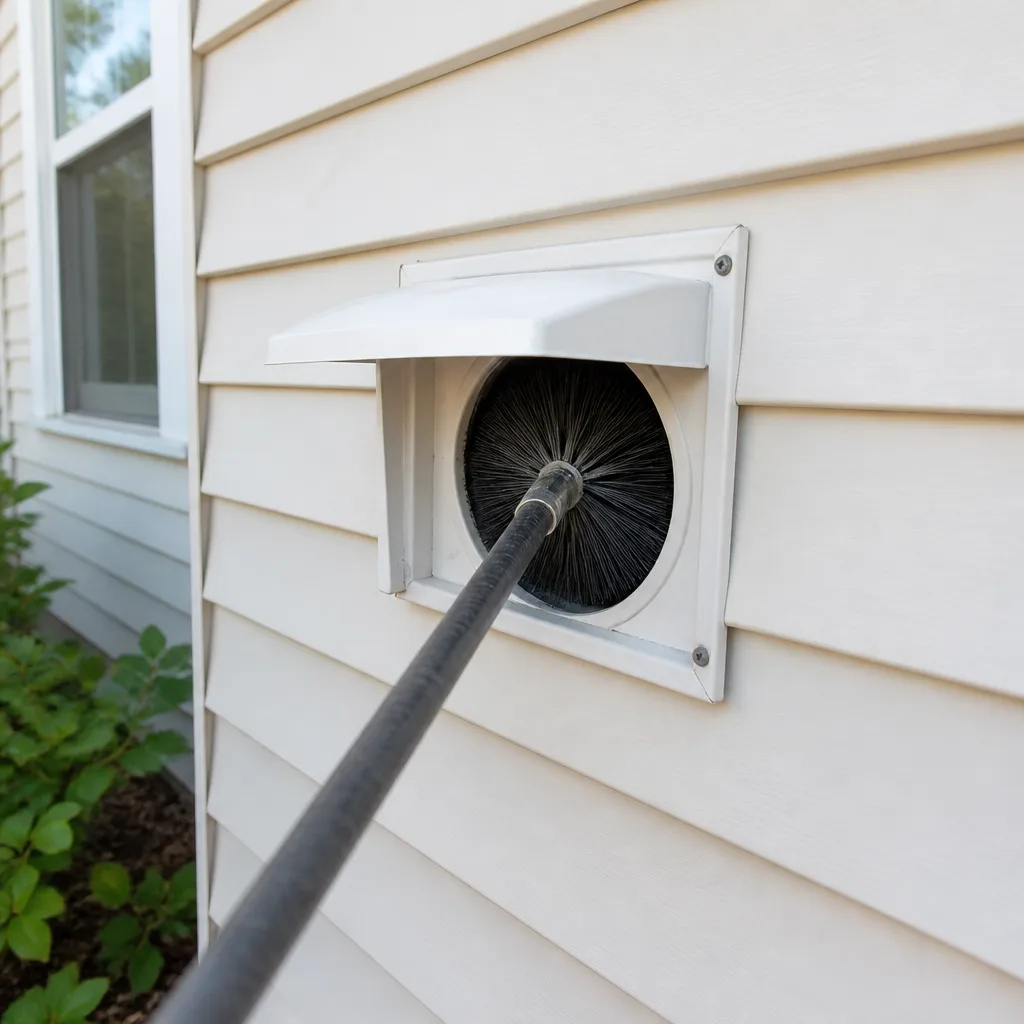 Dryer vent cleaning
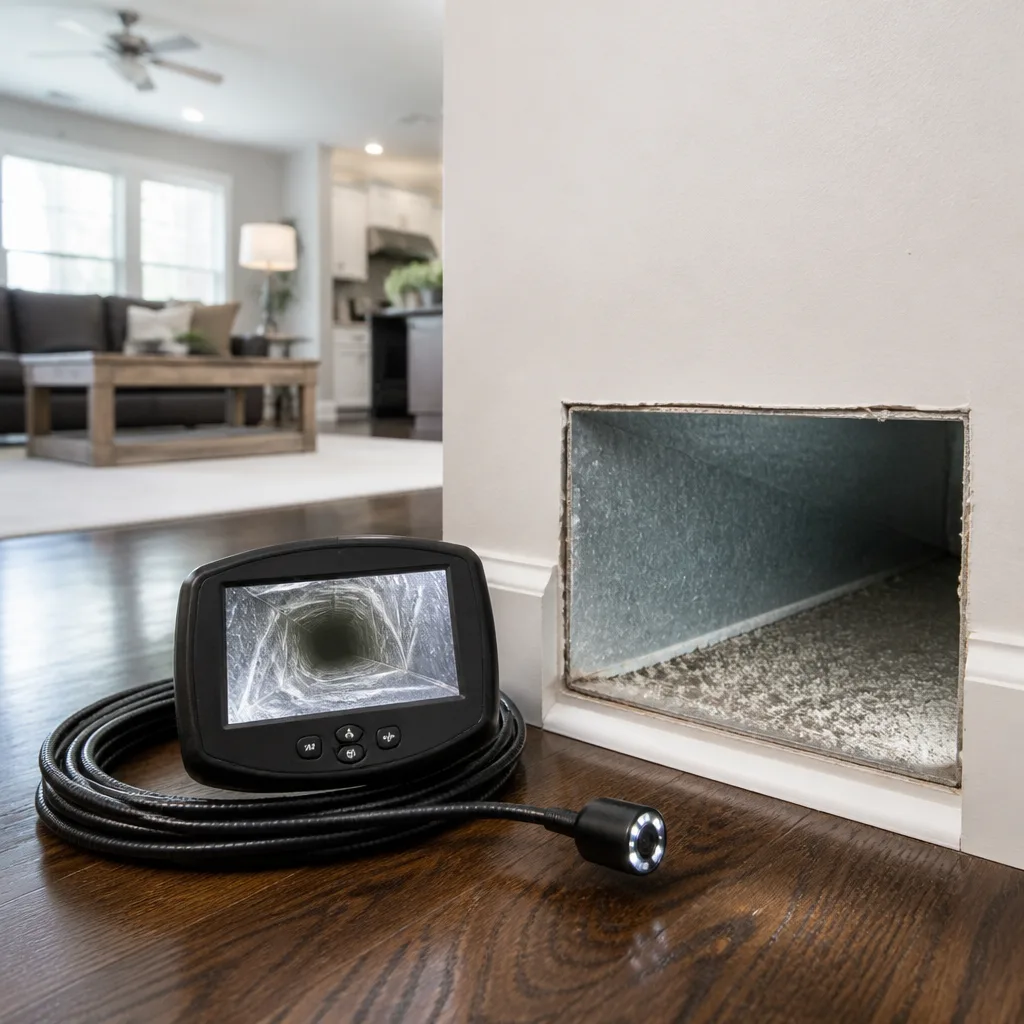 Camera inspection
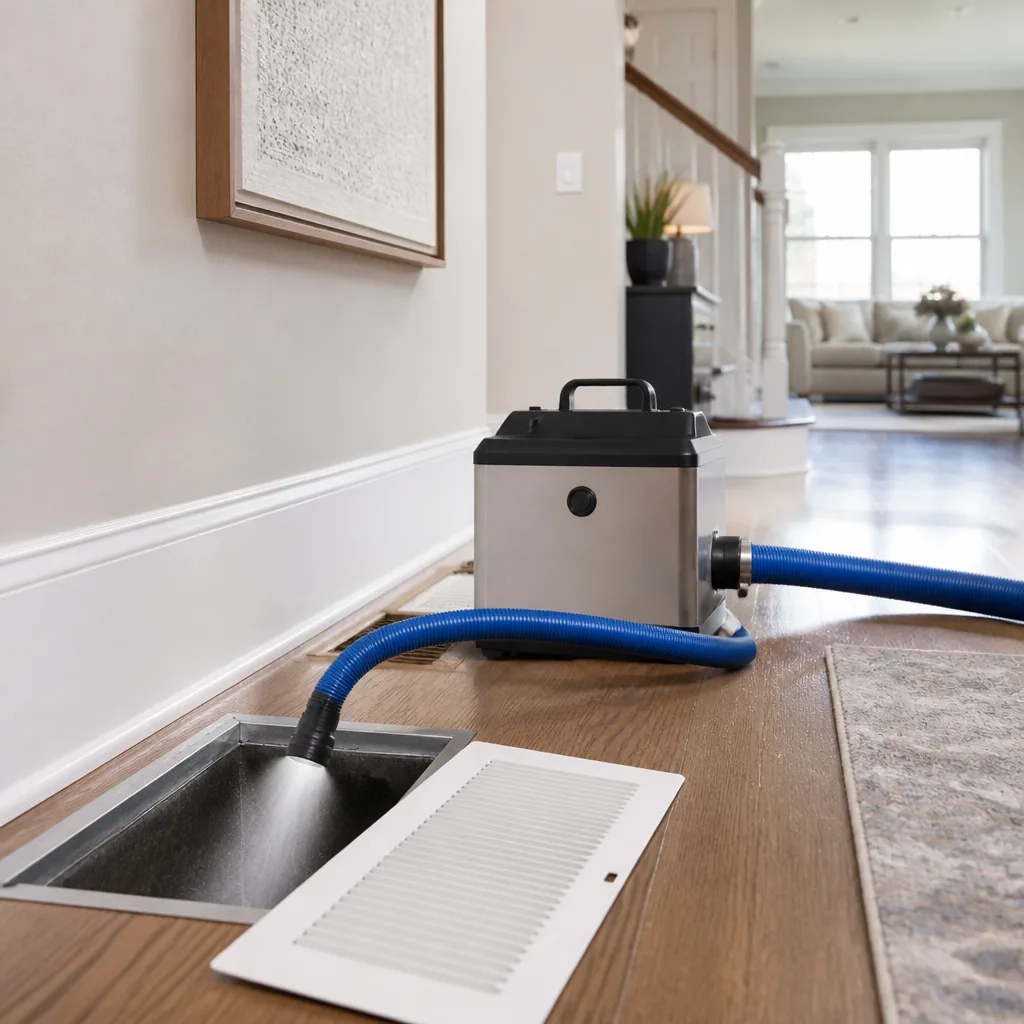 Sanitizing & deodorizing
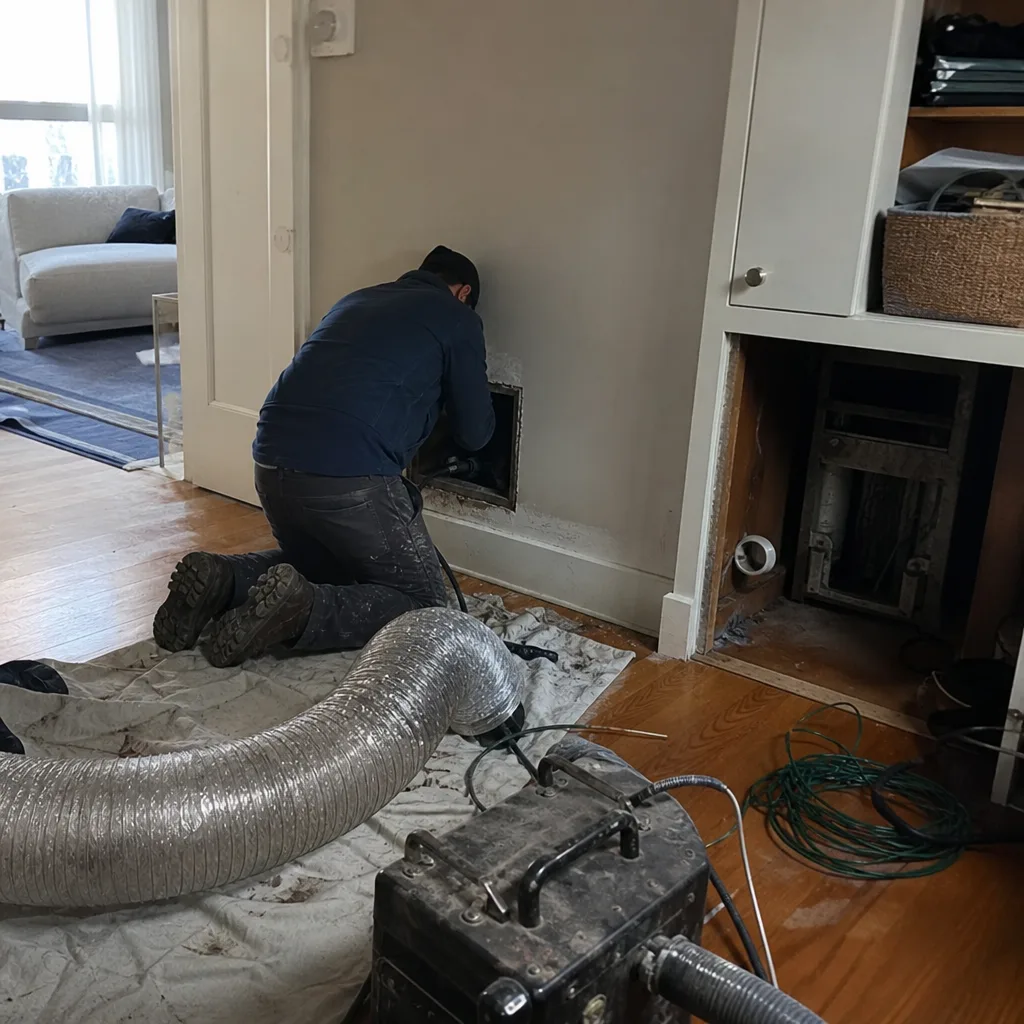
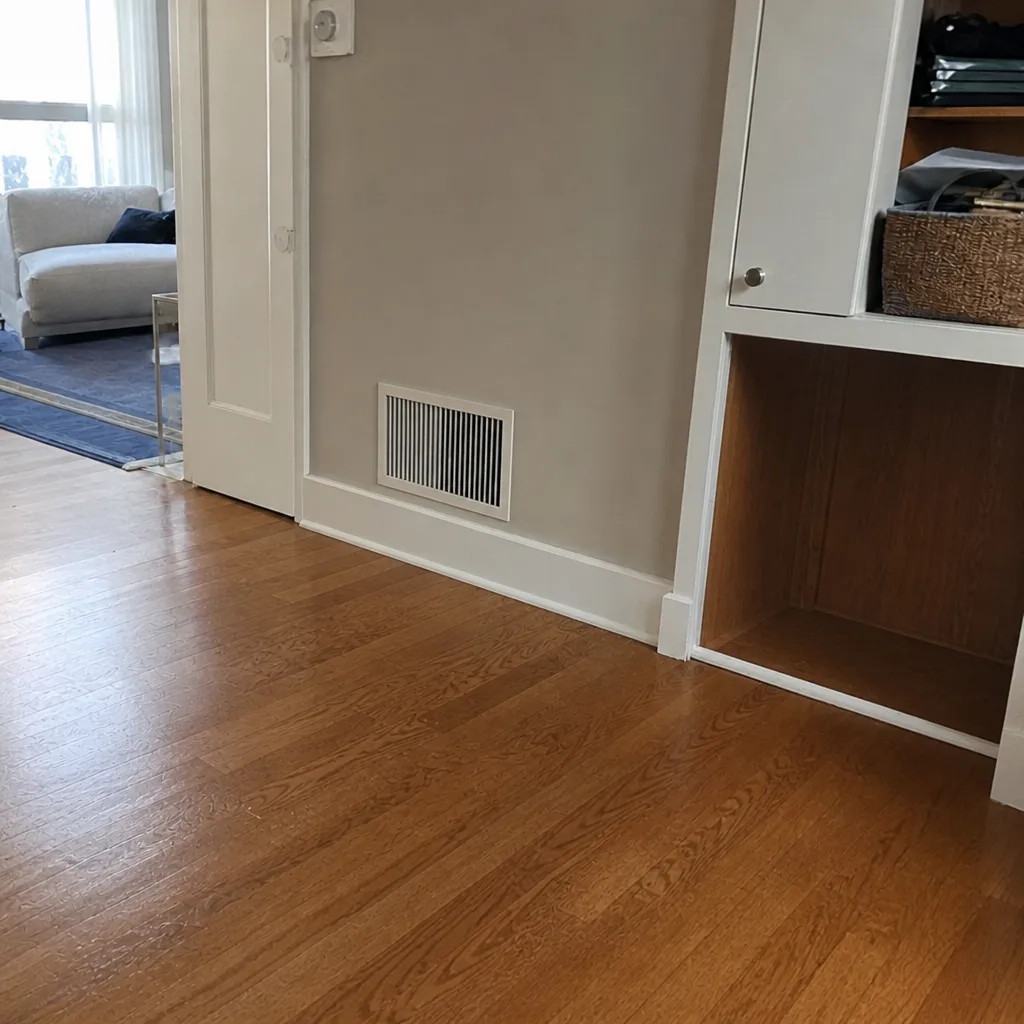
Whole-system duct and dryer vent check with before-and-after photos - you see exactly what came out of your vents
That "$99 whole-house special" is a bait ad - the real number appears once they are in your hallway, or the "clean" is a shop-vac at the register. We photograph the inside of your ducts before and after instead.
Air Duct Cleaning Maintenance Schedule: What to Do and When
The “3-to-5 year” cleaning interval you’ll find on most duct cleaning websites was not derived from any study. It’s a sales-friendly middle ground, repeated until it sounds like a rule. The real interval for your home could be 18 months or 10 years, and it depends on four specific factors: what fuel heats your home, how many pets shed into it, whether anyone in the house has asthma or allergies, and what your ductwork is made of and how old it is. This guide builds a maintenance schedule around those variables instead of a one-size number, with notes for Quincy homes in particular.
Quick Answer
There is no universal air duct cleaning schedule. A Quincy home with oil heat, two shedding pets, a family member with asthma, and 1980s flex duct may need professional cleaning every 18 to 24 months, while a newer condo with sealed sheet metal ductwork and no respiratory concerns may go 7 to 10 years between cleanings. Filter discipline, seasonal DIY checks, and humidity control in basements and crawlspaces all stretch or compress that window.
Styles & brands we work with
- Whole-home duct cleaning
- Dryer vent cleaning
- Camera inspection
- Sanitizing & deodorizing
Table of Contents
- The Four Variables That Set Your Cleaning Interval
- Fuel Type: How Oil, Gas, and Electric Heat Change the Schedule
- Pets and Respiratory Conditions: When Cleaning Moves Up
- Duct Material and Age: Flex, Sheet Metal, and Ductboard
- Filters, MERV Ratings, and How They Buy You Time
- Seasonal Maintenance Tasks You Can Do Yourself
- Quincy Humidity, Basements, and Mold Risk Timelines
- What to Log After Each Cleaning
The Four Variables That Set Your Cleaning Interval
If you want a single honest answer to “how often should air ducts be cleaned in Quincy MA,” it’s this: the calendar doesn’t decide, the conditions in your home do. Four of them matter more than the rest. We’ve seen each one push a cleaning date forward or back by years in homes we’ve worked in around the city.
Here’s how the four variables interact:
- Fuel type. Oil-fired systems in older Quincy homes leave soot and residue that migrates into the ductwork. Gas systems burn cleaner but still move combustion dust. Electric heat pumps produce the least debris of the three.
- Pets. One long-haired dog can load a return duct with fur and dander faster than three humans tracked through a renovation. Two or more shedding animals and you’re on the short end of every interval.
- Occupant respiratory conditions. Asthma, seasonal allergies, and chemical sensitivities don’t change the physics of debris buildup, but they change what’s acceptable. A home that could wait four years may need cleaning in two when a child in the house has asthma.
- Duct material and age. Flex duct with a 1990s liner collects debris and can sag and tear. Sealed sheet metal from a recent build stays clean much longer. Ductboard, common in mid-century homes, degrades internally and needs closer watching.
Score each variable as high, medium, or low concern and you’ll land on a rough window. High concern on three or four factors points to an 18-to-24-month cycle. High on one or two lands you around 3 to 4 years. Low across the board and a 7-to-10-year interval is realistic.
Scoring Your Home in Five Minutes
- Write down your fuel type and system age.
- Count the pets that shed and whether they spend time indoors year-round.
- Note any asthma, allergies, or immune conditions in the household.
- Identify duct material from the boots at the registers and the age of the install.
- Mark anything high, add up the high marks, and you have your starting interval.
Fuel Type: How Oil, Gas, and Electric Heat Change the Schedule
A lot of Quincy housing stock runs on oil heat, and oil systems leave different deposits than gas or electric. Oil combustion produces fine soot that migrates into supply and return ducts over time, especially if the system has ever been serviced poorly or run dirty. Soot is sticky. It clings to flex duct liners and collects on the inner walls of sheet metal.
Gas systems burn cleaner, but they still generate combustion dust, and a home with a gas-fired furnace and an unsealed return can pull attic dust and crawlspace debris into the system continuously. Electric resistance and heat pump setups produce the least residue. That doesn’t mean they stay clean – dust from living in the house still travels through the system – but the deposits are lighter and slower to build.
What this means in practice:
- Oil heat: Plan on a cleaning every 3 to 4 years if the rest of the house is low-concern, every 18 to 24 months if pets or allergies are in the mix. Inspect the supply boots each fall for soot shadowing.
- Gas heat: Every 4 to 5 years in a low-concern home. Watch for dust discoloration at the ceiling registers, which often signals a return-side leak pulling debris in.
- Heat pump or electric: Every 5 to 7 years, longer if filters are disciplined.
Quincy homes with oil systems and old flex duct tend to be the ones that benefit most from a first inspection, regardless of the last cleaning date. If you’re not sure when the system was last serviced, Duct Cleaning Quincy can inspect and tell you what shape the ductwork is actually in before you commit to a schedule.
Pets and Respiratory Conditions: When Cleaning Moves Up
The number of shedding animals in your home is probably the single biggest accelerator of duct debris after fuel type. Pet hair and dander coat the return-side surfaces first, and once they build up there, every heating or cooling cycle pushes the loose fraction back into the air you’re breathing. One long-haired dog that spends most of the day indoors can move the cleaning interval up a year by itself. Two or more and you’re in the 18-to-24-month range.
Respiratory conditions work differently. Asthma, seasonal allergies, and immune concerns don’t make ducts any dirtier, but they make the acceptable threshold much lower. In our experience, families who schedule for medical or allergy reasons tend to do well on a fixed inspection every two years, cleaning when the visual inspection says it’s time. That’s more frequent than the average home needs, but it’s honest for the house.
What to Watch Between Cleanings
- Visible dust trails at the supply registers or on the trim above return grilles.
- Fur accumulation on the return grille that you clean and comes back within weeks.
- Musty or “old house” smell from the supply air when the system first kicks on.
- Allergy symptoms that follow the heating or cooling season rather than pollen counts.
Any two of those alongside a pet or a respiratory condition means your interval has shortened. That’s when professional air duct cleaning is worth scheduling instead of a visual check.
Duct Material and Age: Flex, Sheet Metal, and Ductboard
Flex duct – the slinky plastic-wrapped stuff you see in attics and crawlspaces – is the most common duct type in homes built or rehabbed in the 1980s through the 2000s. It also collects debris faster than anything else because the interior isn’t smooth; the wire coil ridges hold dust, and the liner traps everything that lands. Once the liner degrades, flex duct can start shedding fibers into the airstream. Homes with flex duct need closer attention than their fuel type alone would suggest.
Sealed sheet metal is the most forgiving. If joints are taped and mastic-sealed, less debris gets in from the surrounding space, and the smooth interior lets light build-up pass through with the airstream instead of clinging. A well-built house with sheet metal can genuinely stretch to the 7-to-10-year range.
Ductboard – rigid fiberglass panels with a foil face – sits between the two. It was common in mid-century construction and in many Quincy basement conversions. The panels can trap moisture and lose structural integrity over decades. Any home with ductboard needs a visual inspection every two years, regardless of what the calendar says.
Age matters too. Ducts that are 20 or more years old have likely seen at least one HVAC swap, and that’s the point at which partially disconnected runs and crushed flex sections become common. We’ve found plenty of both in Quincy homes, and they’re a case where our duct repair capability actually solves the problem rather than just cleaning around it.
Filters, MERV Ratings, and How They Buy You Time
Your filter is doing more to determine how often you need professional duct cleaning than any other single thing you control. A properly sized filter at the right MERV rating, changed on schedule, traps a meaningful share of the debris before it ever reaches the ducts. A dirty, undersized, or bypassing filter sends everything straight into the system.
Here’s the practical filter calendar for most Quincy homes:
- Basic 1″ pleated (MERV 8): Change every 60 to 90 days. This is the workhorse for most homes and does fine for general dust and pet dander.
- 1″ pleated upgraded (MERV 11): Same change interval, more capture on fine particles, but be ready for it to load faster in a pet home.
- 4″ or 5″ media cabinet (MERV 11 to 13): Change every 6 to 12 months. The larger surface area is the reason this lasts far longer than a 1″ filter – not better paper.
- Washable or reusable: Clean on the same schedule as a 1″ pleated, and be honest about whether the airflow through them is adequate for your system.
Two things compress the schedule beyond filtration. First, high-MERV filters on a system not designed for the airflow restriction can actually hurt performance and pull air through gaps around the filter frame. Second, filter bypass – the amount of air sneaking around a poorly fitted filter – is invisible unless you look for it. A filter that doesn’t seal its frame isn’t doing much.
For homeowners upgrading filtration as part of a broader air-quality plan, the air handlers and filter cabinets built by Honeywell and Aprilaire are worth asking about. They solve the bypass problem and give the system a real filtration number to work with. If that’s where your head is at, our team can talk through which filter housing fits the equipment you already have.
Seasonal Maintenance Tasks You Can Do Yourself
You don’t need professional equipment to do the four tasks that make the biggest difference between cleanings. Each of them is safe and takes minutes.
- Vacuum each supply and return register. Remove the grille, vacuum the visible boot opening with a brush attachment, and look inside with a flashlight. Do this at the start of the heating season and again at the start of cooling season. It keeps the dust load out of the ducts and lets you catch problems early.
- Log the filter change every time. Write the date on the filter edge with a marker before sliding it in. Over a year you’ll see your real change interval, which is often shorter than the box claims.
- Inspect flex duct in the attic and crawlspace. Look for crushed sections, disconnected boots, tears in the outer wrap, and runs that sag for more than a couple of feet between supports. You don’t need to touch anything – a flashlight and a look tell you whether to call.
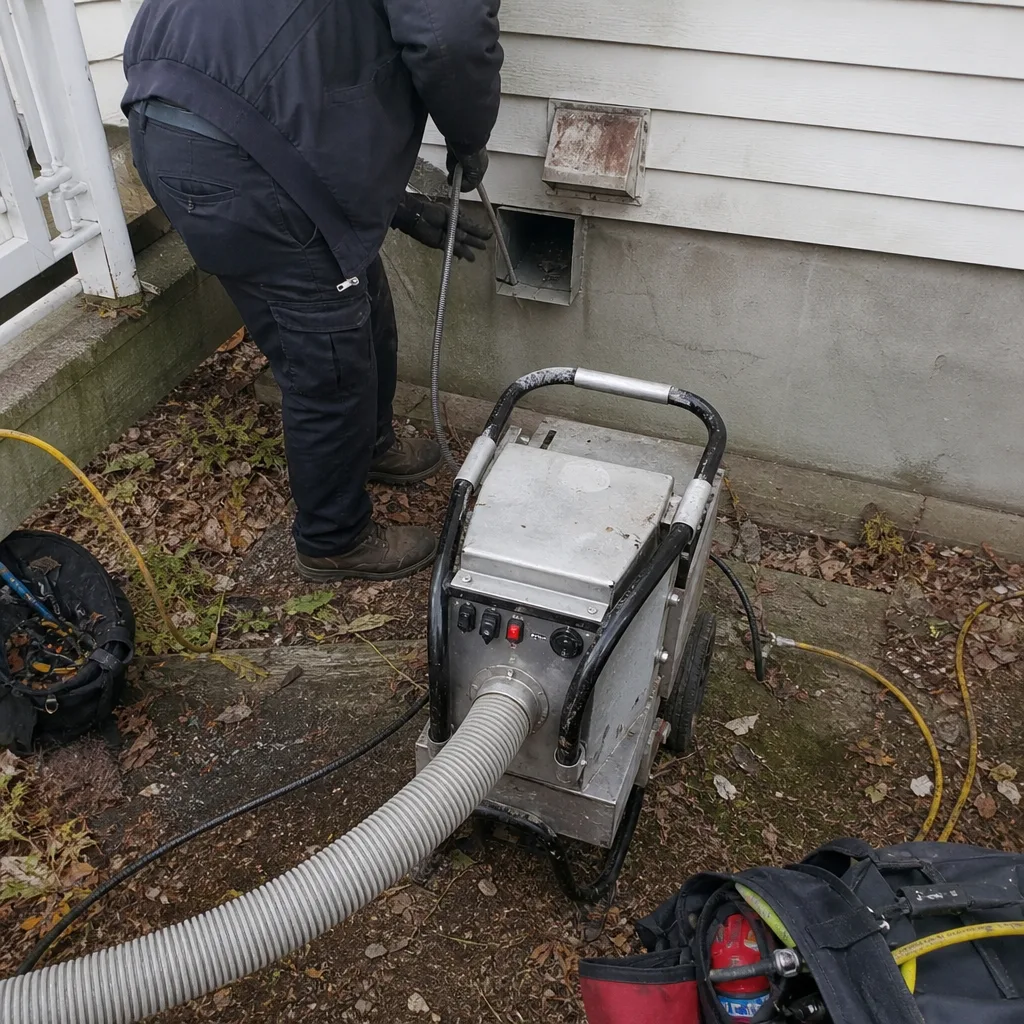
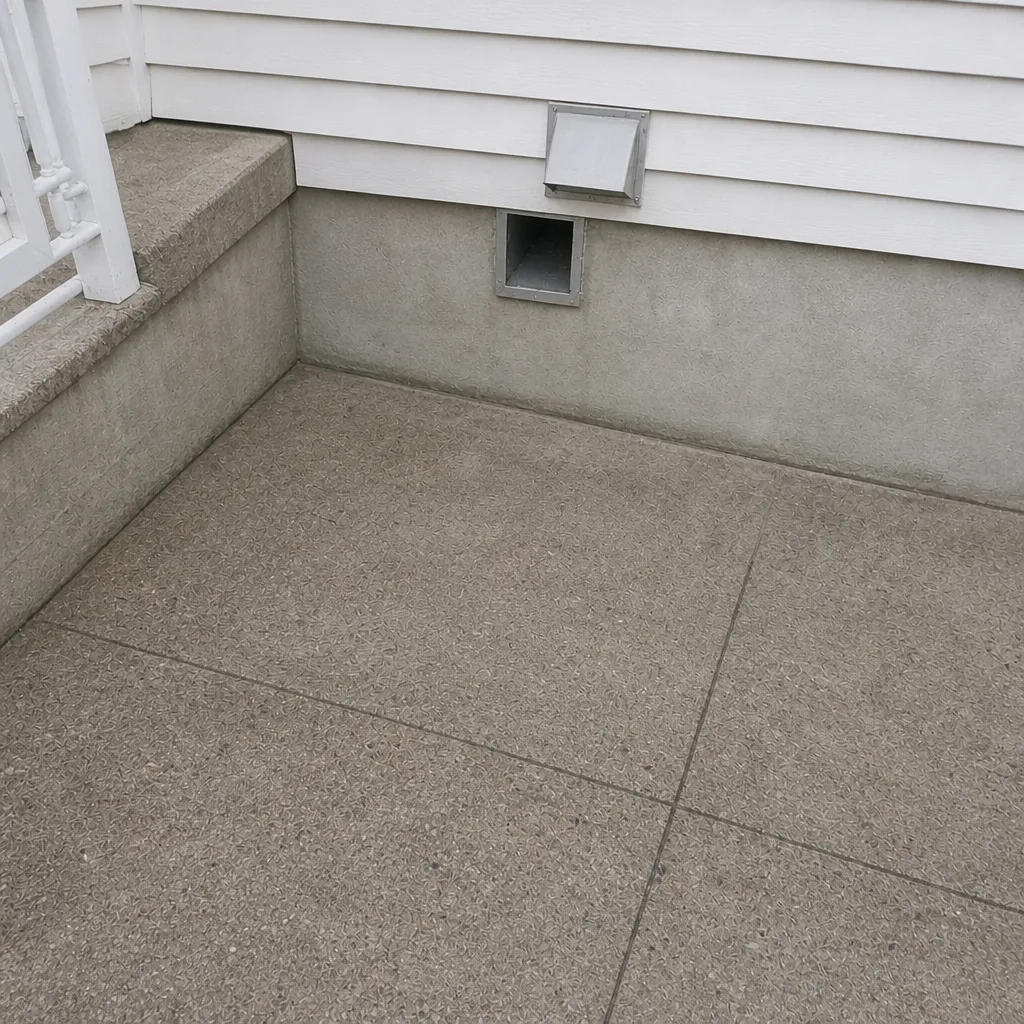
- Check the dryer vent. A dryer that takes noticeably longer than usual to dry a load, or feels hot to the touch on the cabinet, is telling you lint has built up in the vent line. That’s a documented fire risk and not a job to defer. Our dryer vent cleaning covers the entire run, not just the surface near the dryer.
For safety: do not open the furnace cabinet, disconnect duct runs, or reach into the air handler to clean the evaporator coil. Those touch live electrical connections and refrigerant components. Leave them to a licensed technician.
Quincy Humidity, Basements, and Mold Risk Timelines
Quincy sits on Massachusetts Bay, and the climate brings humid summers and damp shoulder seasons. For ductwork running through unconditioned basements and crawlspaces – common in the city’s older housing stock, especially around the triple-deckers and older neighborhoods like Wollaston and Quincy Point – that humidity profile matters for mold risk timelines.
The general rule of thumb for conditioned air ducts in a humid, unconditioned space: if the relative humidity in the basement or crawlspace stays above roughly 60 percent through the summer, you should inspect the duct surfaces and the surrounding framing for signs of condensation or mold growth every spring and fall. Standing moisture, efflorescence on the foundation wall, or a persistent musty odor are all signals the space is too wet for the ductwork it contains.
Insulated flex duct with a compromised outer wrap is the most vulnerable. Once moisture gets between the insulation and the inner liner, that’s a situation that needs real remediation-grade equipment, not a shop vac. This is where the Abatement Technologies negative-air machines come into play – they create containment around the work area so dislodged spores don’t spread into the living space while the duct is being cleaned or repaired.
If you’re seeing or smelling something, don’t wait for the schedule to catch up. Call Quincy area specialists who can inspect, contain, and repair in one visit rather than cleaning around a moisture problem.
What to Log After Each Cleaning
The most useful thing you can hand the next technician is a record of what the last one found. Without a log, every visit is a cold start. With one, you get a real trend line and a schedule that actually adapts.
Here’s what to log after each professional cleaning:
- Date and inspection findings. Note the condition of the duct interior, any visible damage, and any areas that were flagged but not repaired.
- Debris volume. Ask the technician to estimate how loaded the return side was and which sections carried the most. That tells you which areas fill first.
- Repairs performed. Any sealed leaks, reconnected boots, or replaced flex sections. This is the difference between a cleaning company and one that can actually fix things – Guardsman and similar sealing products used during the visit should be noted.
- Filter status at the time of cleaning. Note the MERV rating and how many days the filter had run. That combination sets your next filter change date more accurately than any generic interval.
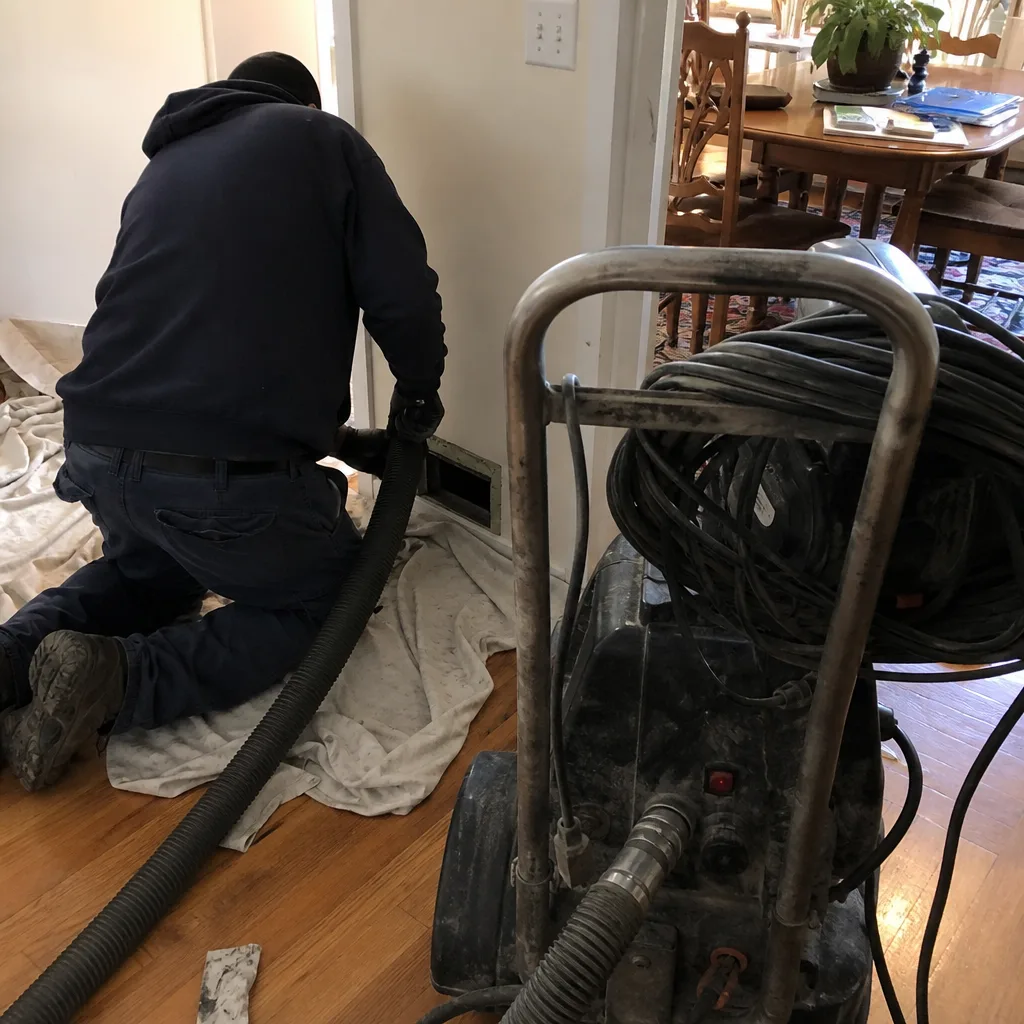
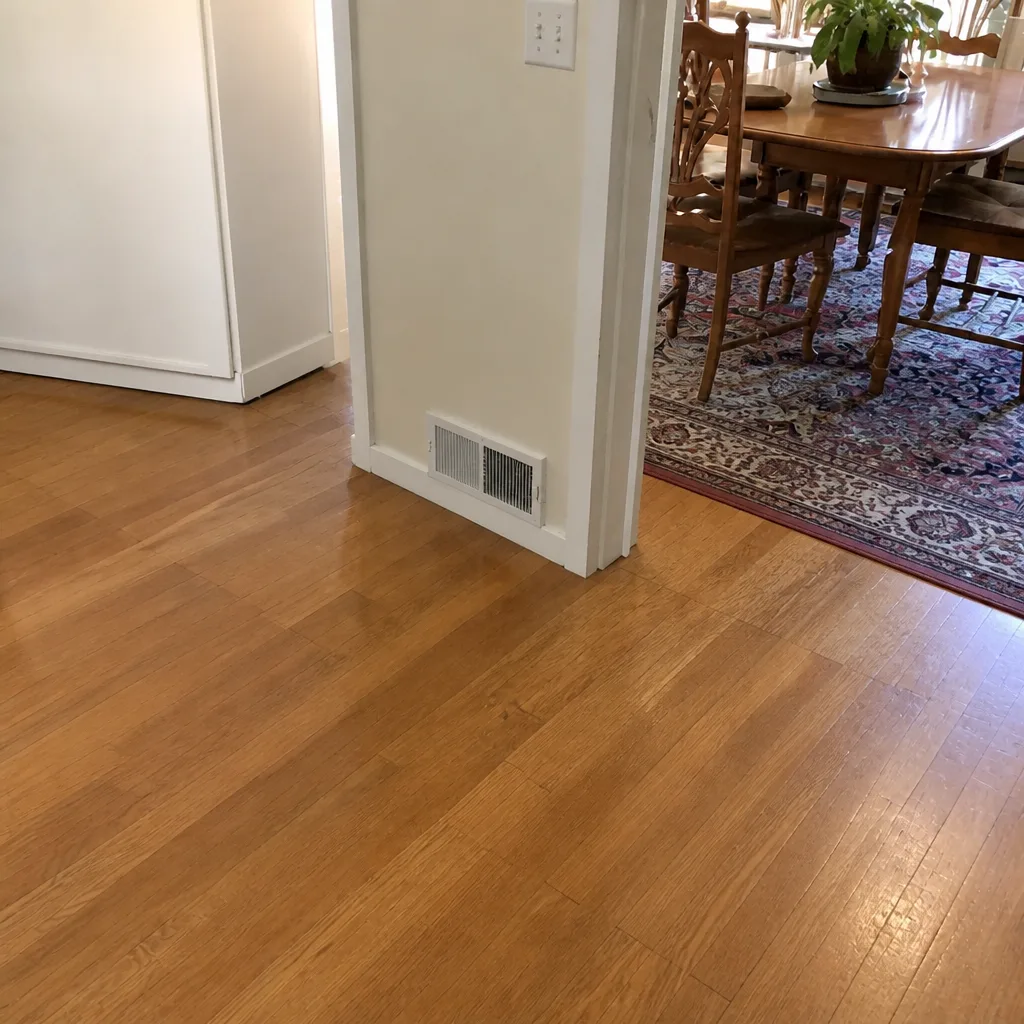
- Photographs. Before-and-after shots of your own ducts – from the technician’s own camera – give you a factual reference for what “normal” looks like in your house.
Keep this in a folder with the HVAC service records. When you sell the house or hand off to a new HVAC contractor, that log is worth more than any verbal history.
Common Mistakes to Avoid
- Following the 3-to-5 year rule blindly. The number is generic and doesn’t reflect your fuel type, pets, or duct material. It’s a starting point, not a schedule.
- Trusting a low coupon price to include repairs. A cleaning-only company that finds a disconnected duct often can’t fix it and you’re paying twice. Ask up front whether the company does repair work.
- Letting dryer vents slide on the same schedule as ducts. A dryer vent is a different maintenance cadence entirely – once a year is the floor for most households, more often for large families with heavy laundry loads.
- Ignoring the basement humidity in Quincy summers. Ducts that run through a wet crawlspace don’t need cleaning, they need moisture control and possibly repair. Cleaning without fixing the moisture is a temporary fix.
- Skipping filter changes “because the box says 90 days.” In a home with two pets or a recent renovation, most 1″ filters need to be changed every 30 to 60 days. The box is a floor, not a schedule.
- Assuming the register looks clean means the ducts are clean. The boot is the last few inches; the run behind it can be loaded while the grille stays bright. That’s why the technician’s before-and-after photos matter.
- Hiring a shop-vac crew for a moisture or mold-adjacent job. A consumer vacuum pushes fine particulate back into the air. If anyone in the house has respiratory issues, the equipment has to be HEPA-rated and contained – as in the Nikro and Abatement Technologies gear used on remediation-grade jobs.
See the difference
 Before
 After
 Before
 After
 Before
 After
When to Call a Professional
Call a professional when the visual signals outpace your schedule. A dryer that takes an extra cycle to dry a load, visible dust trails at supply registers, a musty smell coming from the supply air, fur building up on the return grille faster than usual, or any home where a recent renovation or new HVAC install left debris in the system is a reason to book an inspection rather than wait for the calendar. Homeowners with asthma, allergies, or immune conditions in the household should treat the two-year inspection as a floor, not a stretch target.
Duct Cleaning Quincy offers free estimates in Quincy – call (855) 632-0215. We answer 24/7. Fast dispatch from 7am to 7pm, Sunday through Friday. One visit tells you whether your ducts need cleaning, repair, or both, and we set one flat price per system agreed before work starts.
Frequently Asked Questions
Most Quincy homes land between every 2 and every 5 years, with the interval set by four variables: fuel type, pet count, occupant respiratory conditions, and duct material and age. An oil-heated home with original flex duct and two pets may need cleaning every 18 to 24 months. A newer condo with sealed sheet metal can stretch to 7 years or more. Call (855) 632-0215 for an exact quote based on your home – estimates are free.
No. The 3-to-5 year interval is a rule of thumb that appeared in industry guidance and marketing materials, not a number derived from a controlled study. It’s a reasonable average, but it can’t be right for every home at once. Use it as a starting point and adjust based on the four variables this guide covers.
You know by seeing before-and-after photos of your own ducts, taken on site during the work, not stock images. Ask for the photos as part of the job, and ask what equipment is being used – a HEPA-rated Nikro or Abatement Technologies machine captures dislodged debris, while a shop vac pushes some of it right back into your air. If they can’t tell you the equipment by name, that’s a red flag.
Cheap quotes typically come from companies using consumer-grade vacuums and no mechanical agitation of the debris. Rotobrush rotary brushes and HEPA-rated equipment cost real money, and pricing is honest when it reflects that. If a quote is a fraction of what others are charging for the same house, something in the process is being skipped.
Yes. Drywall dust, insulation fibers, and construction debris settle into the duct runs during a renovation, and much of it reaches the system long before the final walkthrough. Schedule cleaning once the renovation is complete and the HVAC is running normally, not mid-project. If the renovation involved a duct change, that’s also the time to schedule an inspection for damage or disconnections.
Change your filter on a real schedule – every 60 to 90 days for a 1″ pleated, 6 to 12 months for a 4″ or 5″ media cabinet – and vacuum the registers each heating and cooling season. Keep humidity in the basement or crawlspace under control so the duct insulation doesn’t become a moisture problem, and log what you find so the next inspection has real data instead of guesses.
The Bottom Line
The cleaning interval for your home isn’t a rule, it’s a calculation. Fuel type, pets, respiratory conditions, and duct material and age set the base cadence. Filter discipline either stretches it or compresses it. Seasonal DIY checks catch small problems before they become calls. Basement humidity in Quincy summers is a real variable worth watching. And keeping a log after each cleaning turns every future visit into an informed one. If you want a starting point, book an inspection and ask for the before-and-after photos – that gives you the truth of your ducts to schedule around, rather than a generic middle ground.
If you’d like help translating this guide into a schedule for your specific home, call (855) 632-0215. We answer 24/7. Fast dispatch from 7am to 7pm, Sunday through Friday. Free estimates, one flat price per system, before-and-after photos of your own ducts, and the equipment to handle cleaning, repair, and dryer vents in the same visit.
Written by the team at Duct Cleaning Quincy.