
Last updated November 15, 2026
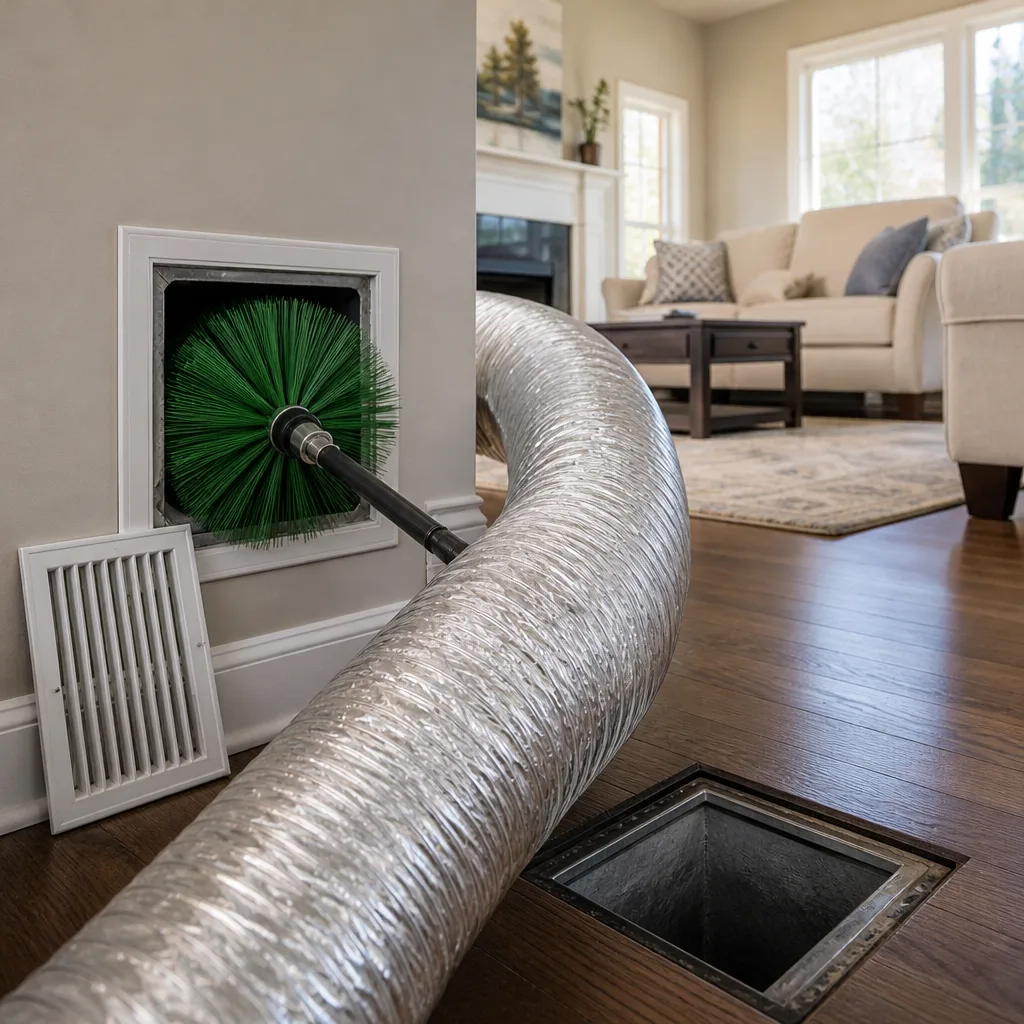 Whole-home duct cleaning
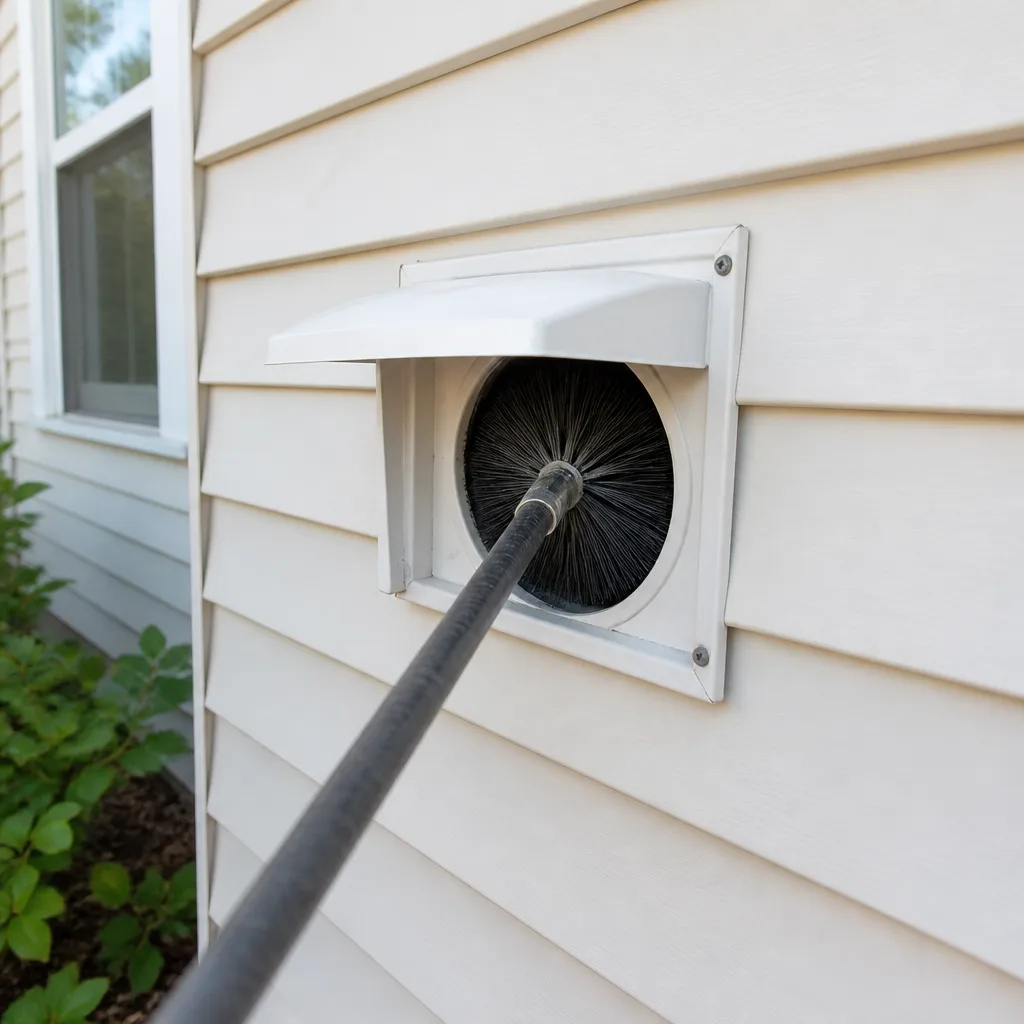 Dryer vent cleaning
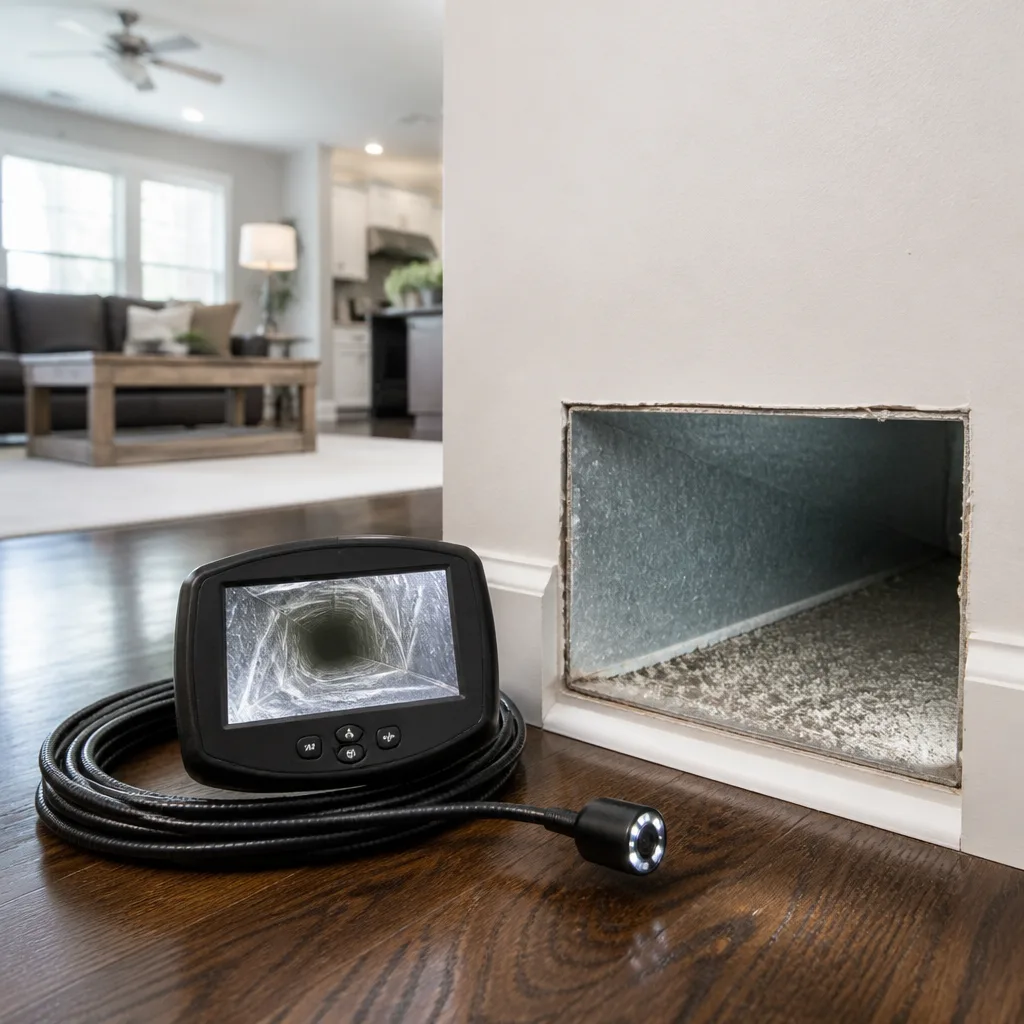 Camera inspection
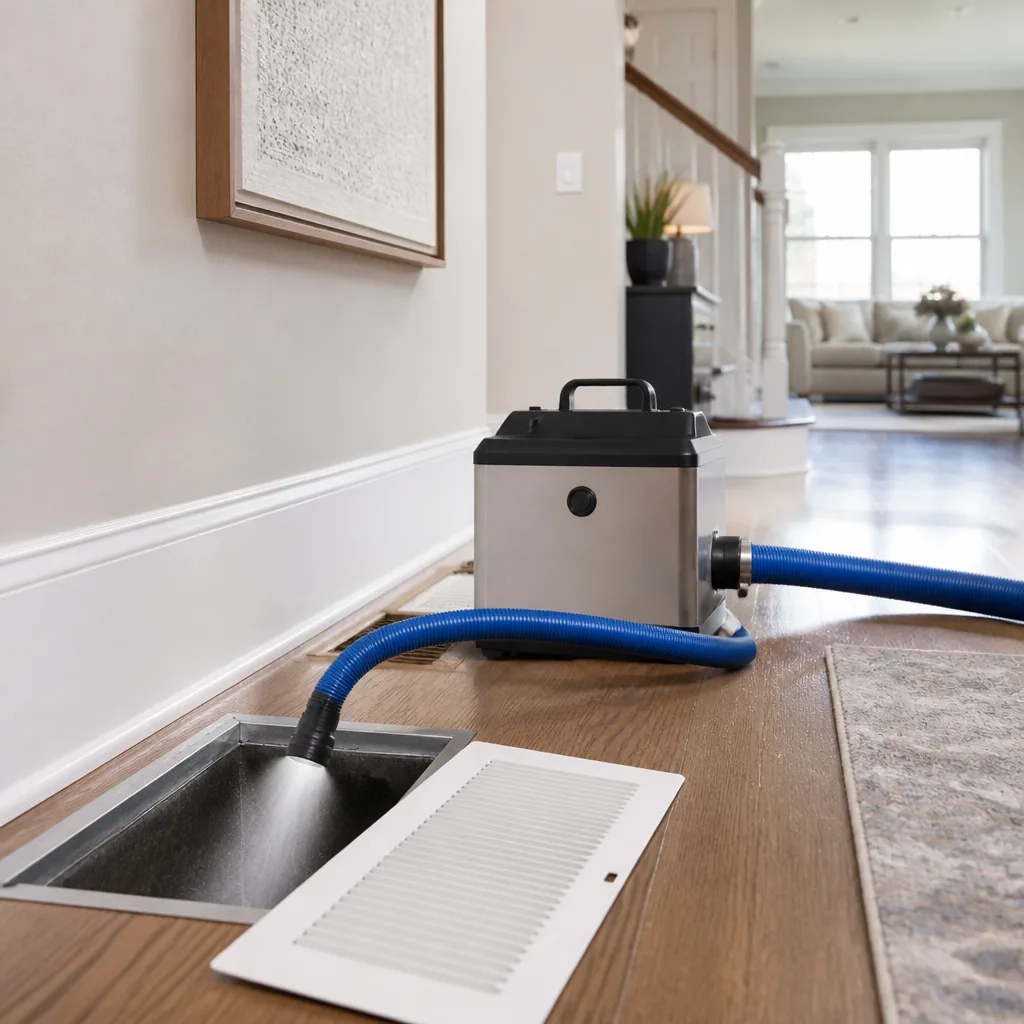 Sanitizing & deodorizing
Whole-system duct and dryer vent check with before-and-after photos - you see exactly what came out of your vents
That "$99 whole-house special" is a bait ad - the real number appears once they are in your hallway, or the "clean" is a shop-vac at the register. We photograph the inside of your ducts before and after instead.
The Complete Guide to Air Duct Cleaning in Quincy
Most homeowners assume a loud machine and a visible puff of dust means their ducts are clean. The opposite is often true. The EPA has stated that duct cleaning has never been proven to prevent health problems, but that finding was built largely on inadequate cleaning methods, not on properly executed negative-pressure source removal. The distinction is everything. In this guide, we walk through what actually happens inside a Quincy home’s duct system, why the equipment doing the work matters more than the marketing around it, and how to tell whether you got a real cleaning or a surface pass.
Quick Answer
Air duct cleaning in Quincy is a source-removal process: a technician puts the system under negative pressure, mechanically agitates the debris inside each run, and captures what comes loose in HEPA-rated equipment so it leaves the house instead of settling back into your living room. A legitimate job starts with an inspection of duct condition (disconnections, liner damage, mold), not with a vacuum. Any company that quotes a price per vent without looking at the system first is skipping the part that matters.
Styles & brands we work with
- Whole-home duct cleaning
- Dryer vent cleaning
- Camera inspection
- Sanitizing & deodorizing
Table of Contents
- What Air Duct Cleaning Actually Involves
- How Quincy’s Older Housing Stock Changes the Job
- Contact Vacuuming vs. Negative-Pressure Source Removal
- What a Legitimate Pre-Cleaning Inspection Looks Like
- Why Cleaning Without Repair Is an Incomplete Job
- How to Verify the Cleaning Worked
- What Air Duct Cleaning Costs in Quincy
- Common Mistakes to Avoid
What Air Duct Cleaning Actually Involves
A real air duct cleaning is a sequence, not a single action. The system gets inspected first. Then a large vacuum source is connected to the plenum or a main trunk to put the whole network under negative pressure. Only after that does the mechanical agitation begin, run by run, so debris that has settled and compacted over years gets broken loose and pulled out of the house at the same time.
The EPA’s guidance on duct cleaning is clear on one point: without the system under negative pressure and without agitation inside the ductwork, debris simply relocates. That’s the failure mode behind most of the “why didn’t it work?” stories you hear about duct cleaning. A shop vac at the register face and a scouring pad on a whip line can move dust around a house for an hour without ever removing it.
A complete job at Duct Cleaning Quincy typically covers:
- The main trunk lines and all branch runs feeding individual registers
- The supply and return plenum connections at the air handler
- The blower compartment and accessible interior surfaces of the air handler housing
- Register covers and grilles, removed, cleaned and reinstalled
- Access holes cut where the system provides none, then properly sealed afterward
What cleaning does not do is seal a leaking joint, reconnect a duct that has separated, or repair liner that has torn loose. Those are separate findings, and a thorough cleaning is where most of them get discovered. When you understand this sequence, you understand why any quote that fixes a number before anyone has seen the system is a guess at best.
How Quincy’s Older Housing Stock Changes the Job
A large share of residential Quincy was built before 1980, and that shapes what the inside of a duct system looks like. Three things happen in these homes that rarely happen in newer construction:
- Original galvanized steel runs. Many pre-1980 systems were built with rectangular sheet-metal trunk and branch ductwork. Joints were sealed with mastic or duct tape, and both materials degrade over decades. What started as a sealed joint becomes a leak, and then a disconnected section the homeowner never sees.
- Retrofit flex duct. When an HVAC system was replaced or a room was added, flex duct often got run through tight cavities and around corners that were not designed for it. Flex has a corrugated liner that traps debris in every ridge and is vulnerable to sagging and kinking, which starves the register of airflow.
- Basement and attic runs. Plenty of Quincy houses have branch runs in unconditioned space – a basement ceiling, a knee-wall attic – where temperature swings and humidity accelerate liner deterioration and where debris accumulates faster.
None of this is a reason to panic about your house. It is a reason to know what a technician is looking at before they start. A duct system in this housing stock has more joints, more transitions, and more potential failure points than a modern system does. That is also why the inspection phase matters more here than in a subdivision built in the last twenty years. If you want the service detail on the cleaning side itself, the air duct cleaning page covers it directly.
Contact Vacuuming vs. Negative-Pressure Source Removal
Two cleaning methods show up most often in this trade, and the difference between them explains a lot of the pricing spread you’ll see. Contact vacuuming uses a rotary brush system to physically agitate debris in the duct, with a vacuum at the brush head pulling material out at the point of contact. This is what a Rotobrush system does, and it’s effective for the main body of the ductwork.
Negative-pressure source removal is the broader method. The entire duct network is sealed and held under negative pressure by a large HEPA-rated vacuum unit while mechanical agitation happens inside. Nikro HEPA equipment, for example, captures particles down to a fine level rather than recirculating them into the home. For serious contamination scenarios – heavy debris, a system that has never been cleaned, or a home where mold-adjacent conditions are suspected – Abatement Technologies negative-air equipment is the tool that keeps containment tight while the work is done.
In our experience, the right answer is usually a combination:
- Seal the system and set up a HEPA-rated negative-pressure machine on the main trunk or plenum.
- Run rotary brush agitation through each branch to break loose compacted debris.
- Keep the negative pressure running throughout so dislodged material is captured, not dispersed.
- Clean and seal all access points when the agitation is finished.
When all you get is a hose pointed at the register with no brush and no containment, the debris gets blown around the duct and lands back where it started. That’s not a cleaning. Any duct cleaning Quincy job worth the money will show you the equipment before it goes to work.
What a Legitimate Pre-Cleaning Inspection Looks Like
Before any equipment runs in a Quincy house, a proper technician does an inspection. Not a glance at the furnace filter. An actual walk of the system. Here is the sequence a legitimate inspection follows:
- Confirm what kind of duct system you have. Rigid metal, flex, a mix, or in some older homes, partially ductboard. Each has different cleaning implications and different failure modes.
- Check for disconnections. Any place where a branch or trunk has fully separated from the next section is a leak that lets unfiltered air from a crawlspace or cavity straight into your supply air. Disconnected runs have to be found before the vacuum gets hooked up.
- Inspect liner condition. Flex duct liner and fiberglass-lined sheet-metal duct both fail over time. Torn liner or exposed insulation inside the duct means you’re looking at repair, not just a cleaning.
- Look for mold or water damage. Any duct joint, plenum, or interior lining that shows moisture staining or visible growth needs to be addressed as a moisture and air-quality problem before it’s treated as a routine cleaning.
- Assess register-by-register airflow. A register with a weak or unbalanced airflow is a signal that something between the trunk and the grille is wrong.
The gold standard for this step is camera inspection of the duct interior. A small camera run through an access hole shows what no exterior view can. A company that won’t put a camera in the duct is either assuming what’s inside, or doesn’t want to know.
Why Cleaning Without Repair Is an Incomplete Job
Most duct cleaning companies only clean. We can also repair them, which matters because a house with original galvanized steel ductwork that has joint separation, or with flex runs that have come off their collars, has a structural problem no amount of vacuuming fixes. Clean ductwork with a disconnected branch is still ductwork that is pulling attic or basement air into the supply side.
Common repair findings in Quincy-area houses include:
- Fully disconnected branch runs at the plenum collar or the register takeoff
- Failed mastic and tape at sheet-metal joints going back to the original installation
- Torn or sagging flex duct liner that needs the run replaced, not patched
- Damaged collars and boots at grilles where the diffuser has worked loose over time
- Crushed or kinked flex where a previous HVAC install was pushed through a tight cavity
One visit is usually enough to tell you whether your ducts need cleaning, repair, or both, and a good technician will write that up before any work starts. If your system has both a contamination problem and a condition problem, cleaning without repair leaves half the job undone – and often recontaminates the clean side of the system the moment the blower starts.
How to Verify the Cleaning Worked
You don’t have to take the technician’s word for it. There are real checks that confirm what happened after the equipment was packed up:
- Before-and-after photos of your own ducts. Not stock images. Actual photos of your access points and branches taken at the start and at the end. We take them on every job and walk you through them.
- A visual post-cleaning inspection. The technician should look inside the trunk and a sample of branches before closing up access holes, and report anything that suggests the cleaning didn’t reach it.
- A camera check when in doubt. A short camera pass after cleaning will show bare interior surfaces and open joints if the work was done properly, and residual debris or liner damage if it wasn’t.
- Register airflow comparison. Before-and-after airflow at the registers, which should be measurably stronger if a clogged return was dampening the whole system.
- Filter condition after the first cycle. A filter that fills noticeably faster than usual in the first couple of weeks after cleaning is normal as fine material settles. A filter that fills at the same rate as before suggests the ducts weren’t the source.
For houses with a dryer vent cleaning job bundled in, the same verification logic applies. A dryer that finishes a load in noticeably less time after the vent was cleared is the real-world confirmation that lint was blocking the path. A vent cleaning that never actually reaches the full run of the vent isn’t a cleaning.
What Air Duct Cleaning Costs in Quincy
Air duct cleaning in Quincy is priced per system by a written estimate, not per vent. The range you’ll see depends on the number of registers, the duct material, the level of contamination, and whether repair is needed on top of cleaning. Rough honest ranges for planning purposes:
- Standard whole-home cleaning, typical single-family layout: usually quoted in the several-hundred-dollar range for a system in reasonable condition.
- Larger or more contaminated systems: higher end of that range, driven by more registers, longer runs, or a system that has never been cleaned.
- Duct cleaning plus repair findings: priced as two separate line items in the estimate, so you can see what the repair work adds and decide on it independently.
- Dryer vent cleaning on its own: a smaller standalone ticket, quoted per run and per access difficulty.
A single flat price per system, agreed before any work starts, is the point. No per-vent pricing, no teaser coupon that doubles once the technician is on site. The reason some quotes come in double what a competitor quotes is almost always that the cheaper one isn’t including containment, brush agitation, or the repair discovery step. The written estimate sets the final price, and you should never agree to one that arrives after the work is done. Call “>(855) 632-0215 for an exact quote on your system. Estimates are free.
Common Mistakes to Avoid
- Believing a per-vent price quote. Any number given before anyone has seen the system is a guess. A real quote requires knowing the layout, the duct material, and the condition, and none of that is available over the phone.
- Assuming a coupon price is what you’ll pay. The long-running bait-and-switch in this trade works by quoting a low headline number and finding “additional issues” once the technician is inside. Ask for the written estimate before any work begins, and ask what could add to it.
- Skipping the pre-cleaning inspection. In Quincy’s older housing stock, disconnections and liner damage are common. Cleaning a system that has one is a waste of money and can make the problem worse.
- Accepting “before and after” photos that aren’t yours. Stock photos are meaningless. You should see photos of your own access points and branches, taken on the day of the work.
- Not asking about containment. A cleaning without a HEPA-rated vacuum and negative pressure recirculates fine particulates into the living space. That’s the opposite of what the job is supposed to accomplish.
- Buying a cleaning when you need a repair. A run that has fully separated from the plenum won’t be fixed by cleaning it. Ask whether the technician will document any repair findings in writing.
- Ignoring the dryer vent. The U.S. Fire Administration names lint-clogged dryer vents as a leading cause of residential dryer fires. It’s a small service that closes a real risk, and it’s worth doing on the same visit as the duct work.
See the difference
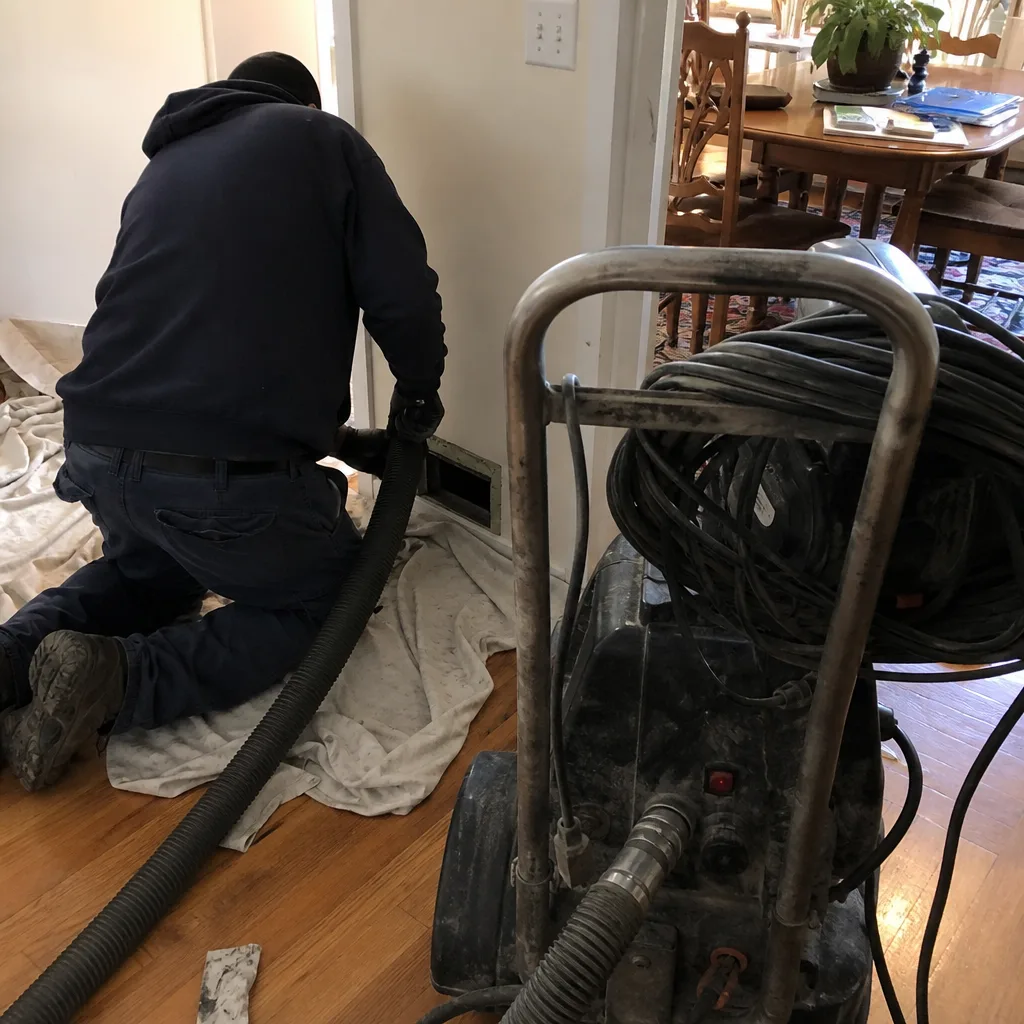 Before
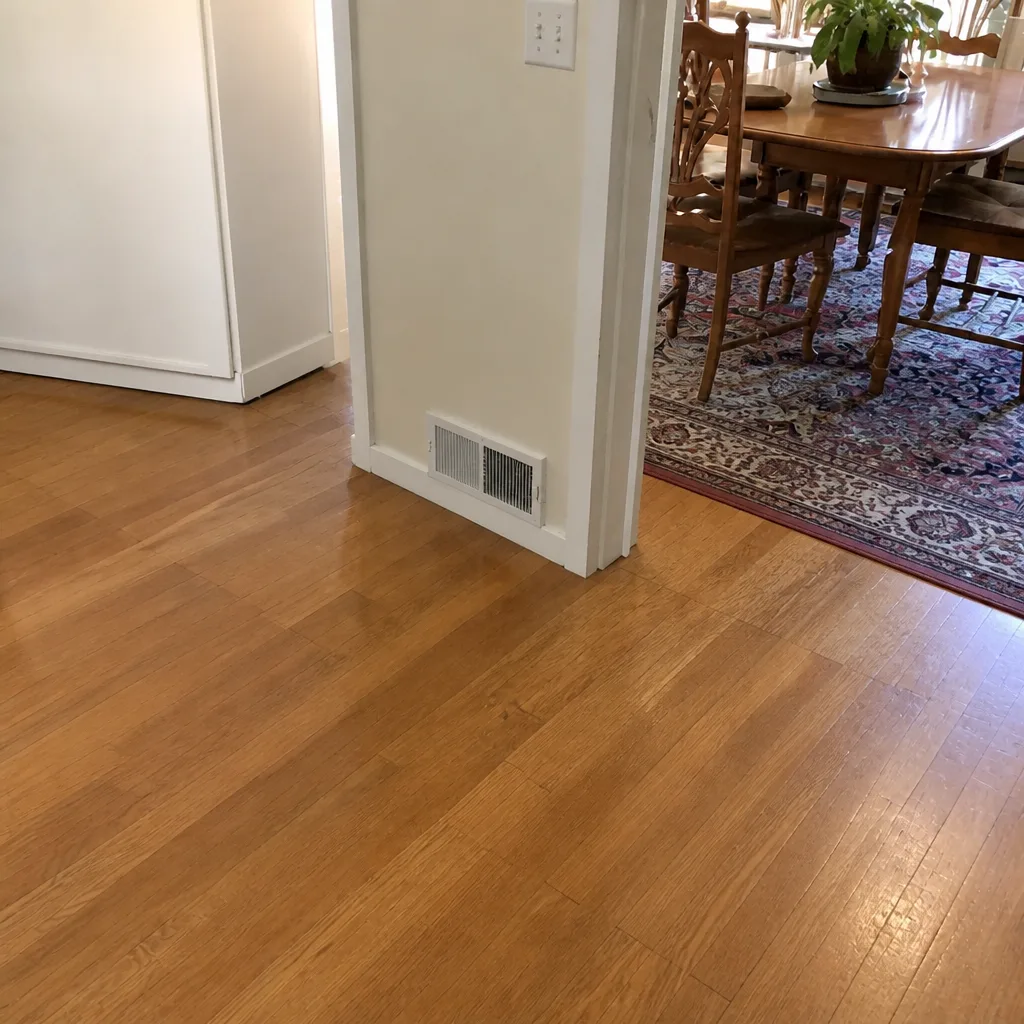 After
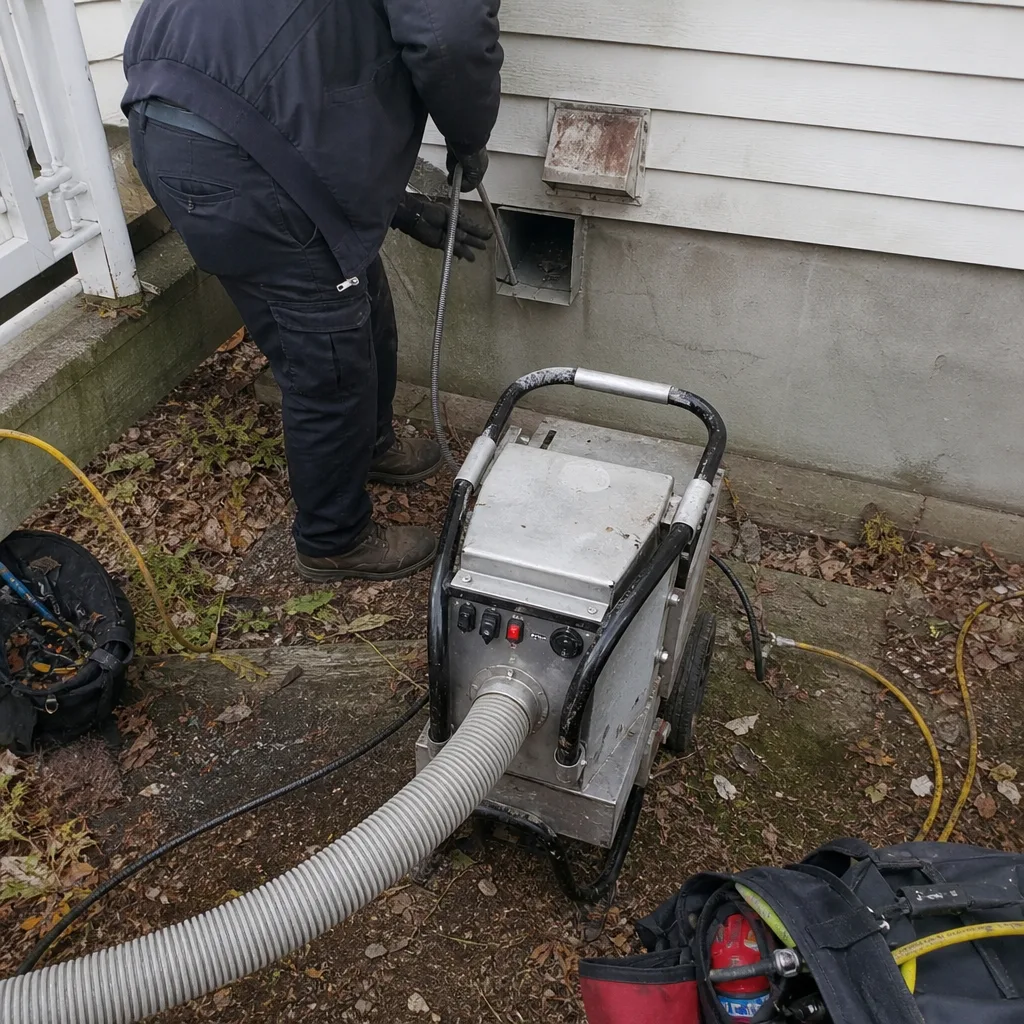 Before
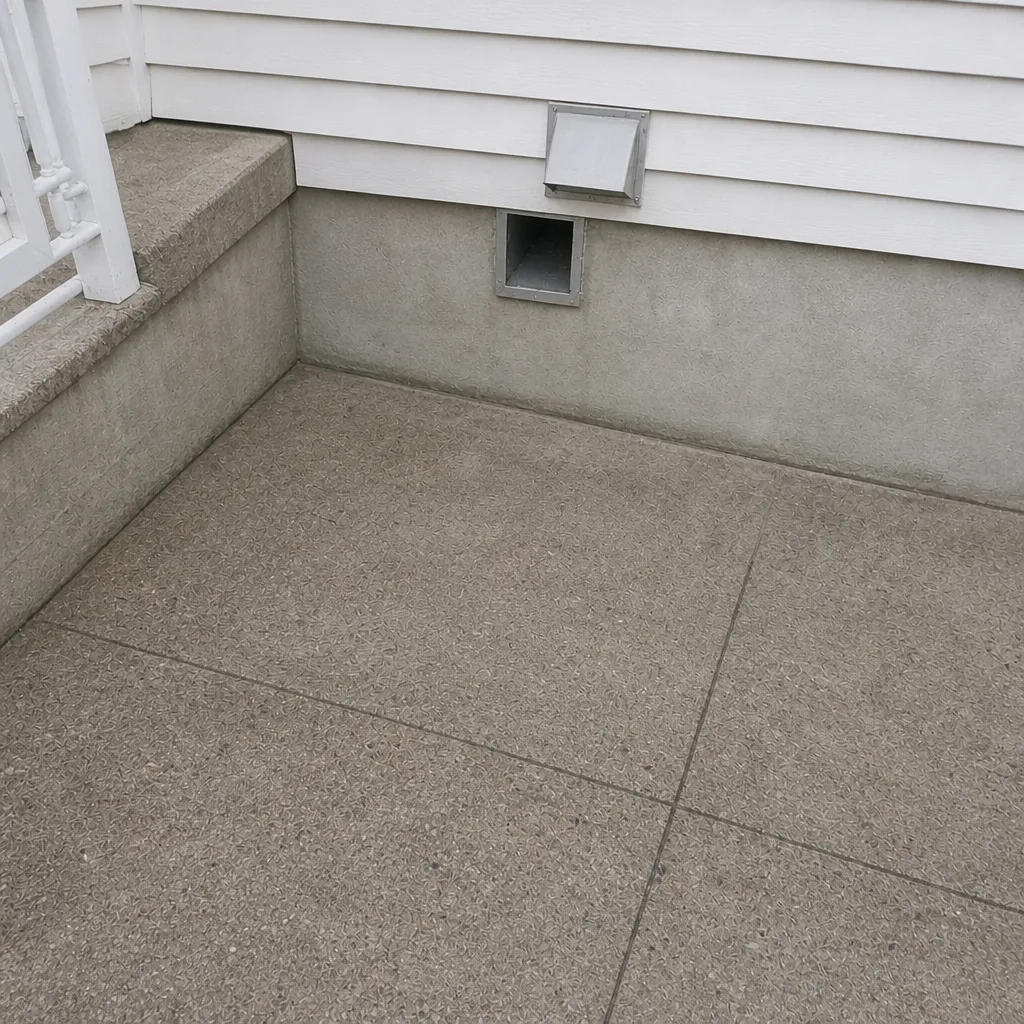 After
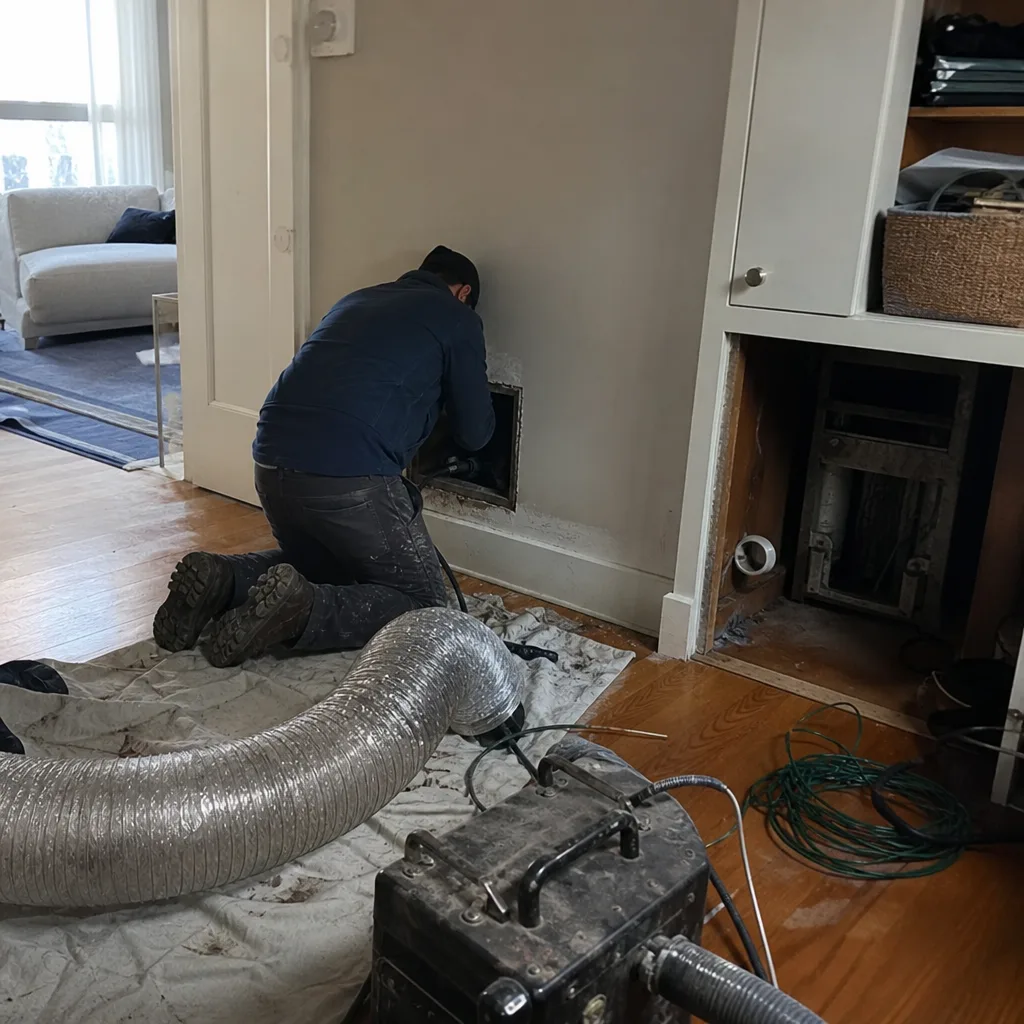 Before
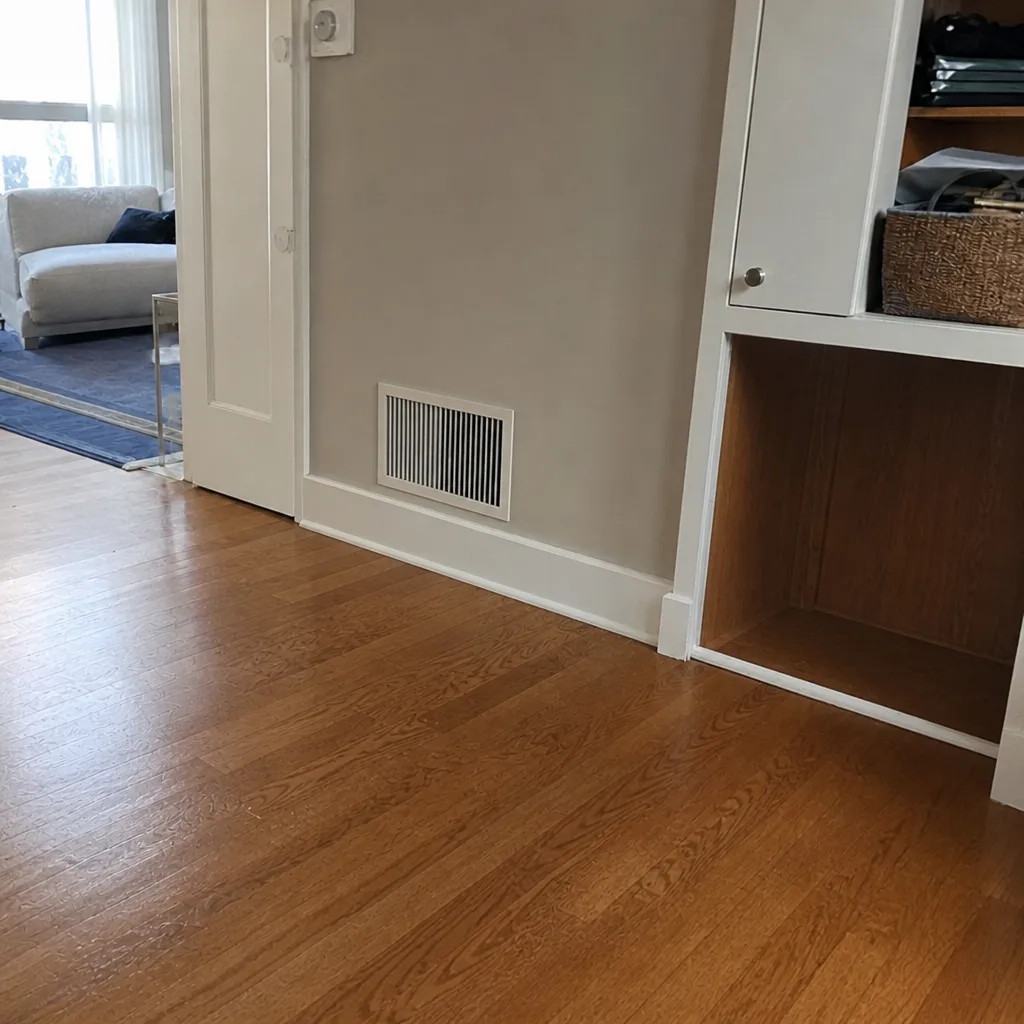 After
When to Call a Professional
You should call a professional for air duct cleaning in Quincy when the signs are physical, not vague. A recently finished renovation that left drywall dust in the returns. Visible debris in the register openings. A new HVAC system being installed, which is the ideal time to clean before the new equipment goes online. Persistent allergy symptoms that a physician has tied to indoor air quality. A dryer that takes noticeably longer to dry clothes than it used to. Any register with weak or unbalanced airflow. Duct work that’s under negative pressure from one end but has visible open joints or sagging runs. Those are all situations where a real inspection will tell you what’s happening. Duct Cleaning Quincy offers free estimates in Quincy. Call (855) 632-0215. We answer 24/7. Fast dispatch from 7am to 7pm, Sunday through Friday.
Frequently Asked Questions
A standard whole-home cleaning in Quincy typically lands in the several-hundred-dollar range, priced per system by a written estimate rather than per vent. The exact figure depends on the number of registers, the duct material, contamination level, and whether repair findings turn up during inspection. Call (855) 632-0215 for an exact quote. Estimates are free.
The cheapest quotes almost always skip containment, brush agitation, or the repair inspection step, so the “cleaning” is really a blow-through. A legitimate job uses HEPA-rated vacuum equipment under negative pressure, mechanically agitates each run, and includes a written estimate before work begins. A quote that arrives at one-third of the going range is a quote for a different service. Call (855) 632-0215 for a real estimate on what your system actually needs.
Most homes don’t need it on a fixed schedule. It’s warranted after a renovation, after a new HVAC install, after a known contamination event, or when physical signs (visible debris, weak airflow, worsening allergens) point to the duct system. A system in a clean home that’s been professionally cleaned once may not need it again for many years.
Ask for before-and-after photos of your own ductwork, a post-cleaning visual inspection, and a camera check if you want extra confirmation. A register airflow comparison before and after the job is another real signal. The equipment itself is the other proof: if the crew showed up without a HEPA-rated vacuum and brush agitation system, the work is not what you were sold. Call (855) 632-0215 for a free estimate.
Yes. Many pre-1980 homes in Quincy still have original galvanized steel ductwork with degraded joint seals, and plenty of retrofits left flex duct with corrugated liner that traps debris in every ridge. The job takes longer and the inspection matters more, because disconnected runs and torn liner are far more common in this housing stock than in newer construction.
Often, yes, if the repair need is identified during the inspection and the parts and scope fit the job. Cleaning and repair are typically priced as separate line items in the estimate so you can decide on each independently. One visit can tell you whether your ducts need cleaning, repair, or both. Call (855) 632-0215 to schedule an inspection.
The Bottom Line
A real air duct cleaning in Quincy is a negative-pressure source removal process with brush agitation, HEPA-rated capture, and a full inspection before any equipment runs. The equipment matters more than the marketing: Rotobrush and Nikro equipment agitates and captures, and debris comes out rather than back into your air. Cleaning without repair, in houses with degraded joint seals and torn flex liner, leaves half the job done. And any quote that arrives per vent, before an inspection, isn’t a quote for the same service. A flat price per system, agreed in writing before work starts, with before-and-after photos of your own ducts, is the standard any homeowner should hold this trade to.
Ready for an honest inspection and a written estimate? Call Duct Cleaning Quincy at (855) 632-0215. We answer 24/7. Fast dispatch from 7am to 7pm, Sunday through Friday. Estimates are free, and our technicians have up to 14 years of experience working with the equipment this trade actually requires.
Written by the team at Duct Cleaning Quincy.