
Last updated November 15, 2026
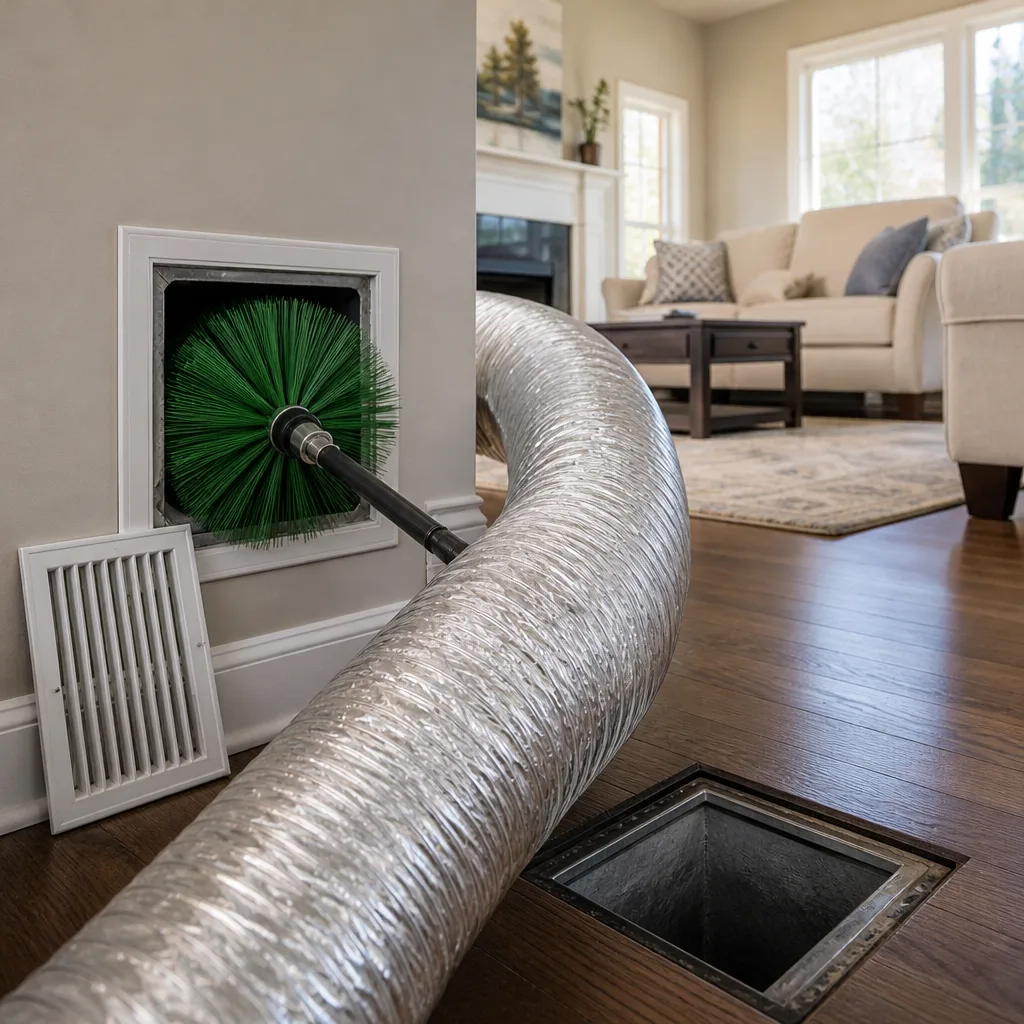 Whole-home duct cleaning
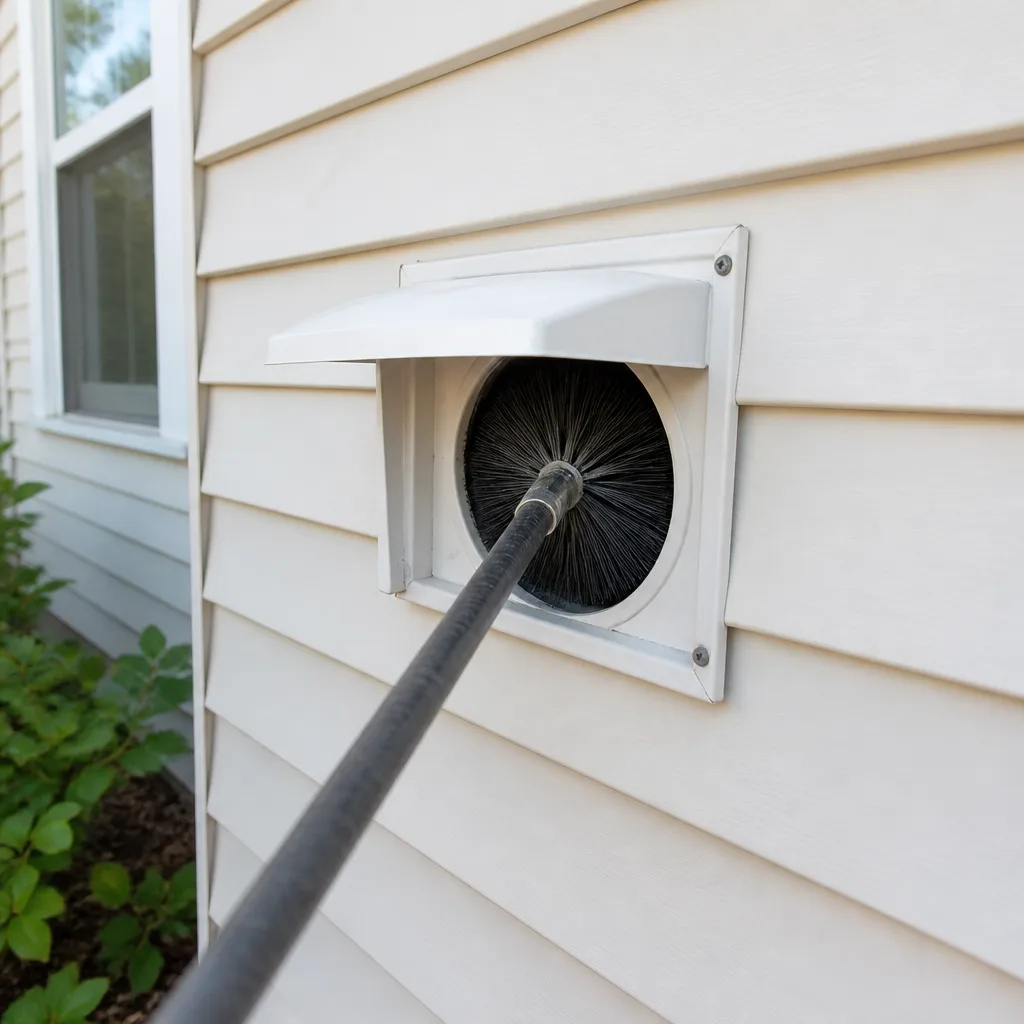 Dryer vent cleaning
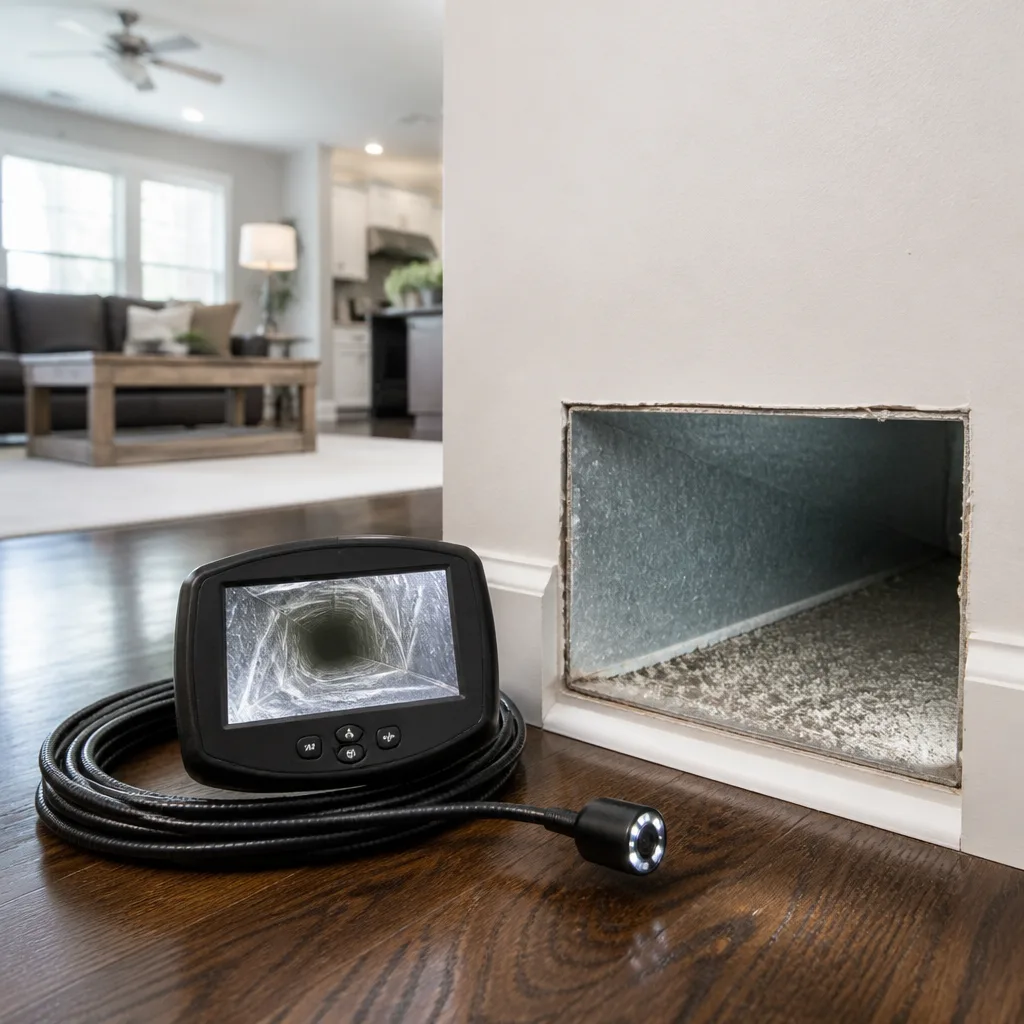 Camera inspection
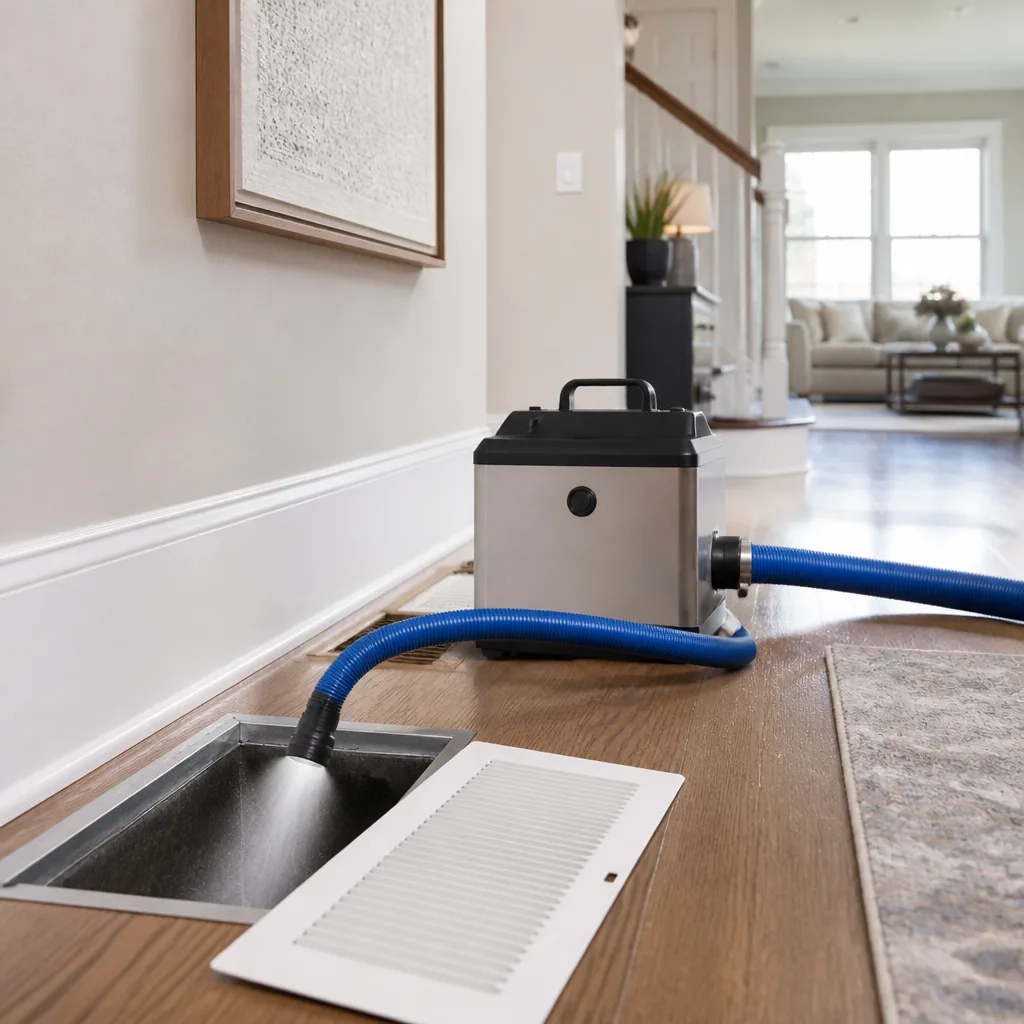 Sanitizing & deodorizing
Whole-system duct and dryer vent check with before-and-after photos - you see exactly what came out of your vents
That "$99 whole-house special" is a bait ad - the real number appears once they are in your hallway, or the "clean" is a shop-vac at the register. We photograph the inside of your ducts before and after instead.
Air Duct Cleaning Cost Breakdown: The Quincy Homeowner’s Reference for 2026
The $299 whole-house duct cleaning special is priced that way because it’s designed to be completed in under two hours. A thorough cleaning of a 2,000 square foot Quincy colonial with a central air handler doesn’t fit in that window; the real work takes three to five hours at minimum. That gap between the advertised price and the actual labor tells you almost everything about why duct cleaning quotes in this city swing from around $200 to well past $1,000 for houses of similar size. It isn’t profit margin. It’s what equipment shows up and what work actually gets done. This breakdown walks through the legitimate cost drivers, so you can read a quote on its merits instead of defaulting to the middle number.
Quick Answer
Air duct cleaning in Quincy typically costs $200 to $500 for a standard single-system home, $450 to $800 for larger homes or multi-zone systems, and over $1,000 when the job includes duct repair, heavy contamination, or deep dryer vent work. The final price depends on system size, duct condition, access, and whether negative-pressure containment equipment is used. Every quote should be a flat price per system, agreed in writing before work starts.
Styles & brands we work with
- Whole-home duct cleaning
- Dryer vent cleaning
- Camera inspection
- Sanitizing & deodorizing
Table of Contents
- What actually drives the price of duct cleaning in Quincy
- How Quincy housing stock changes the job
- What a legitimate cleaning looks like, hour by hour
- Add-ons worth the money versus upsells that inflate the invoice
- Why the lowest quote is usually missing the most expensive equipment
- Cleaning-only quotes versus repair-inclusive quotes
- How to evaluate a duct cleaning quote in Quincy
What actually drives the price of duct cleaning in Quincy?
Duct cleaning cost in Quincy is set by four variables: the number of systems and return zones, the condition of the ductwork, how accessible the runs are, and the equipment used. A quote that names none of these is a number pulled from a price sheet, not from your house.
The biggest legitimate variable is system count. A single forced-air system with one air handler and one main return is the baseline. A Quincy two-family or a colonial with a finished basement and a second zone has more ductwork, more registers, and more setup time. Two systems take roughly twice as long, so a quote that doesn’t ask how many systems you have hasn’t been priced yet.
Duct condition matters just as much. Ducts that have never been cleaned, or that served a recent renovation, hold far more debris than a system cleaned a few years ago. Heavy debris means slower agitation passes, longer extraction, and more HEPA filtration time. If a contractor quotes the same flat price for every house without inspecting, they’re either building in a large cushion or planning a superficial job.
Access is the quiet cost driver. Registers buried behind furniture, returns in finished ceilings, and air handlers wedged into tight basement corners all add setup time. In our experience, an accessible system in a Quincy split-level typically runs $200 to $450, while a cramped basement install with limited clearance for vacuum hose and containment framing pushes toward $600 or more.
- System count: one system is baseline; each additional zone adds labor and setup
- Duct condition: heavy debris, renovation dust, and pet hair extend agitation and extraction
- Access: tight basements, finished ceilings, and blocked registers add hours
- Equipment: negative-pressure containment and HEPA vacuums cost real money and take real time
- Repair need: leaks, disconnects, and damaged sections turn a cleaning into a repair job
How does Quincy housing stock change the job?
Quincy’s housing stock is a cost factor all by itself. The city has a deep inventory of older homes, a lot of two- and three-family buildings, and a large share of finished basements that were retrofitted with return ducts years after the original system went in. Each of those features changes how a cleaning is priced.
Multi-zone systems. Two-family homes in Quincy neighborhoods like Wollaston, Quincy Center, and North Quincy often run separate air handlers or split zones, sometimes with shared return chases. That means more duct runs and more registers to service, and the containment setup has to account for two systems running at different pressures. A flat price built for a single-family house will underestimate the work.
Finished basement returns. Many Quincy homes have basement returns added during a renovation. Those runs are often shorter, flex duct, or boxed into soffits, which makes them harder to reach with a rotary brush. Technicians have to work more slowly and sometimes cut access panels, which adds time and, if a panel needs to be cut, a small materials cost on the repair side.
Older galvanized duct. Galvanized trunk lines in mid-century Quincy homes collect debris differently than newer sheet-metal systems with smooth interior seams. The seams catch lint and dust, so agitation passes have to run slower and more carefully to avoid damaging joints. That’s not upselling; it’s what the metal requires.
None of these factors justifies a price swing of several hundred dollars on their own. What they do is explain why a Quincy house can’t be priced from a national average. The house across the street with a different layout may legitimately cost $250 more to clean.
What does a legitimate duct cleaning look like, hour by hour?
A proper whole-house cleaning in Quincy follows a predictable sequence, and the time each step takes is the best cross-check you have against a quoted price. If a quote promises a full job in under two hours, compare it to this breakdown.
- Inspection (20-30 minutes). The technician walks the system, counts registers and returns, checks the air handler, and photographs conditions before any work starts. This is also when a repair need gets caught.
- Setup and containment (30-45 minutes). Negative-air equipment is placed to create a pressure differential, hoses are run to the air handler, and returns are sealed. This is the step the cheapest bids skip.
- Agitation (45-90 minutes). A rotary brush system mechanically loosens debris from duct walls and seams. Every register and return gets a pass, and older galvanized duct takes longer.
- Extraction (45-75 minutes). HEPA-rated vacuum equipment pulls the loosened material out of the system while containment keeps it out of the living space.
- Reassembly and verification (20-30 minutes). Registers go back on, the system gets a post-cleaning inspection, and before-and-after photos are taken of your own ducts.
Add those up for a typical Quincy single-system home and you’re at three to four hours. A larger multi-zone house runs four to five. That’s the labor inside every legitimate quote, and it’s why a $299 special has to cut the setup, the agitation, or both to survive as a price.
When we quote a job, we use the same equipment commercial and remediation crews rely on, including Rotobrush rotary brush systems and Nikro HEPA vacuums. That gear is part of why the job takes the time it takes.
Which add-ons are worth the money?
Add-ons are where duct cleaning invoices get inflated, and also where a couple of them genuinely earn their cost. The difference is whether the add-on addresses something on your system that needs attention.
Worth the cost:
- Dryer vent cleaning. This is the one add-on we’d call a fire-prevention service rather than an IAQ upgrade. Lint buildup in a dryer vent is a documented cause of residential fires, and the U.S. Fire Administration recommends clearing it regularly. If your clothes are taking longer to dry than they used to, that’s the signal. It’s a core service for us, not an upsell.
- Air handler and coil cleaning. A dirty evaporator coil reduces system efficiency and holds moisture that feeds biological growth. If the coil is visibly fouled during inspection, cleaning it alongside the ducts is cheaper than a separate visit.
- Duct repair. Disconnected sections, torn flex duct, and leaking joints waste conditioned air and let unfiltered air into the system. Repair capability is the difference between a company that can fix what it finds and one that cleans around it.
Usually not worth it as a standalone charge: deodorizing foggers that mask rather than remove contamination, UV lights sold as a substitute for cleaning the system, and per-register “sanitizing” charges added at the door. If a technician quotes a cleaning price and then starts adding per-vent fees after setup, that’s the bait-and-switch pattern to watch for.
Why is the lowest quote usually the one missing negative-pressure equipment?
The cheapest quotes in Quincy are cheap because they leave out the most expensive piece of gear in professional duct cleaning: negative-air containment. An Abatement Technologies negative-air machine creates a pressure differential that keeps dislodged debris from drifting into your living space while the work happens. That equipment costs real money to buy and maintain, takes time to set up, and takes skill to position correctly. A contractor running a shop vac and an air whip doesn’t have to cover any of that.
What happens without containment? Debris gets loosened but not fully captured, and some of it settles back into the ducts or gets pushed into rooms through registers. You can’t see it, which is precisely the problem. The job looks finished, the technician packs up, and the contamination redistributes.
The equipment stack also tells you what kind of job a company is prepared for. Rotobrush rotary brush systems agitate debris mechanically rather than relying on air pressure alone. Nikro HEPA vacuums capture fine particulates instead of recirculating them. Abatement Technologies negative-air equipment handles the containment, and it’s the same class of gear used on remediation-grade projects, not just routine maintenance. If you’re evaluating a quote and the company can name how their equipment captures debris, that’s a good sign. If they can’t answer, ask what containment they use before you book.
What does a repair-inclusive quote look like?
A cleaning-only quote covers agitation, extraction, and reassembly of the existing system. A repair-inclusive quote covers that plus the structural problems found during inspection: leaking joints, disconnected runs, crushed flex duct, or torn insulation. The two look different on paper, and the repair-inclusive quote is usually more useful.
If a company cleans your ducts and leaves a disconnected run behind, the system still leaks. Conditioned air escapes, unfiltered air enters, and the ducts re-dirty faster than they should. That’s why getting the system evaluated for both cleaning and repair in the same visit saves money compared to booking two separate appointments. One inspection covers both questions, one containment setup serves both jobs, and you don’t pay twice for the same access work.
- Cleaning-only quote: line items for register count, agitation, extraction, and containment; no diagnosis of duct condition
- Repair-inclusive quote: the same cleaning line items, plus identified repairs with a cost for each, or a clear note that no repair is needed
- Red flag: a quote that says “repairs quoted separately” without stating what was inspected or what was found
We test a system for leaks and disconnects during the same visit as the cleaning, and we’ll tell you if the repair can wait or should be done now. One visit tells you whether your ducts need cleaning, repair, or both. That’s also why a company that only cleans is leaving value on the table: they can’t price work they aren’t equipped to do.
How do you evaluate a duct cleaning quote in Quincy?
Read the quote against the factors below rather than against the other quotes on the table. The middle number isn’t automatically the right one; the quote that describes its process is.
- Ask how many systems and zones were counted. The quote should reflect your actual layout, not a baseline price.
- Ask what containment equipment is used. Negative-air equipment, HEPA vacuums, and rotary brush systems should be named.
- Ask if the price is flat per system or per vent. A flat price per system agreed before work starts is the standard to hold for; per-vent pricing is where invoices grow at the door.
- Ask whether duct condition is inspected and repairs are quoted. A quote that ignores the system’s health is a partial quote.
- Ask about before-and-after photos. Photos of your own ducts, taken during the job, are how you confirm work was done.
- Read the cancellation and deposit terms. A real quote doesn’t require a large deposit before inspection.
If a company can answer all six, the price difference between them and a cheaper bid is usually explainable. If a company stumbles on the containment question, that’s your answer.
Common Mistakes to Avoid
- Choosing the lowest number without asking what’s included. A cheap quote can omit containment, agitation, and access work; the saving evaporates if the ducts aren’t actually cleaned. Compare process, not price.
- Accepting per-vent pricing. Per-vent pricing rewards the technician for finding registers, not for cleaning the system. Ask for a flat price per system.
- Skipping the inspection. A cleaning booked without an inspection can’t catch a disconnected run or a leaking joint, which will re-dirty the ducts. Get both evaluated.
- Assuming dryer vent cleaning is included. It isn’t included in a duct cleaning price, and it’s the one add-on tied to fire risk. Book it as a separate line.
- Ignoring the air handler. Cleaning the ducts and leaving a dirty coil and blower behind means the system immediately starts re-contaminating the ducts.
- Forgetting multi-zone pricing. Quincy two-families and colonial layouts with finished basements often run multiple systems. A single-system quote won’t match the work.
- Not asking for photos. “We cleaned it” without before-and-after images is unverifiable. Ask what documentation you’ll get.
See the difference
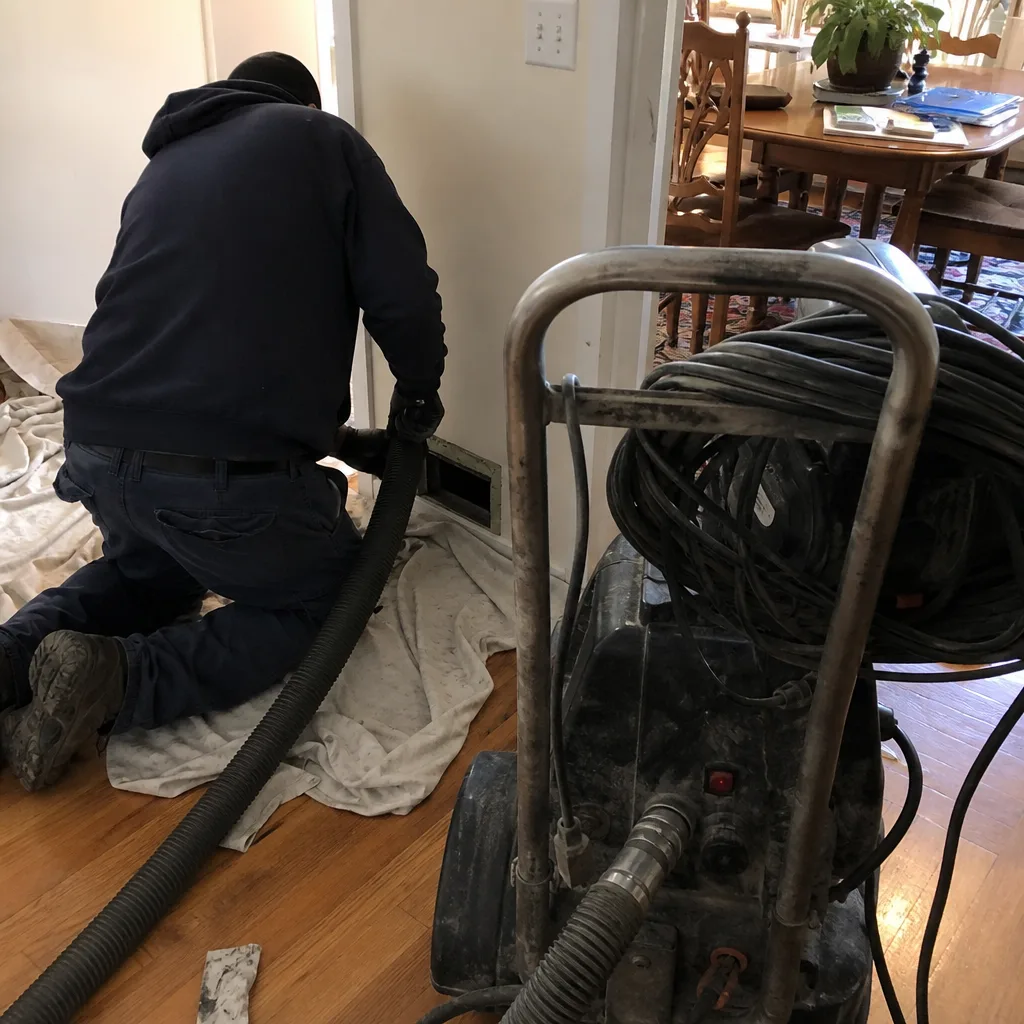 Before
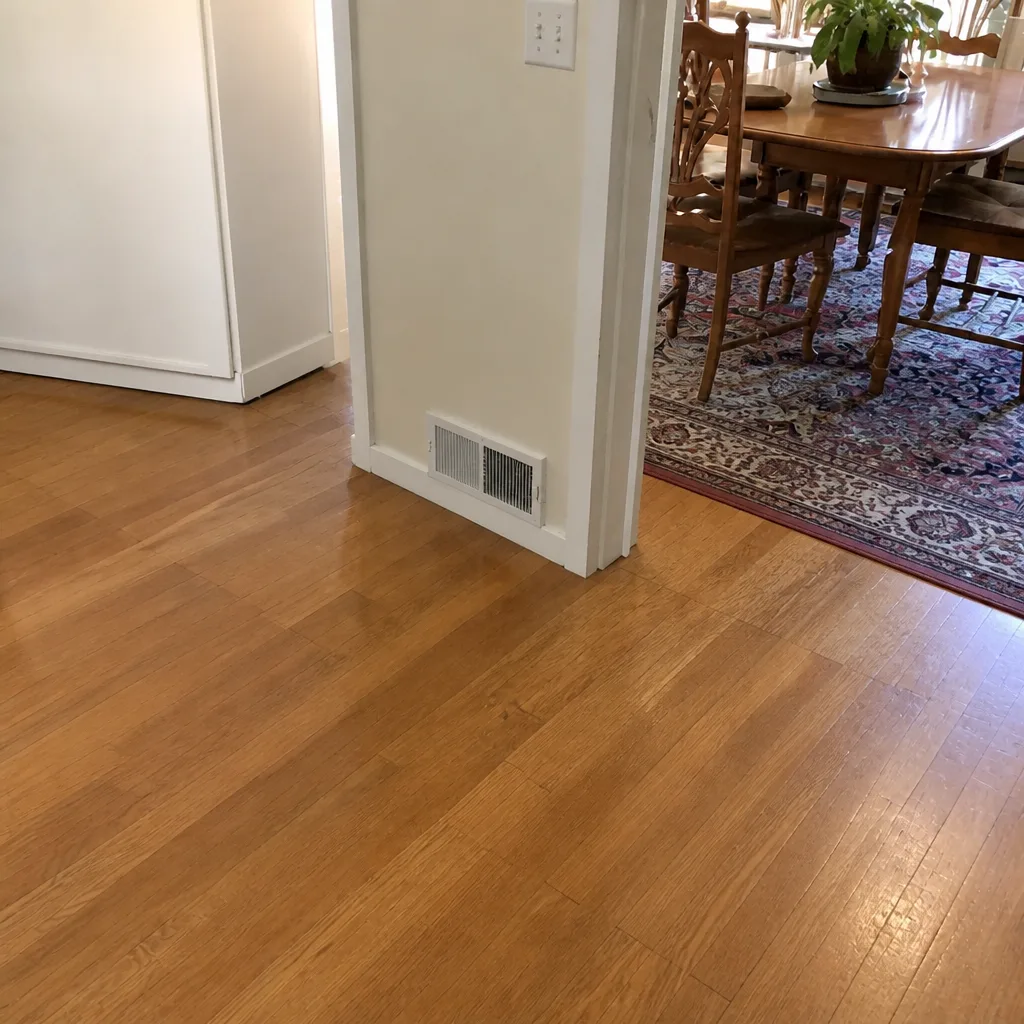 After
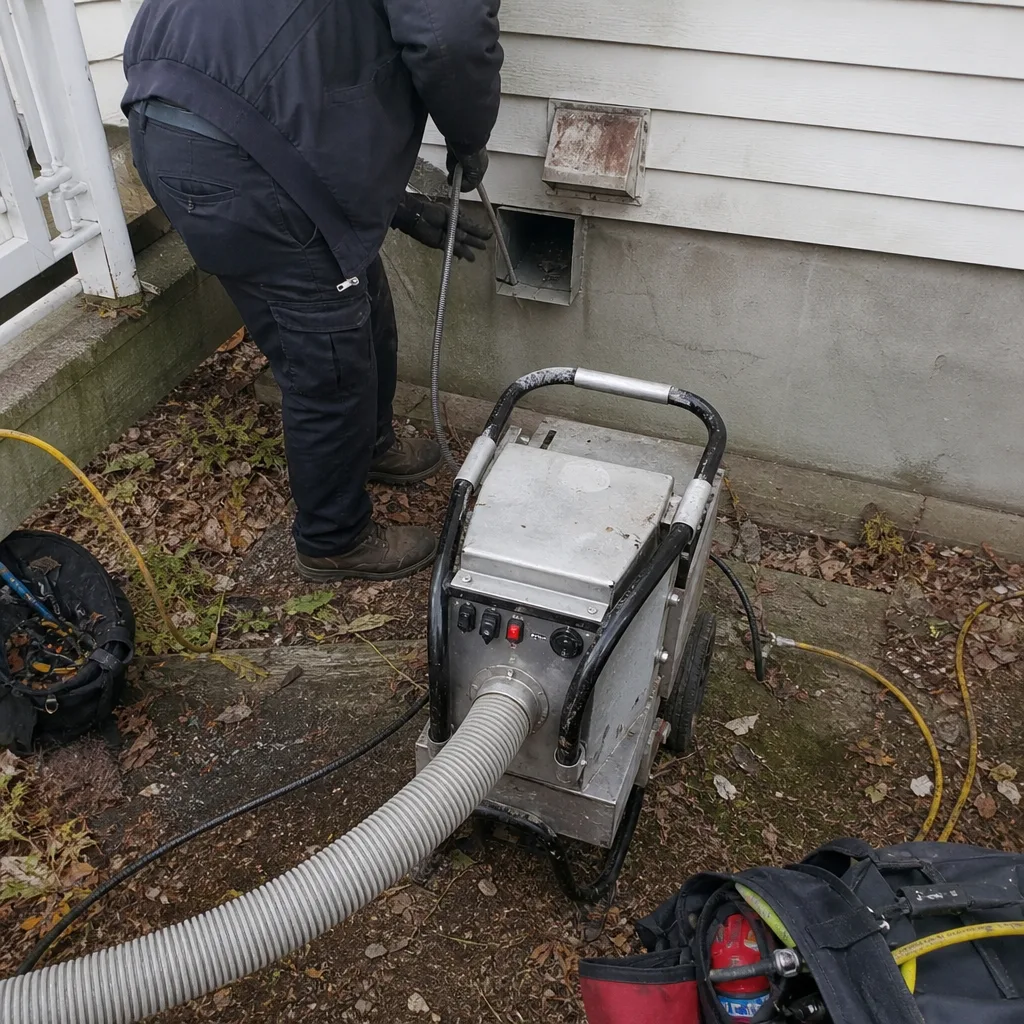 Before
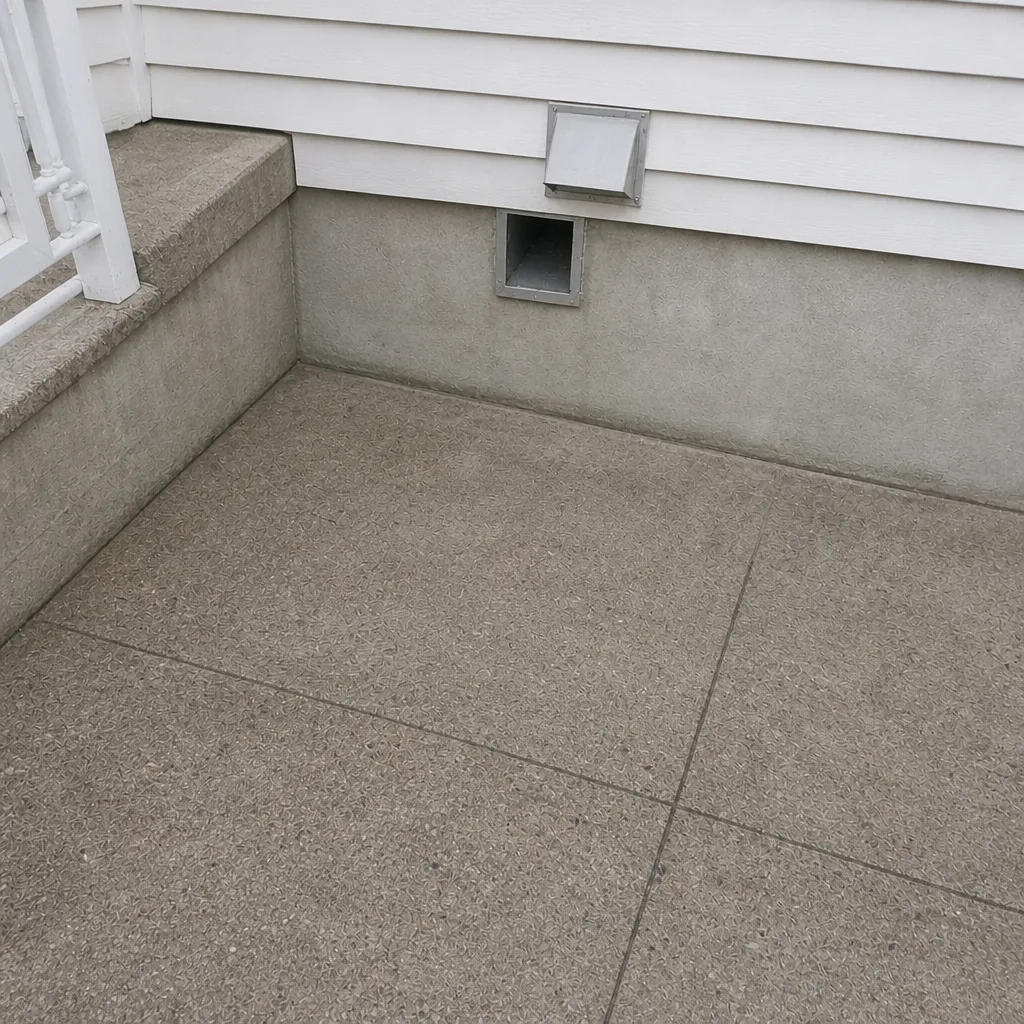 After
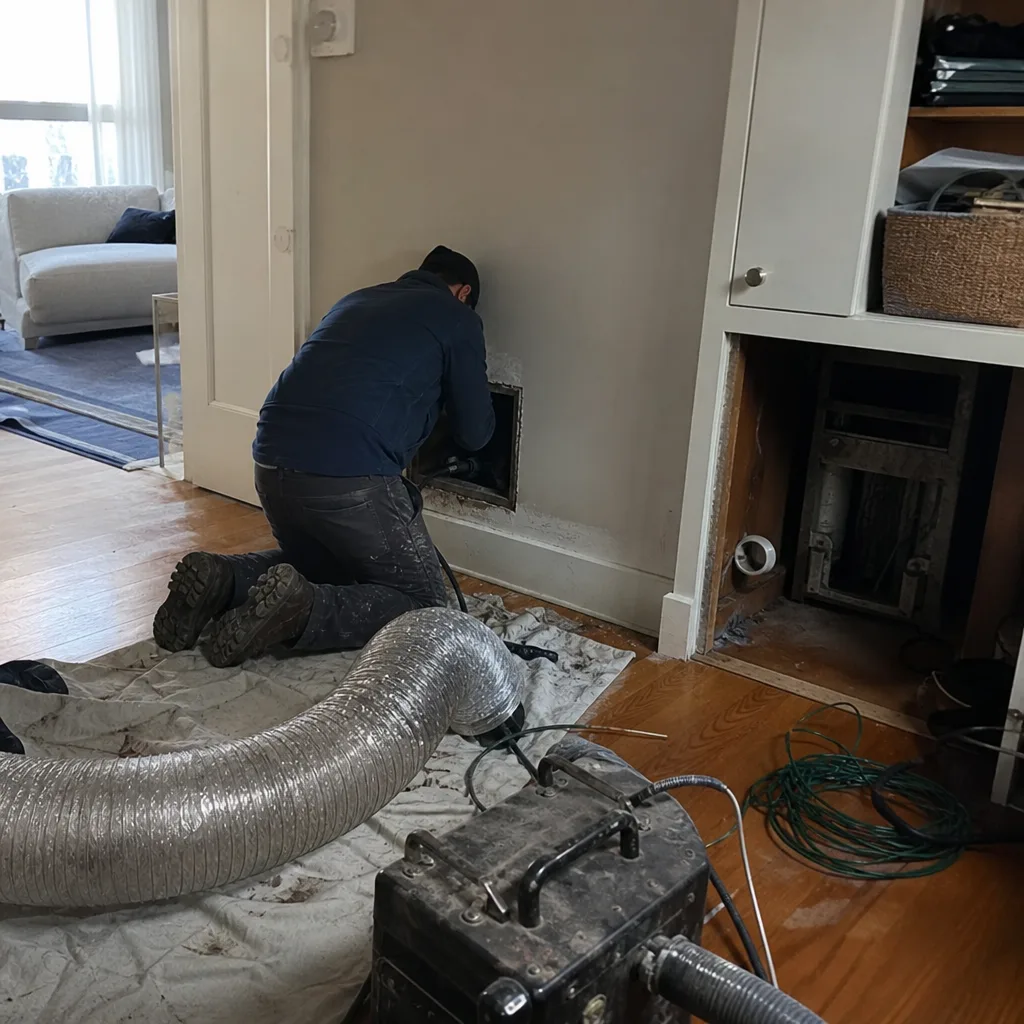 Before
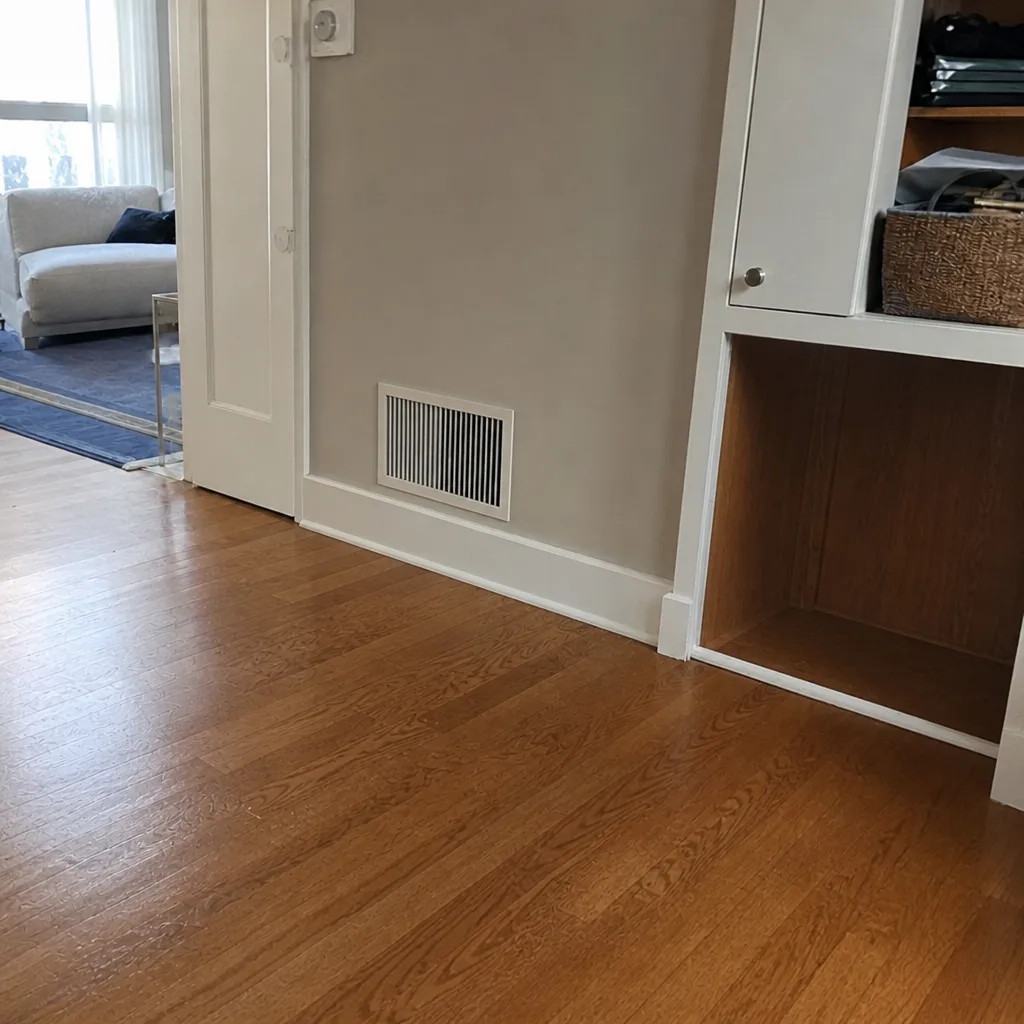 After
When to Call a Professional
Call for a professional inspection when you’re seeing visible dust at registers or on surfaces after cleaning, when allergy or respiratory symptoms seem worse indoors, when a renovation just finished and dust got into the system, when a new HVAC system was installed, or when your dryer takes noticeably longer to dry clothes. Those are the scenarios where a cleaning or repair is likely to pay for itself rather than just add cost. Duct Cleaning Quincy offers free estimates in Quincy for air duct cleaning, dryer vent cleaning, and duct repair; the technician inspects the system, tells you what the work actually requires, and puts the price in writing before anything starts. Call (855) 632-0215 to book.
Frequently Asked Questions
Air duct cleaning in Quincy typically runs $200 to $500 for a standard single-system home, $450 to $800 for larger homes or multi-zone layouts, and over $1,000 when duct repair or heavy contamination is involved. The final number depends on your system count, duct condition, and access. Call (855) 632-0215 for an exact quote; estimates are free.
Cheap quotes usually leave out negative-pressure containment equipment, cut agitation time, or price per vent instead of per system. Those shortcuts save the contractor money but don’t deliver a full cleaning. Compare what equipment each company uses, not just the number. Call (855) 632-0215 and we’ll walk you through what a full job includes, free of charge.
Ask for before-and-after photos of your own ducts, taken during the job, plus a post-cleaning inspection report. A company that uses a HEPA vacuum and containment setup can show what came out of the system. If a contractor can’t document the work, don’t assume it happened. Call (855) 632-0215 to book an inspection with photos included.
Most homes go three to five years between cleanings, but the schedule depends on your system, pets, recent renovations, and whether anyone in the household has respiratory sensitivities. A Quincy home with a finished basement return and pets may need it sooner than a newer single-system house. Call (855) 632-0215 for an assessment of your system’s actual condition; the estimate is free.
Yes, and it’s a fire-prevention measure rather than an upgrade. Lint buildup in a dryer vent is a documented fire cause, and the U.S. Fire Administration recommends clearing it. If clothes take longer to dry or the dryer feels hot, add it to your visit. Call (855) 632-0215 to schedule dryer vent cleaning alongside a duct cleaning.
Yes, and it’s usually the cheaper way to do it. One visit means one containment setup and one inspection covering both cleaning and repair. Disconnected runs, torn flex duct, and leaking joints found during the cleaning can be quoted and fixed in the same appointment. Call (855) 632-0215 for a combined estimate in Quincy.
The Bottom Line
The price gap between a $299 special and a $1,000 quote for the same house isn’t profit margin; it’s the difference between a superficial pass and a full containment, agitation, and extraction job. In Quincy, expect $200 to $500 for a standard single-system home, more for multi-zone layouts and older galvanized duct, and a repair line item if the inspection finds leaks or disconnects. Hold every quote to the same questions: what equipment, what containment, flat price per system, and before-and-after photos. That’s how you read a quote on its merits instead of guessing at the middle number. Our technicians have up to 14 years of experience with the same equipment commercial crews use.
Ready to get a real number? Call (855) 632-0215 for a free estimate. We answer 24/7. Fast dispatch from 7am to 7pm, Sunday through Friday. You can also start with Duct Cleaning Quincy to see the full service lineup, or learn more about our Quincy service area.
Written by the team at Duct Cleaning Quincy.